

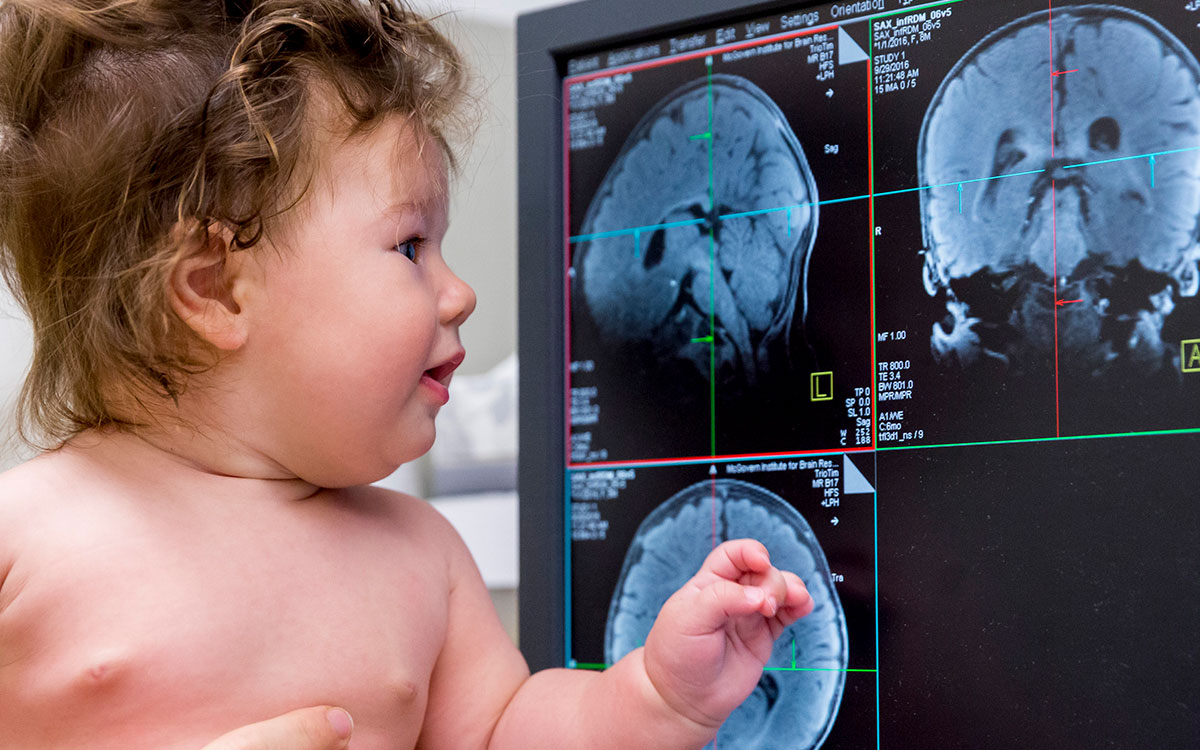
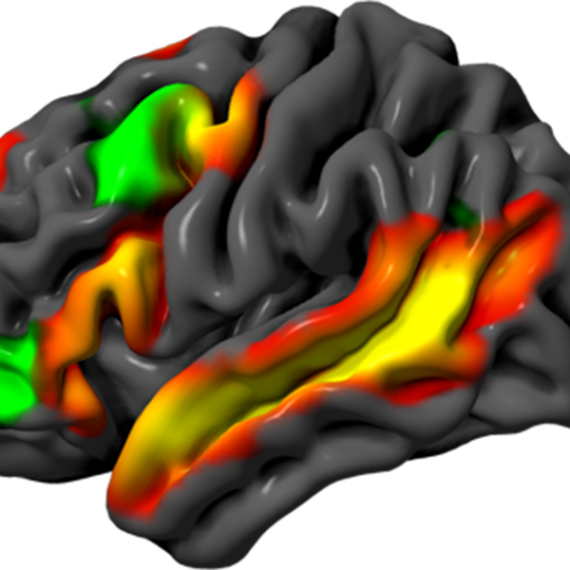
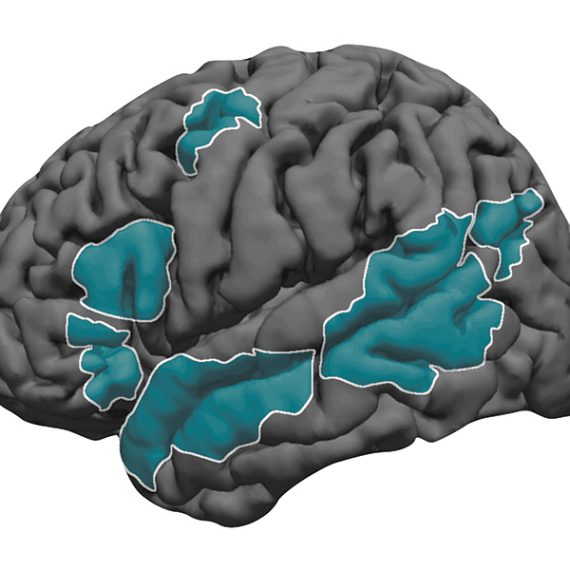
Powerful imaging methods like MRI and MEG provide neuroscientists with a detailed view of the human brain – including the spatial and temporal changes that occur as we interact with the world. Our researchers are using these tools to study how the brain develops from infancy, which regions underlie different aspects of our mental lives, and whether imaging can be used to predict the onset of disease.
To view this video please enable JavaScript, and consider upgrading to a web browser that supports HTML5 video

Brain Imaging
brain mapping · functional connectivity · fMRI · EEG · MEG · predictive imaging · precision interventions · contrast agents · theory of mind · the developing brain · learning

Featured Researcher
Sven Dorkenwald
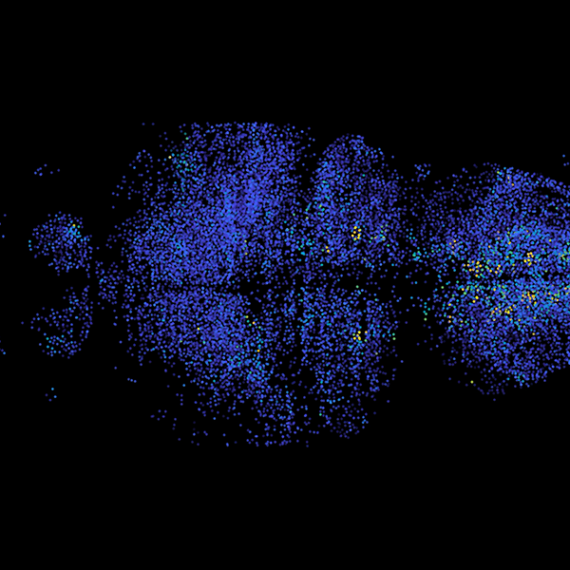
Sven Dorkenwald reconstructs maps of neuronal circuits to investigate how they support complex computations.
224
The typical number of images our scanners take for a 3D brain reconstruction.
3.5-6 minutes
The time typically taken to generate a structural scan of the adult brain using MRI.
Recent Publications
- Pizzimenti, M, Kalia, A, Toghranegar, JA, Ebraheem, M, Cummins, N, Ghosh, SS et al.. Consensus-Based Definitions for Vocal Biomarkers: The International VOCAL Initiative. Digit Biomark. 2026;10 (1):178-190. doi: 10.1159/000553327. PubMed PMID:42757077 PubMed Central PMC13585421.
- Li, J, Atalay, AS, Olchanyi, MD, Cambareri, MK, Ghosh, SS, Horn, A et al.. Functional fractionation of large-scale brain networks in the human subcortex. Proc Natl Acad Sci U S A. 2026;123 (36):e2608875123. doi: 10.1073/pnas.2608875123. PubMed PMID:42673458 PubMed Central PMC13552871.
- Kamps, FS, Chen, EM, Du, H, Kosakowski, HL, Fuchs, A, Kanwisher, N et al.. The cortical scene processing network emerges in infancy, prior to independent navigation experience. Proc Natl Acad Sci U S A. 2026;123 (31):e2513126123. doi: 10.1073/pnas.2513126123. PubMed PMID:42520112 PubMed Central PMC13439116.