How is the McGovern Institute using AI?

This story also appears in our Fall 2026 BrainScan newsletter.

***

The tools of artificial intelligence (AI) are enabling McGovern researchers to ask new kinds of questions and solve more complex problems — and that’s leading to new insights into how the brain works and how mental illness might be more effectively managed.

“I can’t think of any facet [of brain research] where there isn’t an AI-based tool or technology that helps us,” says McGovern Institute Senior Research Scientist Satrajit Ghosh. Ghosh thinks today’s AI technology is particularly powerful in the early stages of research, when researchers are figuring out which questions are important and how to answer them. Historically, this has meant deep reading of the scientific literature — but existing knowledge can be overlooked when people don’t know where to look for it.

“The entire scientific workflow — from ideation to research to execution to dissemination — now has AI tools and technologies that can help.”
– Satra Ghosh

Large language models like Gemini or ChatGPT can pull information and ideas from sources across the internet, connecting users with resources they might not consider accessing on their own. “We get caught in our tracks and grooves that are hard to step outside of,” Ghosh says. “There are still biases in these tools, but I think overall they’re in a much more flexible space than humans typically are.”

McGovern Investigator Feng Zhang adds that by accelerating this vital phase of doing science, AI tools are broadening the scope of what an individual lab can explore. “We’ve never been short on good questions — what’s new is that we can chase them the moment they occur to us, and follow them as far as the data goes,” says Zhang, who is the James and Patricia Poitras Professor of Neuroscience at MIT.

Testing ideas faster

Once a plan is in place, researchers can often go from idea to execution much faster with the help of AI. McGovern Investigators Nancy Kanwisher and Josh McDermott say they have begun using AI models to pilot experiments, refining their approach before working with human study participants. They even use AI to generate images or sounds that their subjects will hear or see during their studies, designing stimuli to uncover specific aspects of the brain’s response.

The models they use are far more reliable representations of human perception than researchers were able to build just a few years ago. And with major advances in AI’s ability to generate computer code, models that took months or years to piece together can now be generated in days.

McDermott, who is the Uncas (1923) and Helen Whitaker Professor of Brain and Cognitive Sciences at MIT, uses an array of models to investigate different aspects of auditory processing in the brain. His team has models that recognize speech, models that localize sounds, and models that detect changes in pitch. “I fantasized about doing these things when I was a grad student, and it just wasn’t possible,” he says. “We were always trying to build working models of things, and it never worked. Now it’s really possible, and it’s just opening huge numbers of doors.”
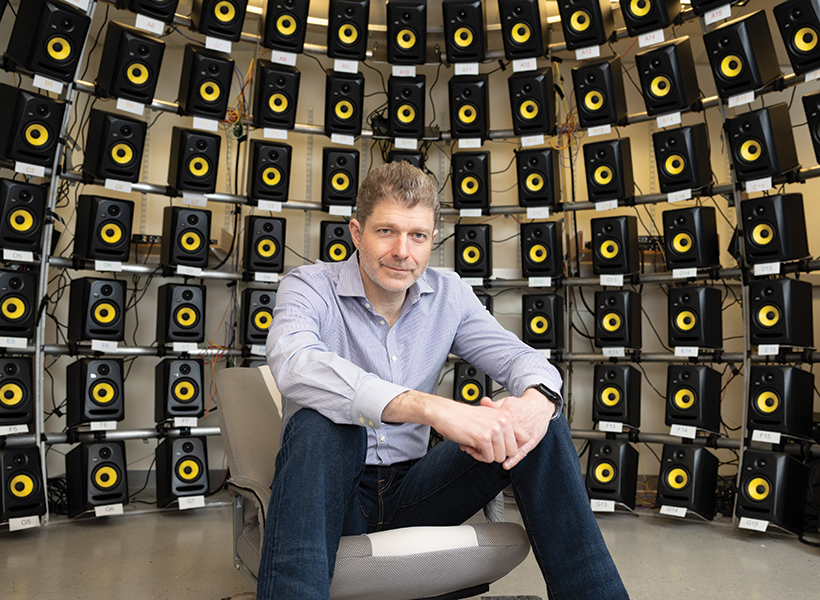
Using a computational model of the auditory system, Josh McDermott has shown how the brain can selectively focus attention on one voice among many in a noisy environment — shedding light on a longstanding neuroscientific phenomenon known as the “cocktail party problem.” Photo: Steph Stevens

For McDermott, one priority is finding ways to develop better devices to help people hear. Computational models can facilitate that by enabling experimentation on a scale that is not possible with human subjects, allowing researchers to explore thousands of different conditions or rapidly test the consequences of modifying a hearing aid algorithm in different ways.

AI models also allow researchers to explore conditions they can’t test in the real world. McDermott’s lab, for example, has studied how hearing might work in a world where sounds behave differently, helping reveal which aspects of perception were shaped by the environment in which our ancestors evolved. And Kanwisher says models help overcome the limitations of experiments with humans, where the tools for monitoring and manipulating brain activity are imprecise and researchers have no control over their subjects’ life experiences.

That’s particularly valuable for studying cognitive functions that are uniquely human. “If you want to study things like language, or mathematical cognition, or theory of mind, it’s pretty hard to do in a mouse or even a monkey,” says McGovern Investigator and Associate Professor of Brain and Cognitive Sciences Evelina Fedorenko, who studies how the brain creates and understands language. AI models, on the other hand, can be trained to mimic these abilities. And what scientists like Fedorenko are learning is that models that behave similarly to humans often process information in ways that are similar to the human brain.

“If you’re in the business of studying sensory systems, like I am, it’s totally changed the way that we do science.” – Josh McDermott

Kanwisher, the Walter A. Rosenblith Professor of Cognitive Neuroscience at MIT, and her colleagues have used AI to explore how and why brains have networks specialized for the processing of certain kinds of objects. Her team and others have tasked AI models with processing visual information, training them with an assortment of images without further information or instruction. Remarkably, such models develop specific responses for certain categories of images: faces, places, bodies, and words — all of which Kanwisher’s team has shown are preferentially processed by specific regions in the human brain.

Kanwisher says that was surprising, because cognitive scientists have reasoned that human brains likely evolved these selective regions to optimize the way perceptual information is later used by the brain. But that doesn’t explain why AI responds to these categories with the same selectivity.

“The AI models don’t use face images to engage social cognition or place images to engage navigation,” she says. “They don’t do a thing with them, and yet they pull out the same categories as important.” That doesn’t rule out previous ideas about human brains — but, Kanwisher says, “It’s proof that you can have these shockingly similar things for very different reasons.” Her group is now exploring how the models’ training experience shapes the development of selective regions — something that cannot be done in humans.

Building better tools

AI is also helping McGovern scientists build physical tools, both to allow researchers to study the brain in new ways and to get better treatments to patients.
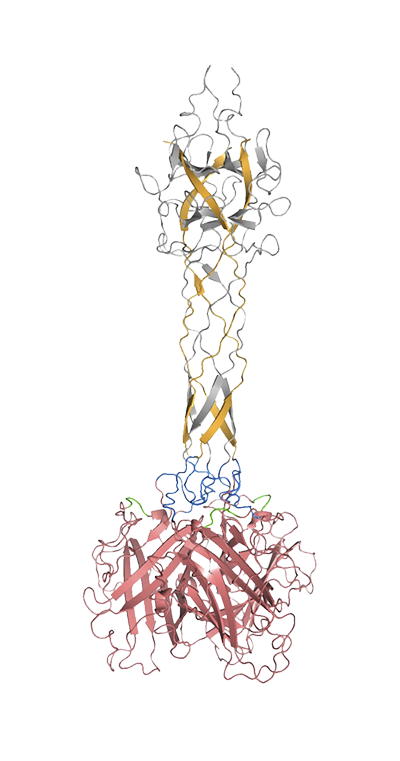
“Molecular syringes” (above), engineered by the AI tool AlphaFold in the Zhang lab, can deliver therapeutic cargo into specific cells in the body. These nanosyringes may lead to safer and more effective treatments for a variety of conditions, including cancer. Image: Joseph Kreitz, Feng Zhang

In Feng Zhang and Ed Boyden’s labs, researchers are using an AI tool called AlphaFold to design proteins with specific properties. Zhang’s lab is searching for proteins that can deliver therapies to specific brain cells, while Boyden’s team is developing tools for monitoring signaling in the brain.

AlphaFold predicts the structure of biomolecules, such as how a sequence of amino acids will fold into a three-dimensional protein. This eliminates much of the trial-and-error stage of protein engineering, speeding scientists’ ability to find molecules that interact with biological systems in the ways that they want.

Boyden, who is the Y. Eva Tan Professor in Neurotechnology at MIT, envisions another powerful AI tool: one that predicts how a brain works from its structure. The idea, he says, is to use machine learning to associate detailed brain maps with physiology and circuit function.

Building such a model would require vast amounts of data, but Boyden says the tools and tissue samples needed for large-scale structural analyses are available.

He envisions a kind of “compiler” built from molecular maps of brain cells and tissues — one that could help neuroscientists understand circuit function and eventually predict the effects of medications and other therapies.

Decoding data

Once an experiment is complete, data analysis begins — and AI is enabling scientists to find insights in datasets that, until recently, were too large and complex to make sense of.

AI tools have been invaluable, for instance, in creating detailed wiring diagrams, or connectomes, which many neuroscientists see as critical guides for brain research. That work, which involves tracing neurons across millions of microscope images, relies heavily on computer vision.

Without AI, piecing together the circuitry of an entire brain would take lifetimes. Remarkably, scientists now have access to a fully mapped connectome for the brain of a fruit fly, whose neurons make more than 50 million connections with one another.
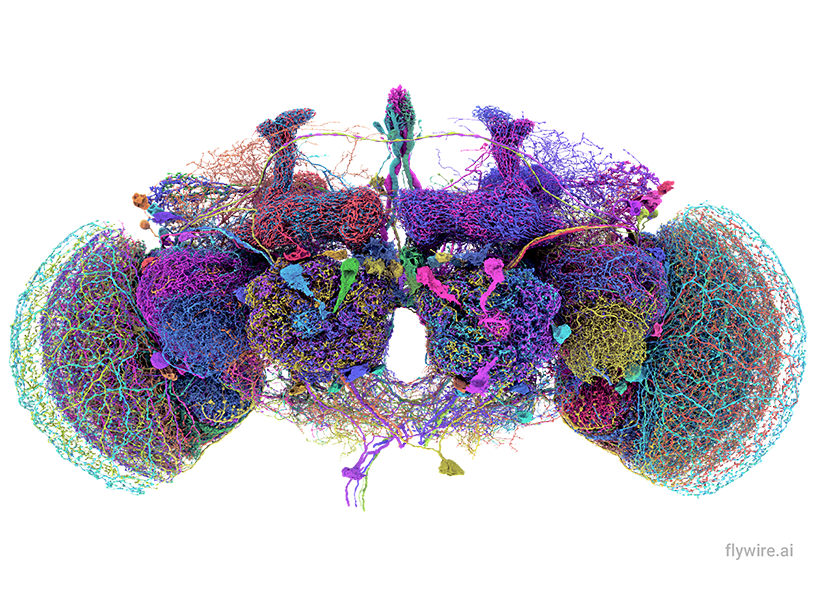
A consortium of scientists, including McGovern Investigator Sven Dorkenwald, created a complete connectome of the fly brain (above) using computer vision algorithms and hundreds of human proofreaders. It is the largest, most complete neuronal map ever produced by scientists. Image: FlyWire Consortium, Sven Dorkenwald

McGovern Investigator Tomaso Poggio and his team are using AI to interact with that connectome by running simulations of circuit function, testing for a motion-detecting circuit that Poggio first proposed in theoretical work he did in the 1980s. Until recently, Poggio, who is the Eugene McDermott Professor Emeritus of Brain and Cognitive Sciences at MIT, had no way to find it.

Personalizing mental health

Other McGovern researchers are deploying AI to find ways to improve the diagnosis and treatment of brain disorders. They are finding that AI can pick up on signals that can be difficult for clinicians to detect — sometimes years before diagnosis.

Working with Satra Ghosh, John Gabrieli’s team found that a machine learning model could predict from clinical data which children and teenagers would later be diagnosed with bipolar disorder. With other collaborators, Ghosh has found that AI can recognize autism-related behaviors in parents’ videos of their toddlers, and he trained an AI model to detect changes in voice and speech patterns associated with conditions like Alzheimer’s and Parkinson’s disease. With further development, tools like these could facilitate earlier diagnosis and intervention for people who need it.

Researchers in Gabrieli’s lab think AI can also enable a more personalized approach to treating mental illness. It’s difficult to predict who will respond to a particular medication or therapy, leaving doctors and patients with a trial-and-error approach to treatment. Gabrieli’s team is betting that machine learning algorithms can find patterns hidden within complex clinical datasets that can enable more informed treatment decisions.
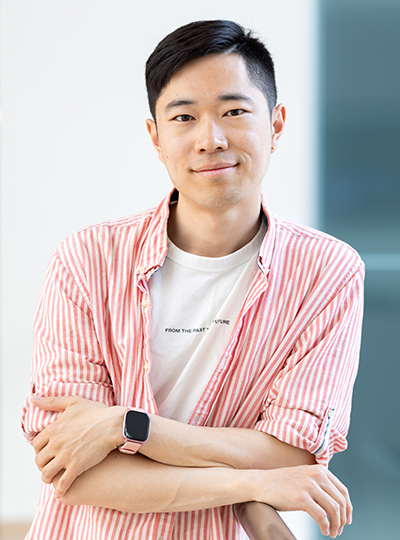
By merging machine-learning approaches with clinical and neuroimaging data, Gun Ahn, a graduate student in John Gabrieli’s lab, is pioneering precision-based methods that could help heal mental illness more quickly and effectively than current strategies.

In a recent success, Gun Ahn, a graduate student on Gabrieli’s team, followed up on a study in which the group found that a daily mindfulness practice meaningfully reduced anxiety for about 50 percent of autistic adults. No single factor separated those who benefitted from those who did not, so the team used machine learning to analyze demographic data and patient questionnaires. Their model was able to predict, with 80 percent accuracy, who responded to the practice.

This finding could help patients decide whether mindfulness is worth trying, particularly if it can one day be paired with predictions about alternative treatments. Gabrieli’s lab is taking a similar approach to predict patients’ response to medications for attention-deficit/hyperactivity disorder, hoping to help people bypass ineffective options and quickly find what works for them.

Tailoring interventions to a patient’s personal biology and experience has long been a goal in psychiatry — but the knowledge clinicians need to achieve this has been elusive. “For about 10 to 15 years, people have been talking about the incredible value that precision psychiatry would have,” says Gabrieli, who is the Grover Hermann Professor of Health Sciences and Technology at MIT. “This is, to me, the most promising scientific approach that could be widely usable.”

AI could even help clinicians move beyond formal diagnoses to understanding and treating people more holistically. Ahn imagines a model trained broadly, with data from a wide swath of patients.

Moving the field forward

Science isn’t done once the data has been analyzed: sharing knowledge is essential, too. Poggio, for example, integrated AI into the writing of a new book, “Brains Minds Machines: The Mystery of Human Intelligence, The Enigmas of the Artificial,” even crediting Gemini and ChatGPT as coauthors. He says the tools helped him organize his thinking and offload tedious tasks.

Looking ahead, most McGovern scientists say AI technologies are advancing so rapidly, their future impacts on neuroscience are difficult to predict. Could AI one day replace human researchers altogether? Some think it’s possible — at least in some areas.

“The scary prospect is that AI is going to put humans out of business. We’re definitely not close to that now, but nobody can predict the future,” says McDermott. “Physically doing experiments may be something that continues to be the domain of humans. But deciding what experiments to run and what they mean, and analyzing all the data? It’s unclear whether humans are still going to be the most efficient way to do that.”

Others are more skeptical. “It’s hard for AI to generate truly creative new ideas,” Boyden says. “I haven’t seen that happen yet.”

For now at least, today’s tools need oversight and guidance. To get the most out of them, users need experience and expertise. “They still have hallucinations from time to time,” Poggio warns. “One has to be careful.”

Nonetheless, today’s tools are tremendously empowering. They’re not just getting more powerful; they’re also getting more accessible. “These models are becoming exciting because they’re becoming usable by everyone, not just specialists,” Zhang says. “And when more people can do more, the whole field moves faster.”
Two McGovern faculty appointed to named professorships at MIT

MIT has appointed McGovern faculty members Sven Dorkenwald and Josh McDermott to named professorships that will provide additional support for their “outstanding research and educational careers.” Named professorships at MIT are prestigious endowed faculty chairs that provide crucial financial support for both junior faculty and senior scholars, enabling them to pursue bold research and global challenges.

Dorkenwald, who recently joined MIT as an assistant professor of brain and cognitive sciences and an investigator at the McGovern Institute, has been selected to hold the  Silverman (1968) Family Career Development Professorship for a three-year term beginning July 1, 2026. A trailblazer in the field of computational neuroscience, Dorkenwald reconstructs maps of neuronal circuits to investigate how they support complex computations. He is recognized for his leadership in connectomics—an emerging discipline focused on reconstructing and analyzing neural circuitry at unprecedented scale and detail. Jeffrey Silverman ’68 is a life member emeritus of the MIT Corporation. His generous gift to the institute empowers early career professors to pursue high-risk research. 

McDermott, a professor of brain and cognitive sciences and an associate investigator at the McGovern Institute, has been selected to hold the Uncas (1923) and Helen Whitaker Professorship for a five-year renewable term beginning July 1, 2026. McDermott’s research operates at the intersection of psychology, neuroscience, and engineering to study how people hear and interpret sound. Groundbreaking discoveries from the McDermott lab are informing new treatments for hearing loss, and paving the way for machine systems that emulate the human ability to recognize and interpret sound. The Uncas (1923) and Helen Whitaker Professorship chair was established in 1980 through a gift from the late Helen Whitaker, the first woman elected to life membership of the MIT Corporation. It is designed to support distinguished faculty whose work spans multiple disciplines to solve complex, real-world problems. 


How the brain handles the “cocktail party problem”

MIT neuroscientists have figured out how the brain is able to focus on a single voice among a cacophony of many voices, shedding light on a longstanding neuroscientific phenomenon known as the cocktail party problem.

This attentional focus becomes necessary when you’re in any crowded environment, such as a cocktail party, with many conversations going on at once. Somehow, your brain is able to follow the voice of the person you’re talking to, despite all the other voices that you’re hearing in the background.

Using a computational model of the auditory system, the MIT team found that amplifying the activity of the neural processing units that respond to features of a target voice, such as its pitch, allows that voice to be boosted to the forefront of attention.

“That simple motif is enough to cause much of the phenotype of human auditory attention to emerge, and the model ends up reproducing a very wide range of human attentional behaviors for sound,” says Josh McDermott, a professor of brain and cognitive sciences at MIT, a member of MIT’s McGovern Institute for Brain Research and Center for Brains, Minds, and Machines, and the senior author of the study.

The findings are consistent with previous studies showing that when people or animals focus on a specific auditory input, neurons in the auditory cortex that respond to features of the target stimulus amplify their activity. This is the first study to show that extra boost is enough to explain how the brain solves the cocktail party problem.

Ian Griffith, a graduate student in the Harvard Program in Speech and Hearing Biosciences and Technology, who is advised by McDermott, is the lead author of the paper. MIT graduate student R. Preston Hess is also an author of the paper, which appears today in Nature Human Behavior.

Modeling attention

Neuroscientists have been studying the phenomenon of selective attention for decades. Many studies in people and animals have shown that when focusing on a particular stimulus like the sound of someone’s voice, neurons that are tuned to features of that voice — for example, high pitch — amplify their activity.

When this amplification occurs, neurons’ firing rates are scaled upward, as though multiplied by a number greater than one. It has been proposed that these “multiplicative gains” allow the brain to focus its attention on certain stimuli. Neurons that aren’t tuned to the target feature exhibit a corresponding reduction in activity.

“The responses of neurons tuned to features that are in the target of attention get scaled up,” Griffith says. “Those effects have been known for a very long time, but what’s been unclear is whether that effect is sufficient to explain what happens when you’re trying to pay attention to a voice or selectively attend to one object.”

This question has remained unanswered because computational models of perception haven’t been able to perform attentional tasks such as picking one voice out of many. Such models can readily perform auditory tasks when there is an unambiguous target sound to identify, but they haven’t been able to perform those tasks when other stimuli are competing for their attention.

“None of our models has had the ability that humans have, to be cued to a particular object or a particular sound and then to base their response on that object or that sound. That’s been a real limitation,” McDermott says.

In this study, the MIT team wanted to see if they could train models to perform those types of tasks by enabling the model to produce neuronal activity boosts like those seen in the human brain.

To do that, they began with a neural network that they and other researchers have used to model audition, and then modified the model to allow each of its stages to implement multiplicative gains. Under this architecture, the activation of processing units within the model can be boosted up or down depending on the specific features they represent, such as pitch.

To train the model, on each trial the researchers first fed it a “cue”: an audio clip of the voice that they wanted the model to pay attention to. The unit activations produced by the cue then determined the multiplicative gains that were applied when the model heard a subsequent stimulus.

“Imagine the cue is an excerpt of a voice that has a low pitch. Then, the units in the model that represent low pitch would get multiplied by a large gain, whereas the units that represent high pitch would get attenuated,” Griffith says.

Then, the model was given clips featuring a mix of voices, including the target voice, and asked to identify the second word said by the target voice. The model activations to this mixture were multiplied by the gains that resulted from the previous cue stimulus. This was expected to cause the target voice to be “amplified” within the model, but it was not clear whether this effect would be enough to yield human-like attentional behavior.

The researchers found that under a variety of conditions, the model performed very similarly to humans, and it tended to make errors similar to those that humans make. For example, like humans, it sometimes made mistakes when trying to focus on one of two male voices or one of two female voices, which are more likely to have similar pitches.

“We did experiments measuring how well people can select voices across a pretty wide range of conditions, and the model reproduces the pattern of behavior pretty well,” Griffith says.

Effects of location

Previous research has shown that in addition to pitch, spatial location is a key factor that helps people focus on a particular voice or sound. The MIT team found that the model also learned to use spatial location for attentional selection, performing better when the target voice was at a different location from distractor voices.

The researchers then used the model to discover new properties of human spatial attention. Using their computational model, the researchers were able to test all possible combinations of target locations and distractor locations, an undertaking that would be hugely time-consuming with human subjects.

“You can use the model as a way to screen large numbers of conditions to look for interesting patterns, and then once you find something interesting, you can go and do the experiment in humans,” McDermott says.

These experiments revealed that the model was much better at correctly selecting the target voice when the target and distractor were at different locations in the horizontal plane. When the sounds were instead separated in the vertical plane, this task became much more difficult. When the researchers ran a similar experiment with human subjects, they observed the same result.

“That was just one example where we were able to use the model as an engine for discovery, which I think is an exciting application for this kind of model,” McDermott says.

Another application the researchers are pursuing is using this kind of model to simulate listening through a cochlear implant. These studies, they hope, could lead to improvements in cochlear implants that could help people with such implants focus their attention more successfully in noisy environments.

The research was funded by the National Institutes of Health.


For healthy hearing, timing matters

When soundwaves reach the inner ear, neurons there pick up the vibrations and alert the brain. Encoded in their signals is a wealth of information that enables us to follow conversations, recognize familiar voices, appreciate music, and quickly locate a ringing phone or crying baby.

Seated man, smiling at camera
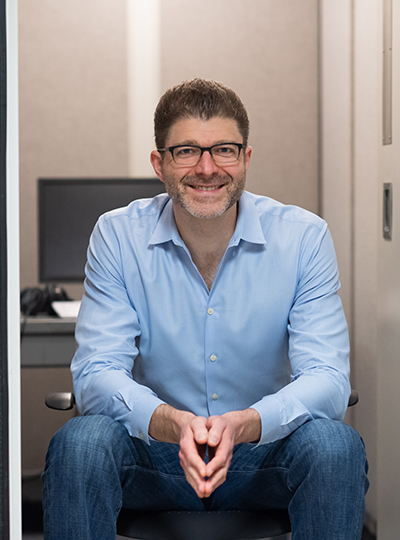
McGovern Institute Associate Investigator Josh McDermott. Photo: Justin Knight

Neurons send signals by emitting spikes—brief changes in voltage that propagate along nerve fibers, also known as action potentials. Remarkably, auditory neurons can fire hundreds of spikes per second, and time their spikes with exquisite precision to match the oscillations of incoming soundwaves.

With powerful new models of human hearing, scientists at MIT’s McGovern Institute have determined that this precise timing is vital for some of the most important ways we make sense of auditory information, including recognizing voices and localizing sounds.

The findings, reported December 4, 2024, in the journal Nature Communications, show how machine learning can help neuroscientists understand how the brain uses auditory information in the real world. McGovern Investigator Josh McDermott, who led the research, explains that his team’s models better equip researchers to study the consequences of different types of hearing impairment and devise more effective interventions.

Science of sound

The nervous system’s auditory signals are timed so precisely, researchers have long suspected that timing is important to our perception of sound. Soundwaves oscillate at rates that determine their pitch: low-pitched sounds travel in slow waves, whereas high-pitched sound waves oscillate more frequently. The auditory nerve that relays information from sound-detecting hair cells in the ear to the brain generates electrical spikes that corresponds to the frequency of these oscillations. “The action potentials in an auditory nerve get fired at very particular points in time relative to the peaks in the stimulus waveform,” explains McDermott, who is also an associate professor of brain and cognitive sciences at MIT.

This relationship, known as phase-locking, requires neurons to time their spikes with sub-millisecond precision. But scientists haven’t really known how informative these temporal patterns are to the brain. Beyond being scientifically intriguing, McDermott says, the question has important clinical implications: “If you want to design a prosthesis that provides electrical signals to the brain to reproduce the function of the ear, it’s arguably pretty important to know what kinds of information in the normal ear actually matter,” he says.

This has been difficult to study experimentally: Animal models can’t offer much insight into how the human brain extracts structure in language or music, and the auditory nerve is inaccessible for study in humans. So McDermott and graduate student Mark Saddler turned to artificial neural networks.

Artificial hearing

Neuroscientists have long used computational models to explore how sensory information might be decoded by the brain, but until recent advances in computing power and machine learning methods, these models were limited to simulating simple tasks. “One of the problems with these prior models is that they’re often way too good,” says Saddler, who is now at the Technical University of Denmark. For example, a computational model tasked with identifying the higher pitch in a pair of simple tones is likely to perform better than people who are asked to do the same thing. “This is not the kind of task that we do every day in hearing,” Saddler points out. “The brain is not optimized to solve this very artificial task.” This mismatch limited the insights that could be drawn from this prior generation of models.

To better understand the brain, Saddler and McDermott wanted to challenge a hearing model to do things that people use their hearing for in the real world, like recognizing words and voices. That meant developing an artificial neural network to simulate the parts of the brain that receive input from the ear. The network was given input from some 32,000 simulated sound-detecting sensory neurons and then optimized for various real-world tasks.

The researchers showed that their model replicated human hearing well—better than any previous model of auditory behavior, McDermott says. In one test, the artificial neural network was asked to recognize words and voices within dozens of types of background noise, from the hum of an airplane cabin to enthusiastic applause. Under every condition, the model performed very similarly to humans.

“The ability to link patterns of firing in the auditory nerve with behavior opens a lot of doors.” – Josh McDermott

When the team degraded the timing of the spikes in the simulated ear, however, their model could no longer match humans’ ability to recognize voices or identify the locations of sounds. For example, while McDermott’s team had previously shown that people use pitch to help them identify people’s voices, the model revealed that that this ability is lost without precisely timed signals. “You need quite precise spike timing in order to both account for human behavior and to perform well on the task,” Saddler says. That suggests that the brain uses precisely timed auditory signals because they aid these practical aspects of hearing.

The team’s findings demonstrate how artificial neural networks can help neuroscientists understand how the information extracted by the ear influences our perception of the world, both when hearing is intact and when it is impaired. “The ability to link patterns of firing in the auditory nerve with behavior opens a lot of doors,” McDermott says.

“Now that we have these models that link neural responses in the ear to auditory behavior, we can ask, ‘If we simulate different types of hearing loss, what effect is that going to have on our auditory abilities?’” McDermott says. “That will help us better diagnose hearing loss, and we think there are also extensions of that to help us design better hearing aids or cochlear implants.” For example, he says, “The cochlear implant is limited in various ways—it can do some things and not others. What’s the best way to set up that cochlear implant to enable you to mediate behaviors? You can, in principle, use the models to tell you that.”

Exposure to different kinds of music influences how the brain interprets rhythm

When listening to music, the human brain appears to be biased toward hearing and producing rhythms composed of simple integer ratios — for example, a series of four beats separated by equal time intervals (forming a 1:1:1 ratio).

However, the favored ratios can vary greatly between different societies, according to a large-scale study led by researchers at MIT and the Max Planck Institute for Empirical Aesthetics and carried out in 15 countries. The study included 39 groups of participants, many of whom came from societies whose traditional music contains distinctive patterns of rhythm not found in Western music.

“Our study provides the clearest evidence yet for some degree of universality in music perception and cognition, in the sense that every single group of participants that was tested exhibits biases for integer ratios. It also provides a glimpse of the variation that can occur across cultures, which can be quite substantial,” says Nori Jacoby, the study’s lead author and a former MIT postdoc, who is now a research group leader at the Max Planck Institute for Empirical Aesthetics in Frankfurt, Germany.

The brain’s bias toward simple integer ratios may have evolved as a natural error-correction system that makes it easier to maintain a consistent body of music, which human societies often use to transmit information.

“When people produce music, they often make small mistakes. Our results are consistent with the idea that our mental representation is somewhat robust to those mistakes, but it is robust in a way that pushes us toward our preexisting ideas of the structures that should be found in music,” says Josh McDermott, an associate professor of brain and cognitive sciences at MIT and a member of MIT’s McGovern Institute for Brain Research and Center for Brains, Minds, and Machines.

McDermott is the senior author of the study, which appears today in Nature Human Behaviour. The research team also included scientists from more than two dozen institutions around the world.

A global approach

The new study grew out of a smaller analysis that Jacoby and McDermott published in 2017. In that paper, the researchers compared rhythm perception in groups of listeners from the United States and the Tsimane’, an Indigenous society located in the Bolivian Amazon rainforest.

pitch perception study
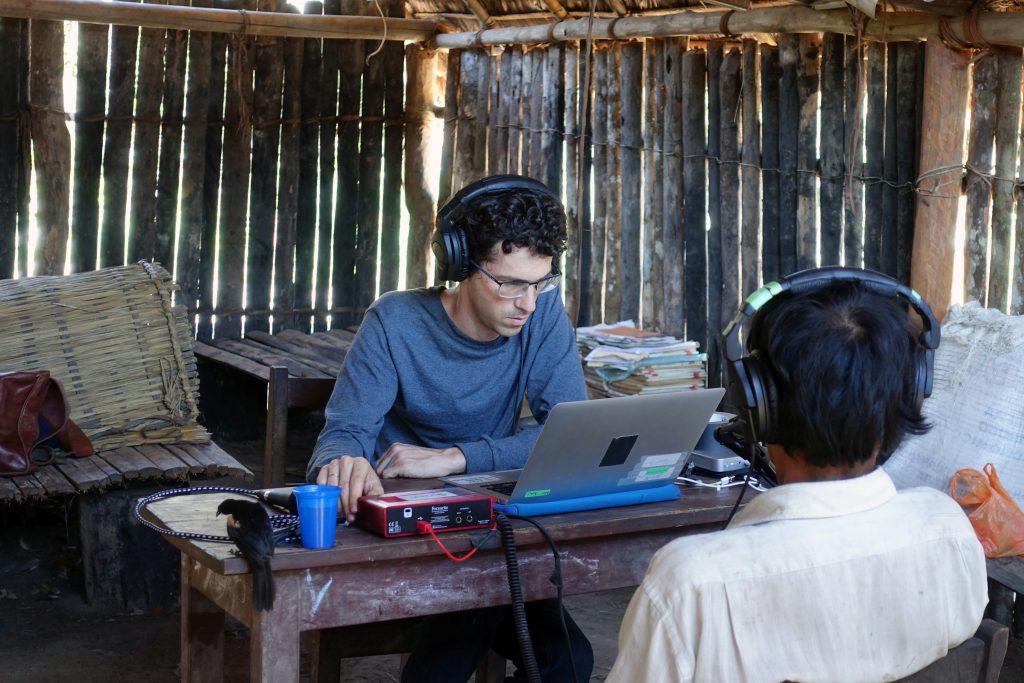
Nori Jacoby, a former MIT postdoc now at the Max Planck Institute for Empirical Aesthetics, runs an experiment with a member of the Tsimane’ tribe, who have had little exposure to Western music. Photo: Josh McDermott

To measure how people perceive rhythm, the researchers devised a task in which they play a randomly generated series of four beats and then ask the listener to tap back what they heard. The rhythm produced by the listener is then played back to the listener, and they tap it back again. Over several iterations, the tapped sequences became dominated by the listener’s internal biases, also known as priors.

“The initial stimulus pattern is random, but at each iteration the pattern is pushed by the listener’s biases, such that it tends to converge to a particular point in the space of possible rhythms,” McDermott says. “That can give you a picture of what we call the prior, which is the set of internal implicit expectations for rhythms that people have in their heads.”

When the researchers first did this experiment, with American college students as the test subjects, they found that people tended to produce time intervals that are related by simple integer ratios. Furthermore, most of the rhythms they produced, such as those with ratios of 1:1:2 and 2:3:3, are commonly found in Western music.

The researchers then went to Bolivia and asked members of the Tsimane’ society to perform the same task. They found that Tsimane’ also produced rhythms with simple integer ratios, but their preferred ratios were different and appeared to be consistent with those that have been documented in the few existing records of Tsimane’ music.

“At that point, it provided some evidence that there might be very widespread tendencies to favor these small integer ratios, and that there might be some degree of cross-cultural variation. But because we had just looked at this one other culture, it really wasn’t clear how this was going to look at a broader scale,” Jacoby says.

To try to get that broader picture, the MIT team began seeking collaborators around the world who could help them gather data on a more diverse set of populations. They ended up studying listeners from 39 groups, representing 15 countries on five continents — North America, South America, Europe, Africa, and Asia.

“This is really the first study of its kind in the sense that we did the same experiment in all these different places, with people who are on the ground in those locations,” McDermott says. “That hasn’t really been done before at anything close to this scale, and it gave us an opportunity to see the degree of variation that might exist around the world.”

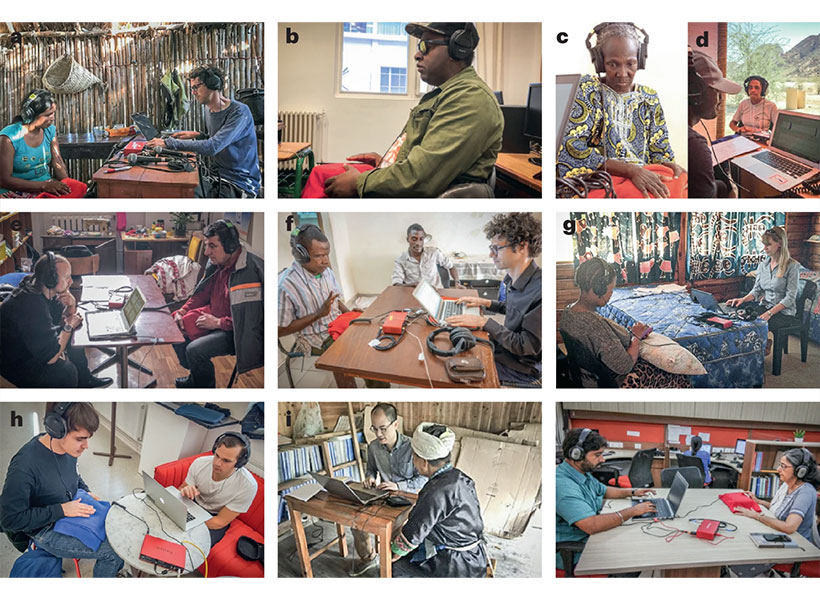
A grid of nine different photos showing a researcher working with an individual at a table. The individuals are wearing headphones.
Example testing sites. a, Yaranda, Bolivia. b, Montevideo, Uruguay. c, Sagele, Mali. d, Spitzkoppe, Namibia. e, Pleven, Bulgaria. f, Bamako, Mali. g, D’Kar, Botswana. h, Stockholm, Sweden. i, Guizhou, China. j, Mumbai, India. Verbal informed consent was obtained from the individuals in each photo.

Cultural comparisons

Just as they had in their original 2017 study, the researchers found that in every group they tested, people tended to be biased toward simple integer ratios of rhythm. However, not every group showed the same biases. People from North America and Western Europe, who have likely been exposed to the same kinds of music, were more likely to generate rhythms with the same ratios. However, many groups, for example those in Turkey, Mali, Bulgaria, and Botswana showed a bias for other rhythms.

“There are certain cultures where there are particular rhythms that are prominent in their music, and those end up showing up in the mental representation of rhythm,” Jacoby says.

The researchers believe their findings reveal a mechanism that the brain uses to aid in the perception and production of music.

“When you hear somebody playing something and they have errors in their performance, you’re going to mentally correct for those by mapping them onto where you implicitly think they ought to be,” McDermott says. “If you didn’t have something like this, and you just faithfully represented what you heard, these errors might propagate and make it much harder to maintain a musical system.”

Among the groups that they studied, the researchers took care to include not only college students, who are easy to study in large numbers, but also people living in traditional societies, who are more difficult to reach. Participants from those more traditional groups showed significant differences from college students living in the same countries, and from people who live in those countries but performed the test online.

“What’s very clear from the paper is that if you just look at the results from undergraduate students around the world, you vastly underestimate the diversity that you see otherwise,” Jacoby says. “And the same was true of experiments where we tested groups of people online in Brazil and India, because you’re dealing with people who have internet access and presumably have more exposure to Western music.”

The researchers now hope to run additional studies of different aspects of music perception, taking this global approach.

“If you’re just testing college students around the world or people online, things look a lot more homogenous. I think it’s very important for the field to realize that you actually need to go out into communities and run experiments there, as opposed to taking the low-hanging fruit of running studies with people in a university or on the internet,” McDermott says.

The research was funded by the James S. McDonnell Foundation, the Canadian National Science and Engineering Research Council, the South African National Research Foundation, the United States National Science Foundation, the Chilean National Research and Development Agency, the Austrian Academy of Sciences, the Japan Society for the Promotion of Science, the Keio Global Research Institute, the United Kingdom Arts and Humanities Research Council, the Swedish Research Council, and the John Fell Fund.

Deep neural networks show promise as models of human hearing

Computational models that mimic the structure and function of the human auditory system could help researchers design better hearing aids, cochlear implants, and brain-machine interfaces. A new study from MIT has found that modern computational models derived from machine learning are moving closer to this goal.

In the largest study yet of deep neural networks that have been trained to perform auditory tasks, the MIT team showed that most of these models generate internal representations that share properties of representations seen in the human brain when people are listening to the same sounds.

The study also offers insight into how to best train this type of model: The researchers found that models trained on auditory input including background noise more closely mimic the activation patterns of the human auditory cortex.

“What sets this study apart is it is the most comprehensive comparison of these kinds of models to the auditory system so far. The study suggests that models that are derived from machine learning are a step in the right direction, and it gives us some clues as to what tends to make them better models of the brain,” says Josh McDermott, an associate professor of brain and cognitive sciences at MIT, a member of MIT’s McGovern Institute for Brain Research and Center for Brains, Minds, and Machines, and the senior author of the study.

MIT graduate student Greta Tuckute and Jenelle Feather PhD ’22 are the lead authors of the open-access paper, which appears today in PLOS Biology.

Models of hearing

Deep neural networks are computational models that consists of many layers of information-processing units that can be trained on huge volumes of data to perform specific tasks. This type of model has become widely used in many applications, and neuroscientists have begun to explore the possibility that these systems can also be used to describe how the human brain performs certain tasks.

“These models that are built with machine learning are able to mediate behaviors on a scale that really wasn’t possible with previous types of models, and that has led to interest in whether or not the representations in the models might capture things that are happening in the brain,” Tuckute says.

When a neural network is performing a task, its processing units generate activation patterns in response to each audio input it receives, such as a word or other type of sound. Those model representations of the input can be compared to the activation patterns seen in fMRI brain scans of people listening to the same input.

In 2018, McDermott and then-graduate student Alexander Kell reported that when they trained a neural network to perform auditory tasks (such as recognizing words from an audio signal), the internal representations generated by the model showed similarity to those seen in fMRI scans of people listening to the same sounds.

Since then, these types of models have become widely used, so McDermott’s research group set out to evaluate a larger set of models, to see if the ability to approximate the neural representations seen in the human brain is a general trait of these models.

For this study, the researchers analyzed nine publicly available deep neural network models that had been trained to perform auditory tasks, and they also created 14 models of their own, based on two different architectures. Most of these models were trained to perform a single task — recognizing words, identifying the speaker, recognizing environmental sounds, and identifying musical genre — while two of them were trained to perform multiple tasks.

When the researchers presented these models with natural sounds that had been used as stimuli in human fMRI experiments, they found that the internal model representations tended to exhibit similarity with those generated by the human brain. The models whose representations were most similar to those seen in the brain were models that had been trained on more than one task and had been trained on auditory input that included background noise.

“If you train models in noise, they give better brain predictions than if you don’t, which is intuitively reasonable because a lot of real-world hearing involves hearing in noise, and that’s plausibly something the auditory system is adapted to,” Feather says.

Hierarchical processing

The new study also supports the idea that the human auditory cortex has some degree of hierarchical organization, in which processing is divided into stages that support distinct computational functions. As in the 2018 study, the researchers found that representations generated in earlier stages of the model most closely resemble those seen in the primary auditory cortex, while representations generated in later model stages more closely resemble those generated in brain regions beyond the primary cortex.

Additionally, the researchers found that models that had been trained on different tasks were better at replicating different aspects of audition. For example, models trained on a speech-related task more closely resembled speech-selective areas.

“Even though the model has seen the exact same training data and the architecture is the same, when you optimize for one particular task, you can see that it selectively explains specific tuning properties in the brain,” Tuckute says.

McDermott’s lab now plans to make use of their findings to try to develop models that are even more successful at reproducing human brain responses. In addition to helping scientists learn more about how the brain may be organized, such models could also be used to help develop better hearing aids, cochlear implants, and brain-machine interfaces.

“A goal of our field is to end up with a computer model that can predict brain responses and behavior. We think that if we are successful in reaching that goal, it will open a lot of doors,” McDermott says.

The research was funded by the National Institutes of Health, an Amazon Fellowship from the Science Hub, an International Doctoral Fellowship from the American Association of University Women, an MIT Friends of McGovern Institute Fellowship, a fellowship from the K. Lisa Yang Integrative Computational Neuroscience (ICoN) Center at MIT, and a Department of Energy Computational Science Graduate Fellowship.

Study: Deep neural networks don’t see the world the way we do

Human sensory systems are very good at recognizing objects that we see or words that we hear, even if the object is upside down or the word is spoken by a voice we’ve never heard.

Computational models known as deep neural networks can be trained to do the same thing, correctly identifying an image of a dog regardless of what color its fur is, or a word regardless of the pitch of the speaker’s voice. However, a new study from MIT neuroscientists has found that these models often also respond the same way to images or words that have no resemblance to the target.

When these neural networks were used to generate an image or a word that they responded to in the same way as a specific natural input, such as a picture of a bear, most of them generated images or sounds that were unrecognizable to human observers. This suggests that these models build up their own idiosyncratic “invariances” — meaning that they respond the same way to stimuli with very different features.

The findings offer a new way for researchers to evaluate how well these models mimic the organization of human sensory perception, says Josh McDermott, an associate professor of brain and cognitive sciences at MIT and a member of MIT’s McGovern Institute for Brain Research and Center for Brains, Minds, and Machines.

“This paper shows that you can use these models to derive unnatural signals that end up being very diagnostic of the representations in the model,” says McDermott, who is the senior author of the study. “This test should become part of a battery of tests that we as a field are using to evaluate models.”

Jenelle Feather PhD ’22, who is now a research fellow at the Flatiron Institute Center for Computational Neuroscience, is the lead author of the open-access paper, which appears today in Nature Neuroscience. Guillaume Leclerc, an MIT graduate student, and Aleksander Mądry, the Cadence Design Systems Professor of Computing at MIT, are also authors of the paper.

Different perceptions

In recent years, researchers have trained deep neural networks that can analyze millions of inputs (sounds or images) and learn common features that allow them to classify a target word or object roughly as accurately as humans do. These models are currently regarded as the leading models of biological sensory systems.

It is believed that when the human sensory system performs this kind of classification, it learns to disregard features that aren’t relevant to an object’s core identity, such as how much light is shining on it or what angle it’s being viewed from. This is known as invariance, meaning that objects are perceived to be the same even if they show differences in those less important features.

“Classically, the way that we have thought about sensory systems is that they build up invariances to all those sources of variation that different examples of the same thing can have,” Feather says. “An organism has to recognize that they’re the same thing even though they show up as very different sensory signals.”

The researchers wondered if deep neural networks that are trained to perform classification tasks might develop similar invariances. To try to answer that question, they used these models to generate stimuli that produce the same kind of response within the model as an example stimulus given to the model by the researchers.

They term these stimuli “model metamers,” reviving an idea from classical perception research whereby stimuli that are indistinguishable to a system can be used to diagnose its invariances. The concept of metamers was originally developed in the study of human perception to describe colors that look identical even though they are made up of different wavelengths of light.

To their surprise, the researchers found that most of the images and sounds produced in this way looked and sounded nothing like the examples that the models were originally given. Most of the images were a jumble of random-looking pixels, and the sounds resembled unintelligible noise. When researchers showed the images to human observers, in most cases the humans did not classify the images synthesized by the models in the same category as the original target example.

“They’re really not recognizable at all by humans. They don’t look or sound natural and they don’t have interpretable features that a person could use to classify an object or word,” Feather says.

The findings suggest that the models have somehow developed their own invariances that are different from those found in human perceptual systems. This causes the models to perceive pairs of stimuli as being the same despite their being wildly different to a human.

Idiosyncratic invariances

The researchers found the same effect across many different vision and auditory models. However, each of these models appeared to develop their own unique invariances. When metamers from one model were shown to another model, the metamers were just as unrecognizable to the second model as they were to human observers.

“The key inference from that is that these models seem to have what we call idiosyncratic invariances,” McDermott says. “They have learned to be invariant to these particular dimensions in the stimulus space, and it’s model-specific, so other models don’t have those same invariances.”

The researchers also found that they could induce a model’s metamers to be more recognizable to humans by using an approach called adversarial training. This approach was originally developed to combat another limitation of object recognition models, which is that introducing tiny, almost imperceptible changes to an image can cause the model to misrecognize it.

The researchers found that adversarial training, which involves including some of these slightly altered images in the training data, yielded models whose metamers were more recognizable to humans, though they were still not as recognizable as the original stimuli. This improvement appears to be independent of the training’s effect on the models’ ability to resist adversarial attacks, the researchers say.

“This particular form of training has a big effect, but we don’t really know why it has that effect,” Feather says. “That’s an area for future research.”

Analyzing the metamers produced by computational models could be a useful tool to help evaluate how closely a computational model mimics the underlying organization of human sensory perception systems, the researchers say.

“This is a behavioral test that you can run on a given model to see whether the invariances are shared between the model and human observers,” Feather says. “It could also be used to evaluate how idiosyncratic the invariances are within a given model, which could help uncover potential ways to improve our models in the future.”

The research was funded by the National Science Foundation, the National Institutes of Health, a Department of Energy Computational Science Graduate Fellowship, and a Friends of the McGovern Institute Fellowship.

Understanding reality through algorithms

Although Fernanda De La Torre still has several years left in her graduate studies, she’s already dreaming big when it comes to what the future has in store for her.

“I dream of opening up a school one day where I could bring this world of understanding of cognition and perception into places that would never have contact with this,” she says.

It’s that kind of ambitious thinking that’s gotten De La Torre, a doctoral student in MIT’s Department of Brain and Cognitive Sciences, to this point. A recent recipient of the prestigious Paul and Daisy Soros Fellowship for New Americans, De La Torre has found at MIT a supportive, creative research environment that’s allowed her to delve into the cutting-edge science of artificial intelligence. But she’s still driven by an innate curiosity about human imagination and a desire to bring that knowledge to the communities in which she grew up.

An unconventional path to neuroscience

De La Torre’s first exposure to neuroscience wasn’t in the classroom, but in her daily life. As a child, she watched her younger sister struggle with epilepsy. At 12, she crossed into the United States from Mexico illegally to reunite with her mother, exposing her to a whole new language and culture. Once in the States, she had to grapple with her mother’s shifting personality in the midst of an abusive relationship. “All of these different things I was seeing around me drove me to want to better understand how psychology works,” De La Torre says, “to understand how the mind works, and how it is that we can all be in the same environment and feel very different things.”

But finding an outlet for that intellectual curiosity was challenging. As an undocumented immigrant, her access to financial aid was limited. Her high school was also underfunded and lacked elective options. Mentors along the way, though, encouraged the aspiring scientist, and through a program at her school, she was able to take community college courses to fulfill basic educational requirements.

It took an inspiring amount of dedication to her education, but De La Torre made it to Kansas State University for her undergraduate studies, where she majored in computer science and math. At Kansas State, she was able to get her first real taste of research. “I was just fascinated by the questions they were asking and this entire space I hadn’t encountered,” says De La Torre of her experience working in a visual cognition lab and discovering the field of computational neuroscience.

Although Kansas State didn’t have a dedicated neuroscience program, her research experience in cognition led her to a machine learning lab led by William Hsu, a computer science professor. There, De La Torre became enamored by the possibilities of using computation to model the human brain. Hsu’s support also convinced her that a scientific career was a possibility. “He always made me feel like I was capable of tackling big questions,” she says fondly.

With the confidence imparted in her at Kansas State, De La Torre came to MIT in 2019 as a post-baccalaureate student in the lab of Tomaso Poggio, the Eugene McDermott Professor of Brain and Cognitive Sciences and an investigator at the McGovern Institute for Brain Research. With Poggio, also the director of the Center for Brains, Minds and Machines, De La Torre began working on deep-learning theory, an area of machine learning focused on how artificial neural networks modeled on the brain can learn to recognize patterns and learn.

“It’s a very interesting question because we’re starting to use them everywhere,” says De La Torre of neural networks, listing off examples from self-driving cars to medicine. “But, at the same time, we don’t fully understand how these networks can go from knowing nothing and just being a bunch of numbers to outputting things that make sense.”

Her experience as a post-bac was De La Torre’s first real opportunity to apply the technical computer skills she developed as an undergraduate to neuroscience. It was also the first time she could fully focus on research. “That was the first time that I had access to health insurance and a stable salary. That was, in itself, sort of life-changing,” she says. “But on the research side, it was very intimidating at first. I was anxious, and I wasn’t sure that I belonged here.”

Fortunately, De La Torre says she was able to overcome those insecurities, both through a growing unabashed enthusiasm for the field and through the support of Poggio and her other colleagues in MIT’s Department of Brain and Cognitive Sciences. When the opportunity came to apply to the department’s PhD program, she jumped on it. “It was just knowing these kinds of mentors are here and that they cared about their students,” says De La Torre of her decision to stay on at MIT for graduate studies. “That was really meaningful.”

Expanding notions of reality and imagination

In her two years so far in the graduate program, De La Torre’s work has expanded the understanding of neural networks and their applications to the study of the human brain. Working with Guangyu Robert Yang, an associate investigator at the McGovern Institute and an assistant professor in the departments of Brain and Cognitive Sciences and Electrical Engineering and Computer Sciences, she’s engaged in what she describes as more philosophical questions about how one develops a sense of self as an independent being. She’s interested in how that self-consciousness develops and why it might be useful.

De La Torre’s primary advisor, though, is Professor Josh McDermott, who leads the Laboratory for Computational Audition. With McDermott, De La Torre is attempting to understand how the brain integrates vision and sound. While combining sensory inputs may seem like a basic process, there are many unanswered questions about how our brains combine multiple signals into a coherent impression, or percept, of the world. Many of the questions are raised by audiovisual illusions in which what we hear changes what we see. For example, if one sees a video of two discs passing each other, but the clip contains the sound of a collision, the brain will perceive that the discs are bouncing off, rather than passing through each other. Given an ambiguous image, that simple auditory cue is all it takes to create a different perception of reality.

There’s something interesting happening where our brains are receiving two signals telling us different things and, yet, we have to combine them somehow to make sense of the world.

De La Torre is using behavioral experiments to probe how the human brain makes sense of multisensory cues to construct a particular perception. To do so, she’s created various scenes of objects interacting in 3D space over different sounds, asking research participants to describe characteristics of the scene. For example, in one experiment, she combines visuals of a block moving across a surface at different speeds with various scraping sounds, asking participants to estimate how rough the surface is. Eventually she hopes to take the experiment into virtual reality, where participants will physically push blocks in response to how rough they perceive the surface to be, rather than just reporting on what they experience.

Once she’s collected data, she’ll move into the modeling phase of the research, evaluating whether multisensory neural networks perceive illusions the way humans do. “What we want to do is model exactly what’s happening,” says De La Torre. “How is it that we’re receiving these two signals, integrating them and, at the same time, using all of our prior knowledge and inferences of physics to really make sense of the world?”

Although her two strands of research with Yang and McDermott may seem distinct, she sees clear connections between the two. Both projects are about grasping what artificial neural networks are capable of and what they tell us about the brain. At a more fundamental level, she says that how the brain perceives the world from different sensory cues might be part of what gives people a sense of self. Sensory perception is about constructing a cohesive, unitary sense of the world from multiple sources of sensory data. Similarly, she argues, “the sense of self is really a combination of actions, plans, goals, emotions, all of these different things that are components of their own, but somehow create a unitary being.”

It’s a fitting sentiment for De La Torre, who has been working to make sense of and integrate different aspects of her own life. Working in the Computational Audition lab, for example, she’s started experimenting with combining electronic music with folk music from her native Mexico, connecting her “two worlds,” as she says. Having the space to undertake those kinds of intellectual explorations, and colleagues who encourage it, is one of De La Torre’s favorite parts of MIT.

“Beyond professors, there’s also a lot of students whose way of thinking just amazes me,” she says. “I see a lot of goodness and excitement for science and a little bit of — it’s not nerdiness, but a love for very niche things — and I just kind of love that.”

How do illusions trick the brain?

As part of our Ask the Brain series, Jarrod Hicks, a graduate student in Josh McDermott‘s lab and Dana Boebinger, a postdoctoral researcher at the University of Rochester (and former graduate student in Josh McDermott’s lab), answer the question, “How do illusions trick the brain?”

_____

Graduate student Jarrod Hicks studies how the brain processes sound. Photo: M.E. Megan Hicks

Imagine you’re a detective. Your job is to visit a crime scene, observe some evidence, and figure out what happened. However, there are often multiple stories that could have produced the evidence you observe. Thus, to solve the crime, you can’t just rely on the evidence in front of you – you have to use your knowledge about the world to make your best guess about the most likely sequence of events. For example, if you discover cat hair at the crime scene, your prior knowledge about the world tells you it’s unlikely that a cat is the culprit. Instead, a more likely explanation is that the culprit might have a pet cat.

Although it might not seem like it, this kind of detective work is what your brain is doing all the time. As your senses send information to your brain about the world around you, your brain plays the role of detective, piecing together each bit of information to figure out what is happening in the world. The information from your senses usually paints a pretty good picture of things, but sometimes when this information is incomplete or unclear, your brain is left to fill in the missing pieces with its best guess of what should be there. This means that what you experience isn’t actually what’s out there in the world, but rather what your brain thinks is out there. The consequence of this is that your perception of the world can depend on your experience and assumptions.

Optical illusions

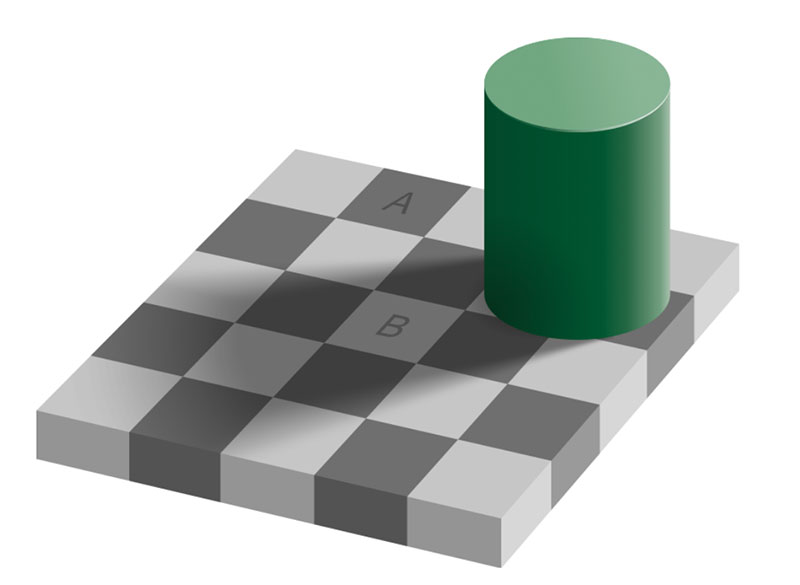
Optical illusions are a great way of showing how our expectations and assumptions affect what we perceive. For example, look at the squares labeled “A” and “B” in the image below.

Checkershadow illusion. Image: Edward H. Adelson

Is one of them lighter than the other? Although most people would agree that the square labeled “B” is much lighter than the one labeled “A,” the two squares are actually the exact same color. You perceive the squares differently because your brain knows, from experience, that shadows tend to make things appear darker than what they actually are. So, despite the squares being physically identical, your brain thinks “B” should be lighter.

Auditory illusions

Tricks of perception are not limited to optical illusions. There are also several dramatic examples of how our expectations influence what we hear. For example, listen to the mystery sound below. What do you hear?

Mystery sound

Because you’ve probably never heard a sound quite like this before, your brain has very little idea about what to expect. So, although you clearly hear something, it might be very difficult to make out exactly what that something is. This mystery sound is something called sine-wave speech, and what you’re hearing is essentially a very degraded sound of someone speaking.

Now listen to a “clean” version of this speech in the audio clip below:

Clean speech

You probably hear a person saying, “the floor was quite slippery.” Now listen to the mystery sound above again. After listening to the original audio, your brain has a strong expectation about what you should hear when you listen to the mystery sound again. Even though you’re hearing the exact same mystery sound as before, you experience it completely differently. (Audio clips courtesy of University of Sussex).


Dana Boebinger describes the science of illusions in this McGovern Minute.

Subjective perceptions

These illusions have been specifically designed by scientists to fool your brain and reveal principles of perception. However, there are plenty of real-life situations in which your perceptions strongly depend on expectations and assumptions. For example, imagine you’re watching TV when someone begins to speak to you from another room. Because the noise from the TV makes it difficult to hear the person speaking, your brain might have to fill in the gaps to understand what’s being said. In this case, different expectations about what is being said could cause you to hear completely different things.

Which phrase do you hear?

Listen to the clip below to hear a repeating loop of speech. As the sound plays, try to listen for one of the phrases listed in teal below.

Because the audio is somewhat ambiguous, the phrase you perceive depends on which phrase you listen for. So even though it’s the exact same audio each time, you can perceive something totally different! (Note: the original audio recording is from a football game in which the fans were chanting, “that is embarrassing!”)

Illusions like the ones above are great reminders of how subjective our perceptions can be. In order to make sense of the messy information coming in from our senses, our brains are constantly trying to fill in the blanks and with its best guess of what’s out there. Because of this guesswork, our perceptions depend on our experiences, leading each of us to perceive and interact with the world in a way that’s uniquely ours.

Jarrod Hicks is a PhD candidate in the Department of Brain and Cognitive Sciences at MIT working with Josh McDermott in the Laboratory for Computational Audition. He studies sound segregation, a key aspect of real-world hearing in which a sound source of interest is estimated amid a mixture of competing sources. He is broadly interested in teaching/outreach, psychophysics, computational approaches to represent stimulus spaces, and neural coding of high-level sensory representations.

_____

Do you have a question for The Brain? Ask it here.

Three from MIT awarded 2022 Paul and Daisy Soros Fellowships for New Americans

MIT graduate student Fernanda De La Torre, alumna Trang Luu ’18, SM ’20, and senior Syamantak Payra are recipients of the 2022 Paul and Daisy Soros Fellowships for New Americans.

De La Torre, Luu, and Payra are among 30 New Americans selected from a pool of over 1,800 applicants. The fellowship honors the contributions of immigrants and children of immigrants by providing $90,000 in funding for graduate school.

Students interested in applying to the P.D. Soros Fellowship for future years may contact Kim Benard, associate dean of distinguished fellowships in Career Advising and Professional Development.

Fernanda De La Torre

Fernanda De La Torre is a PhD student in the Department of Brain and Cognitive Sciences. With Professor Josh McDermott, she studies how we integrate vision and sound, and with Professor Robert Yang, she develops computational models of imagination.

De La Torre spent her early childhood with her younger sister and grandmother in Guadalajara, Mexico. At age 12, she crossed the Mexican border to reunite with her mother in Kansas City, Missouri. Shortly after, an abusive home environment forced De La Torre to leave her family and support herself throughout her early teens.

Despite her difficult circumstances, De La Torre excelled academically in high school. By winning various scholarships that would discretely take applications from undocumented students, she was able to continue her studies in computer science and mathematics at Kansas State University. There, she became intrigued by the mysteries of the human mind. During college, De La Torre received invaluable mentorship from her former high school principal, Thomas Herrera, who helped her become documented through the Violence Against Women Act. Her college professor, William Hsu, supported her interests in artificial intelligence and encouraged her to pursue a scientific career.

After her undergraduate studies, De La Torre won a post-baccalaureate fellowship from the Department of Brain and Cognitive Sciences at MIT, where she worked with Professor Tomaso Poggio on the theory of deep learning. She then transitioned into the department’s PhD program. Beyond contributing to scientific knowledge, De La Torre plans to use science to create spaces where all people, including those from backgrounds like her own, can innovate and thrive.

She says: “Immigrants face many obstacles, but overcoming them gives us a unique strength: We learn to become resilient, while relying on friends and mentors. These experiences foster both the desire and the ability to pay it forward to our community.”

Trang Luu

Trang Luu graduated from MIT with a BS in mechanical engineering in 2018, and a master of engineering degree in 2020. Her Soros award will support her graduate studies at Harvard University in the MBA/MS engineering sciences program.

Born in Saigon, Vietnam, Luu was 3 when her family immigrated to Houston, Texas. Watching her parents’ efforts to make a living in a land where they did not understand the culture or speak the language well, Luu wanted to alleviate hardship for her family. She took full responsibility for her education and found mentors to help her navigate the American education system. At home, she assisted her family in making and repairing household items, which fueled her excitement for engineering.

As an MIT undergraduate, Luu focused on assistive technology projects, applying her engineering background to solve problems impeding daily living. These projects included a new adaptive socket liner for below-the-knee amputees in Kenya, Ethiopia, and Thailand; a walking stick adapter for wheelchairs; a computer head pointer for patients with limited arm mobility, a safer makeshift cook stove design for street vendors in South Africa; and a quicker method to test new drip irrigation designs. As a graduate student in MIT D-Lab under the direction of Professor Daniel Frey, Luu was awarded a National Science Foundation Graduate Research Fellowship. In her graduate studies, Luu researched methods to improve evaporative cooling devices for off-grid farmers to reduce rapid fruit and vegetable deterioration.

These projects strengthened Luu’s commitment to innovating new technology and devices for people struggling with basic daily tasks. During her senior year, Luu collaborated on developing a working prototype of a wearable device that noninvasively reduces hand tremors associated with Parkinson’s disease or essential tremor. Observing patients’ joy after their tremors stopped compelled Luu and three co-founders to continue developing the device after college. Four years later, Encora Therapeutics has accomplished major milestones, including Breakthrough Device designation by the U.S. Food and Drug Administration.

Syamantak Payra

Hailing from Houston, Texas, Syamantak Payra is a senior majoring in electrical engineering and computer science, with minors in public policy and entrepreneurship and innovation. He will be pursuing a PhD in engineering at Stanford University, with the goal of creating new biomedical devices that can help improve daily life for patients worldwide and enhance health care outcomes for decades to come.

Payra’s parents had emigrated from India, and he grew up immersed in his grandparents’ rich Bengali culture. As a high school student, he conducted projects with NASA engineers at Johnson Space Center, experimented at home with his scientist parents, and competed in spelling bees and science fairs across the United States. Through these avenues and activities, Syamantak not only gained perspectives on bridging gaps between people, but also found passions for language, scientific discovery, and teaching others.

After watching his grandmother struggle with asthma and chronic obstructive pulmonary disease and losing his baby brother to brain cancer, Payra devoted himself to trying to use technology to solve health-care challenges. Payra’s proudest accomplishments include building a robotic leg brace for his paralyzed teacher and conducting free literacy workshops and STEM outreach programs that reached nearly a thousand underprivileged students across the Greater Houston Area.

At MIT, Payra has worked in Professor Yoel Fink’s research laboratory, creating digital sensor fibers that have been woven into intelligent garments that can assist in diagnosing illnesses, and in Professor Joseph Paradiso’s research laboratory, where he contributed to next-generation spacesuit prototypes that better protect astronauts on spacewalks. Payra’s research has been published by multiple scientific journals, and he was inducted into the National Gallery of America’s Young Inventors.