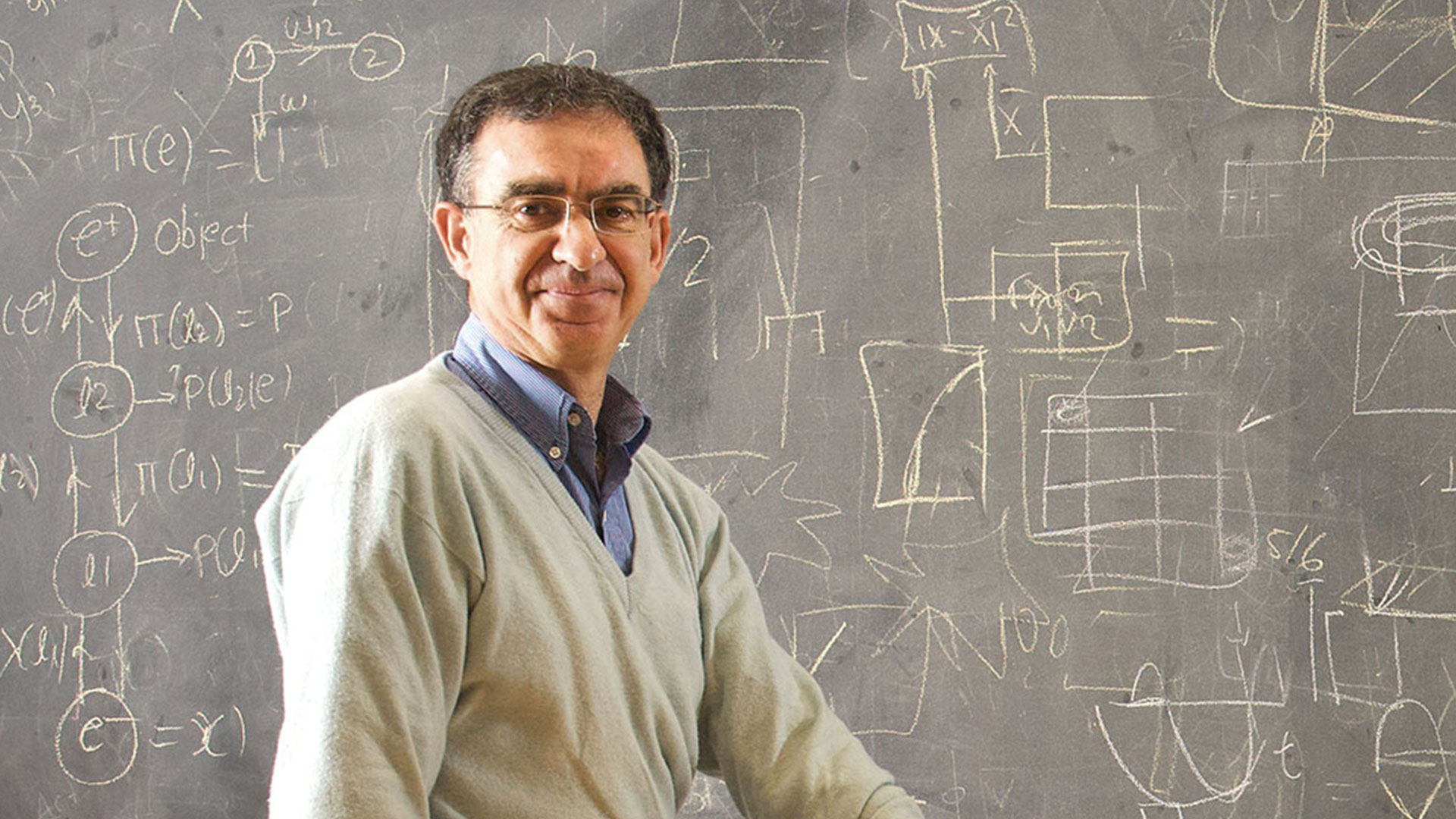
Current research in the Poggio Lab is relevant to both understanding higher brain function, but also for mathematical and computational applications of statistical learning. In the theory domain, Poggio has focused on the foundations of learning theory and on a formal characterization of necessary and sufficient conditions for predictivity of learning. Engineering applications in the lab include bioinformatics projects, computer vision for scene recognition, and trainable, man-machine interfaces. In the area of computational neuroscience, Poggio’s research focuses on a quantitative theory of the ventral stream, which underlies object recognition and categorization in the visual cortex. The theory and its computational implementation has become a tool for analyzing, interpreting and planning experiments in extensive collaborations with experimental neuroscientists. These collaborative approaches should lead to a more coherent understanding of the neural mechanisms underlying visual recognition and of normal and abnormal cortical function.
Tomaso A. Poggio, is the Eugene McDermott Professor Emeritus in MIT’s Department of Brain and Cognitive Sciences and former director of the NSF Center for Brains, Minds and Machines at MIT. He is a founding member of the McGovern Institute as well as a member of the Computer Science and Artificial Intelligence Laboratory. A former Corporate Fellow of Thinking Machines Corporation, a former director of PHZ Capital Partners, Inc. and of Mobileye, he was involved in starting, or investing in several other high tech companies including Arris Pharmaceutical, nFX, Imagen, Digital Persona, Deep Mind and Orcam. He is one of the most cited computational scientists and has mentored PhD students and postdocs that are some of the today’s leaders in the science and engineering of intelligence.
Foreign Member, Italian Academy of Sciences
Fellow, American Academy of Arts and Sciences
Fellow, American Association for the Advancement of Science
Founding Fellow, Association for the Advancement of Artificial Intelligence
Laurea Honoris Causa from the University of Pavia for the Volta Bicentennial
Kampe’ de F’eriet Award and Plenary Lecture, IMPU 2022
Ratio et Spes Award, Nicolaus Copernicus University and the Vatican Joseph Ratzinger-Benedetto XVI Foundation, 2020
ICCV Helmholtz Prize, 2021
IEEE Azriel Rosenfeld Lifetime Achievement Award, 2017
Swartz Prize for Theoretical and Computational Neuroscience, Society for Neuroscience, 2014
Okawa Prize, 2009
Gabor Award, International Neural Network Society, 2003