Can (and should) consciousness be uploaded to a machine?
McGovern researchers weigh the technical hurdles and philosophical puzzles of digital consciousness.
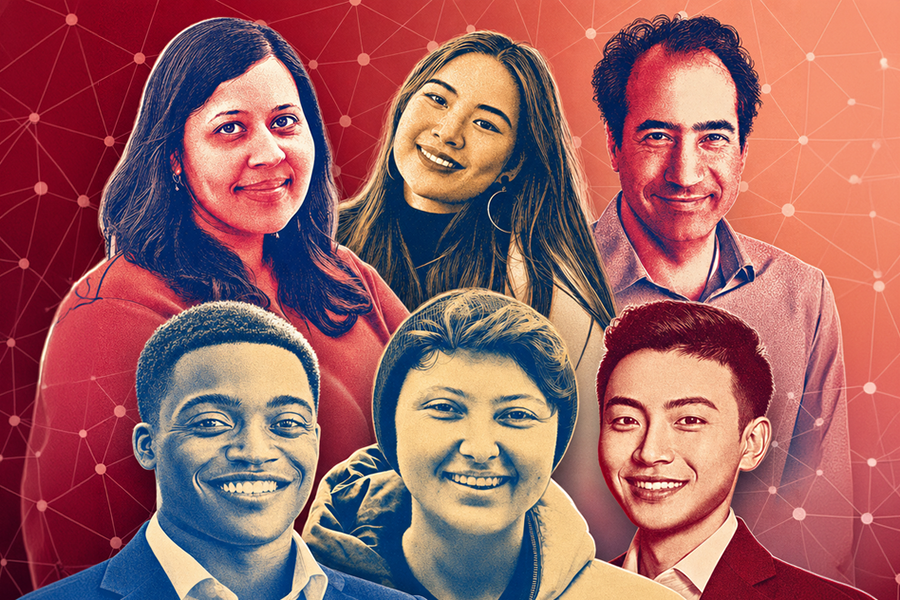
Consciousness transfer, the hypothetical process of moving a human mind to a digital medium, has been a cornerstone of science fiction movies and books for decades. But as AI advances, questions about whether human consciousness could be transferred to a machine have moved from science fiction to serious academic debate.
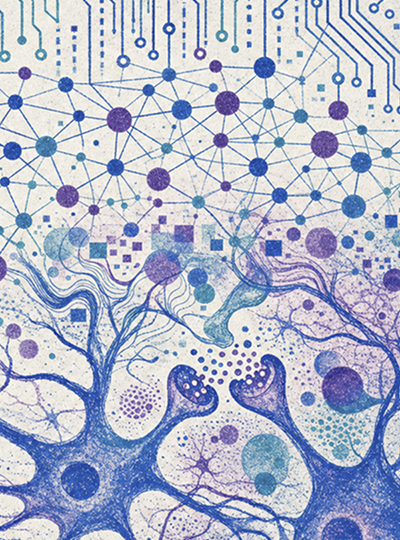 The human brain is widely considered the most complex structure in the known universe, with tens of billions of neurons and more than 100 trillion points of connection. The theoretical process of uploading the mind, or “whole brain emulation,” would require mapping all of these circuits and understanding their unique function – a feat that many neuroscientists say exceeds current technologies and computing power. Mapping even the poppy seed-sized brain of a fly required an unprecedented collaboration of hundreds of scientists, various AI tools, and a global community of human proofreaders six years to complete. Researchers estimate it will take another 10 to 15 years to do the same in the mouse.
These technical hurdles aside, consciousness transfer also raises profound philosophical questions about identity, mortality, and what it means to exist. Even if we could upload our minds to a machine, should we?
To explore these questions, we asked members of the McGovern community to weigh in on the debate.
Jeffrey Brown II
Jeffrey Brown II is an EECS PhD student in Edward Boyden’s lab at the McGovern Institute. He builds AI agents to help construct a complete and accurate wiring diagram of the brain.“
Working on this problem can be extremely stimulative for neuroscience because, if you approach it seriously, you will have to deal with the some of the field’s most challenging problems.” – Jeffrey Brown
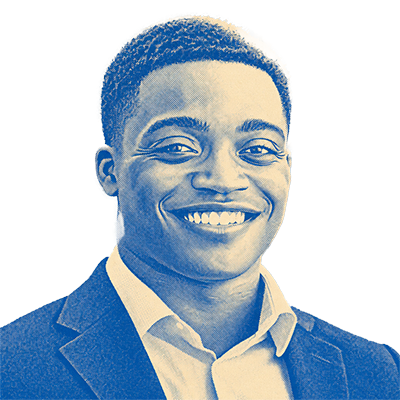
No one one really knows how the brain works, says Brown, and it’s unclear how much we need to know about the human brain in order to build an AI model of it.
“We don’t even have a list of all the circuits in the human brain,” says Brown, adding that he hopes to scale this up as part of his doctoral thesis in the Boyden lab. “We know many pieces of the brain, but we don’t really know how they all interact across massive scales of space and time,” he explains.
Some researchers believe functional data suffices; others insist on biophysical accuracy; still others use different approaches entirely. There’s no scientific consensus on what “good enough” actually means, Brown says.
Brown emphasizes that serious work in this space could be tremendously valuable for neuroscience, pushing researchers to grapple with some of the field’s most fundamental challenges. “On the other hand, if you don’t do the science carefully, I think people could hurt themselves, most likely by ceding their health (physical and mental) or agency to building a digital model that is not really “them.””
Davy Deng
Davy Deng is a Harvard-MIT HST PhD student in Ed Boyden’s lab at the McGovern Institute. His research goal is to build a digital brain using high-resolution multimodal data from the nervous systems of small animals.
“The most scientifically grounded and promising path toward whole brain emulation involves studying the nervous system of a small worm.” – Davy Deng

In his recent TEDxMIT talk, Deng highlights a striking geographic divide: “When I mention whole brain emulation in Silicon Valley, people lean forward… But if I mention this in Boston, I tend to get some suspicious looks.”
This hype and skepticism has clouded real progress, he says, and a rigorous scientific foundation is needed to make headway. He argues that C. elegans, a 1-millimeter transparent worm, offers a unique opportunity to do this. The complete wiring diagram of the worm is well established, yet scientists have been unsuccessful in emulating its brain activity in a computer.
“This tells us that a wiring diagram alone does not contain sufficient information to simulate a brain,” he says.
His solution is to incorporate two additional layers of information – the chemical signatures of each connection and whole-organism imaging during behavior – creating what he calls the “ground truth” necessary for brain emulation.
Ila Fiete
Ila Fiete is an associate investigator at the McGovern Institute, a professor of brain and cognitive sciences, and the director of the K. Lisa Yang ICoN Center at MIT.
“I do think consciousness transfer could be possible!” – Ila Fiete

Initial proofs of concept based on the connectome show some promise, Fiete says. (Nature, Sept 2024; Nature, Oct 2024; NeurIPS 2025) These studies combine supervised learning with existing circuit knowledge to infer the function of individual neurons.
“The challenge will be to show whether it is possible to do this for the whole brain, where we do not have knowledge of what most of the circuits exactly do, or how they do it.”
Rather than declaring consciousness transfer inherently good or bad, Fiete recognizes that there are profound philosophical concerns that deserve careful attention from ethicists.
“I think once people have an idea, it’s impossible to stop it from being pursued,” she says. “That’s a pathology of our species stemming from our curiosity and drive for improvement.”
“Fortunately, I do think and hope that we are capable of building guardrails around how these things are done.”
Alan Jasanoff
Alan Jasanoff is an associate investigator at the McGovern Institute, the Eugene McDermott Professor in the Brain Sciences and Human Behavior at MIT. He is also the author of the book, “The Biological Mind: How Brain, Body, and Environment Collaborate to Make Us Who We Are.”
“Given our current level of knowledge, it is hard to imagine how this could be done.
But never say never!” – Alan Jasanoff
Even if we mapped the billions of neurons and their interactions in the human brain, says Jasanoff, we still can’t easily explain the “phenomenal” aspect of consciousness: why we feel and experience things the way we do.
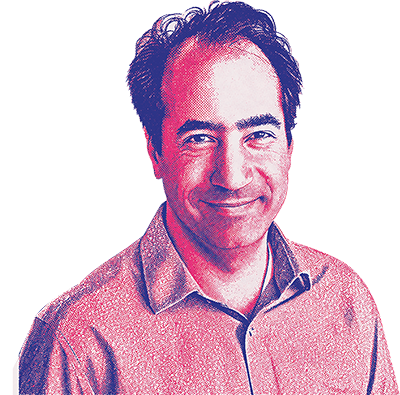
“This aspect of consciousness doesn’t seem reducible to more fundamental characteristics the way that biological phenomena like disease, digestion, or even life itself seem to be,” he says.
“And if phenomenal consciousness were somehow recreated, consider what kind of existence awaits,” Jasanoff reflects.
“What would give that life satisfaction or a sense of purpose? The virtual consciousness might achieve freedom from biological suffering and death, but how could it escape virtual equivalents of those in the machine environment?”
Qiyao (Catherine) Liang
Catherine Liang is an EECS PhD student in Ila Fiete’s lab at the McGovern Institute. She studies how intelligence emerges in brains and artificial systems.
“Consciousness uploading could be brilliant in principle, but terrible if developed or used without a clear understanding of its consequence.” – Catherine Liang

“It may one day be possible to create models that imitate a person’s memories, personality, and behavior closely enough to function as a digital descendant,” says Liang. “Even whole-brain emulation may become a reality if consciousness depends mainly on the brain’s functional organization.”
“But that is assuming that consciousness is an emergent property of the physical brain, and precisely what level of details we need to emulate is the open question,” she says.
Consciousness uploading could theoretically overcome aging, disease, and biological limitations, says Liang, but it poses catastrophic risks if the process merely copies consciousness while the original person dies.
Profound ethical concerns would emerge around access, consent, ownership, and the legal rights of digital minds, she cautions.
Caitlin Lienkaemper
Caitlin Lienkaemper is the Swartz Foundation Postdoctoral Fellow for Theory in Neuroscience in Ila Fiete’s lab where she uses mathematical tools to study how the brain encodes and processes information.
“If I only existed as thoughts on a computer, I don’t think I’d be alive in a meaningful sense; I am my body as much as I am my thoughts.” – Caitlin Lienkaemper