How is the McGovern Institute using AI?
AI is revolutionizing the way people work, and McGovern researchers are embracing the change.
This story also appears in our Fall 2026 BrainScan newsletter.
***
The tools of artificial intelligence (AI) are enabling McGovern researchers to ask new kinds of questions and solve more complex problems — and that’s leading to new insights into how the brain works and how mental illness might be more effectively managed.
“I can’t think of any facet [of brain research] where there isn’t an AI-based tool or technology that helps us,” says McGovern Institute Senior Research Scientist Satrajit Ghosh. Ghosh thinks today’s AI technology is particularly powerful in the early stages of research, when researchers are figuring out which questions are important and how to answer them. Historically, this has meant deep reading of the scientific literature — but existing knowledge can be overlooked when people don’t know where to look for it.
“The entire scientific workflow — from ideation to research to execution to dissemination — now has AI tools and technologies that can help.”
– Satra Ghosh
Large language models like Gemini or ChatGPT can pull information and ideas from sources across the internet, connecting users with resources they might not consider accessing on their own. “We get caught in our tracks and grooves that are hard to step outside of,” Ghosh says. “There are still biases in these tools, but I think overall they’re in a much more flexible space than humans typically are.”
McGovern Investigator Feng Zhang adds that by accelerating this vital phase of doing science, AI tools are broadening the scope of what an individual lab can explore. “We’ve never been short on good questions — what’s new is that we can chase them the moment they occur to us, and follow them as far as the data goes,” says Zhang, who is the James and Patricia Poitras Professor of Neuroscience at MIT.
Testing ideas faster
Once a plan is in place, researchers can often go from idea to execution much faster with the help of AI. McGovern Investigators Nancy Kanwisher and Josh McDermott say they have begun using AI models to pilot experiments, refining their approach before working with human study participants. They even use AI to generate images or sounds that their subjects will hear or see during their studies, designing stimuli to uncover specific aspects of the brain’s response.
The models they use are far more reliable representations of human perception than researchers were able to build just a few years ago. And with major advances in AI’s ability to generate computer code, models that took months or years to piece together can now be generated in days.
McDermott, who is the Uncas (1923) and Helen Whitaker Professor of Brain and Cognitive Sciences at MIT, uses an array of models to investigate different aspects of auditory processing in the brain. His team has models that recognize speech, models that localize sounds, and models that detect changes in pitch. “I fantasized about doing these things when I was a grad student, and it just wasn’t possible,” he says. “We were always trying to build working models of things, and it never worked. Now it’s really possible, and it’s just opening huge numbers of doors.”
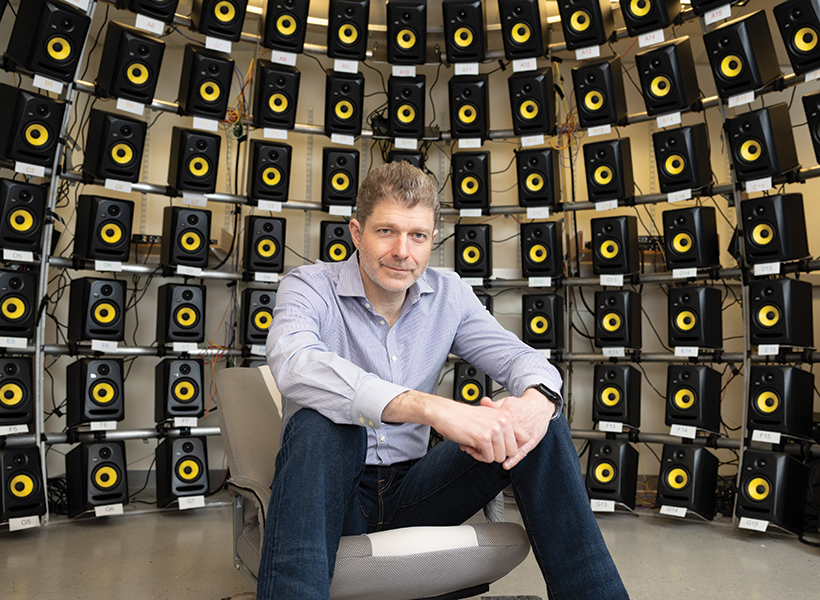
For McDermott, one priority is finding ways to develop better devices to help people hear. Computational models can facilitate that by enabling experimentation on a scale that is not possible with human subjects, allowing researchers to explore thousands of different conditions or rapidly test the consequences of modifying a hearing aid algorithm in different ways.
AI models also allow researchers to explore conditions they can’t test in the real world. McDermott’s lab, for example, has studied how hearing might work in a world where sounds behave differently, helping reveal which aspects of perception were shaped by the environment in which our ancestors evolved. And Kanwisher says models help overcome the limitations of experiments with humans, where the tools for monitoring and manipulating brain activity are imprecise and researchers have no control over their subjects’ life experiences.
That’s particularly valuable for studying cognitive functions that are uniquely human. “If you want to study things like language, or mathematical cognition, or theory of mind, it’s pretty hard to do in a mouse or even a monkey,” says McGovern Investigator and Associate Professor of Brain and Cognitive Sciences Evelina Fedorenko, who studies how the brain creates and understands language. AI models, on the other hand, can be trained to mimic these abilities. And what scientists like Fedorenko are learning is that models that behave similarly to humans often process information in ways that are similar to the human brain.
“If you’re in the business of studying sensory systems, like I am, it’s totally changed the way that we do science.” – Josh McDermott
Kanwisher, the Walter A. Rosenblith Professor of Cognitive Neuroscience at MIT, and her colleagues have used AI to explore how and why brains have networks specialized for the processing of certain kinds of objects. Her team and others have tasked AI models with processing visual information, training them with an assortment of images without further information or instruction. Remarkably, such models develop specific responses for certain categories of images: faces, places, bodies, and words — all of which Kanwisher’s team has shown are preferentially processed by specific regions in the human brain.
Kanwisher says that was surprising, because cognitive scientists have reasoned that human brains likely evolved these selective regions to optimize the way perceptual information is later used by the brain. But that doesn’t explain why AI responds to these categories with the same selectivity.
“The AI models don’t use face images to engage social cognition or place images to engage navigation,” she says. “They don’t do a thing with them, and yet they pull out the same categories as important.” That doesn’t rule out previous ideas about human brains — but, Kanwisher says, “It’s proof that you can have these shockingly similar things for very different reasons.” Her group is now exploring how the models’ training experience shapes the development of selective regions — something that cannot be done in humans.
Building better tools
AI is also helping McGovern scientists build physical tools, both to allow researchers to study the brain in new ways and to get better treatments to patients.
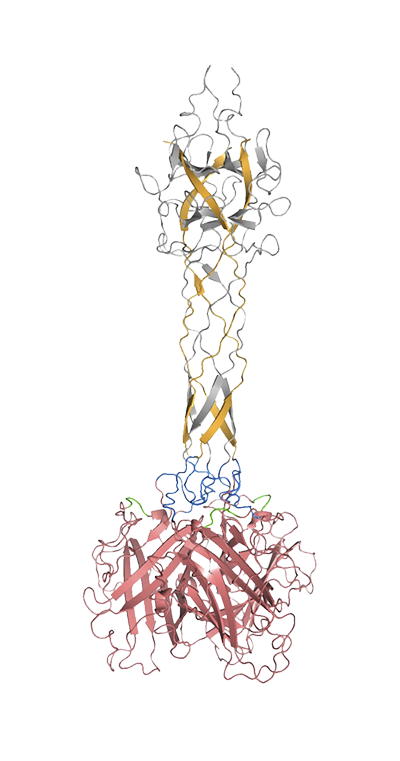
In Feng Zhang and Ed Boyden’s labs, researchers are using an AI tool called AlphaFold to design proteins with specific properties. Zhang’s lab is searching for proteins that can deliver therapies to specific brain cells, while Boyden’s team is developing tools for monitoring signaling in the brain.
AlphaFold predicts the structure of biomolecules, such as how a sequence of amino acids will fold into a three-dimensional protein. This eliminates much of the trial-and-error stage of protein engineering, speeding scientists’ ability to find molecules that interact with biological systems in the ways that they want.
Boyden, who is the Y. Eva Tan Professor in Neurotechnology at MIT, envisions another powerful AI tool: one that predicts how a brain works from its structure. The idea, he says, is to use machine learning to associate detailed brain maps with physiology and circuit function.
Building such a model would require vast amounts of data, but Boyden says the tools and tissue samples needed for large-scale structural analyses are available.
He envisions a kind of “compiler” built from molecular maps of brain cells and tissues — one that could help neuroscientists understand circuit function and eventually predict the effects of medications and other therapies.
Decoding data
Once an experiment is complete, data analysis begins — and AI is enabling scientists to find insights in datasets that, until recently, were too large and complex to make sense of.
AI tools have been invaluable, for instance, in creating detailed wiring diagrams, or connectomes, which many neuroscientists see as critical guides for brain research. That work, which involves tracing neurons across millions of microscope images, relies heavily on computer vision.
Without AI, piecing together the circuitry of an entire brain would take lifetimes. Remarkably, scientists now have access to a fully mapped connectome for the brain of a fruit fly, whose neurons make more than 50 million connections with one another.
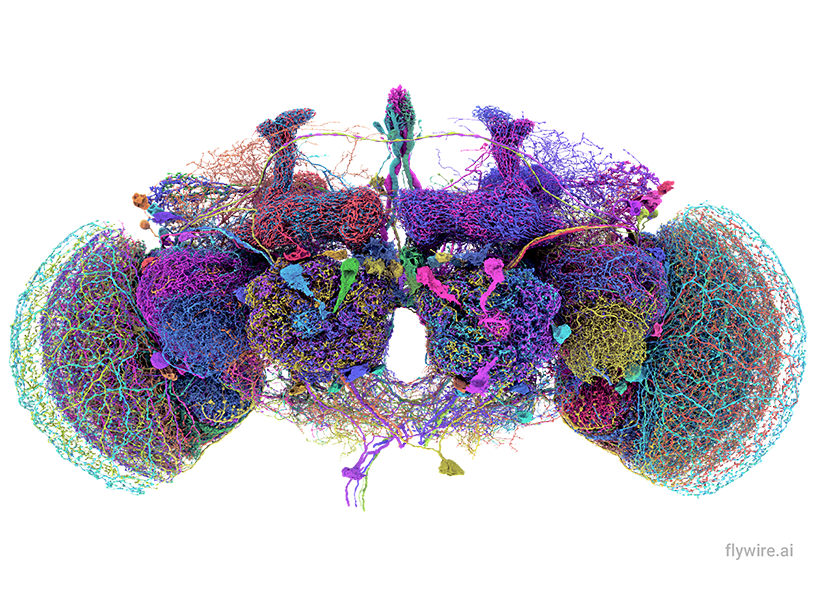
McGovern Investigator Tomaso Poggio and his team are using AI to interact with that connectome by running simulations of circuit function, testing for a motion-detecting circuit that Poggio first proposed in theoretical work he did in the 1980s. Until recently, Poggio, who is the Eugene McDermott Professor Emeritus of Brain and Cognitive Sciences at MIT, had no way to find it.
Personalizing mental health
Other McGovern researchers are deploying AI to find ways to improve the diagnosis and treatment of brain disorders. They are finding that AI can pick up on signals that can be difficult for clinicians to detect — sometimes years before diagnosis.
Working with Satra Ghosh, John Gabrieli’s team found that a machine learning model could predict from clinical data which children and teenagers would later be diagnosed with bipolar disorder. With other collaborators, Ghosh has found that AI can recognize autism-related behaviors in parents’ videos of their toddlers, and he trained an AI model to detect changes in voice and speech patterns associated with conditions like Alzheimer’s and Parkinson’s disease. With further development, tools like these could facilitate earlier diagnosis and intervention for people who need it.
Researchers in Gabrieli’s lab think AI can also enable a more personalized approach to treating mental illness. It’s difficult to predict who will respond to a particular medication or therapy, leaving doctors and patients with a trial-and-error approach to treatment. Gabrieli’s team is betting that machine learning algorithms can find patterns hidden within complex clinical datasets that can enable more informed treatment decisions.

In a recent success, Gun Ahn, a graduate student on Gabrieli’s team, followed up on a study in which the group found that a daily mindfulness practice meaningfully reduced anxiety for about 50 percent of autistic adults. No single factor separated those who benefitted from those who did not, so the team used machine learning to analyze demographic data and patient questionnaires. Their model was able to predict, with 80 percent accuracy, who responded to the practice.
This finding could help patients decide whether mindfulness is worth trying, particularly if it can one day be paired with predictions about alternative treatments. Gabrieli’s lab is taking a similar approach to predict patients’ response to medications for attention-deficit/hyperactivity disorder, hoping to help people bypass ineffective options and quickly find what works for them.
Tailoring interventions to a patient’s personal biology and experience has long been a goal in psychiatry — but the knowledge clinicians need to achieve this has been elusive. “For about 10 to 15 years, people have been talking about the incredible value that precision psychiatry would have,” says Gabrieli, who is the Grover Hermann Professor of Health Sciences and Technology at MIT. “This is, to me, the most promising scientific approach that could be widely usable.”
AI could even help clinicians move beyond formal diagnoses to understanding and treating people more holistically. Ahn imagines a model trained broadly, with data from a wide swath of patients.
Moving the field forward
Science isn’t done once the data has been analyzed: sharing knowledge is essential, too. Poggio, for example, integrated AI into the writing of a new book, “Brains Minds Machines: The Mystery of Human Intelligence, The Enigmas of the Artificial,” even crediting Gemini and ChatGPT as coauthors. He says the tools helped him organize his thinking and offload tedious tasks.
Looking ahead, most McGovern scientists say AI technologies are advancing so rapidly, their future impacts on neuroscience are difficult to predict. Could AI one day replace human researchers altogether? Some think it’s possible — at least in some areas.
“The scary prospect is that AI is going to put humans out of business. We’re definitely not close to that now, but nobody can predict the future,” says McDermott. “Physically doing experiments may be something that continues to be the domain of humans. But deciding what experiments to run and what they mean, and analyzing all the data? It’s unclear whether humans are still going to be the most efficient way to do that.”
Others are more skeptical. “It’s hard for AI to generate truly creative new ideas,” Boyden says. “I haven’t seen that happen yet.”
For now at least, today’s tools need oversight and guidance. To get the most out of them, users need experience and expertise. “They still have hallucinations from time to time,” Poggio warns. “One has to be careful.”
Nonetheless, today’s tools are tremendously empowering. They’re not just getting more powerful; they’re also getting more accessible. “These models are becoming exciting because they’re becoming usable by everyone, not just specialists,” Zhang says. “And when more people can do more, the whole field moves faster.”