

October 14, 2026
In The Transmitter’s “This paper changed my life” series, neuroscientists respond to a set of questions to reflect on a paper that profoundly influenced their career and how they think about their research.
In this issue, Picower Professor of Neuroscience Earl Miller identifies “Selective attention gates visual processing in the extrastriate cortex,” a 1985 Science paper by Jeffrey Moran and Robert Desimone as the paper that “literally changed my scientific (and life) trajectory.”
Miller describes how the paper showed that monkeys could focus their attention on different stimuli in their visual field without shifting their gaze, marking a key milestone in the emergence of cognitive neuroscience.


August 27, 2026
Health Day reports on findings from Evelina Fedorenko‘s lab which found that age doesn’t seem to degrade a person’s language skills as it does other brain functions.
“Vocabulary keeps increasing as long as people have been measuring, which makes sense. People get exposed to more and more language, and older people sometimes start reading more, so they get an extra boost — it’s like a large language model trained on increasingly more data,” Fedorenko said.
August 20, 2026
The Atlantic explores a new lexicon emerging in Silicon Valley, where people describe themselves as if they were large language models.
The article describes how Evelina Fedorenko and others have identified a type of “language network” inside the human brain, which Fedorenko believes is “very similar in many ways to early LLMs.”
August 15, 2026
The Dallas Express covers new research from Evelina Fedorenko‘s lab which found that the brain’s language system extends well beyond the traditional regions associated with speech and comprehension.
“Even though there are all these distant components, it’s pretty restricted in terms of volume,” said Fedorenko. “You don’t need that much of the brain to do language.”

June 16, 2026
TIME magazine asked scientists, scholars, researchers, and doctors to describe the discoveries and developments that define American science and health today.
“The ability to read and write the genome, measure biological processes with unprecedented resolution, and use AI to make sense of enormously complex biological data is allowing us, for the first time, to tackle health challenges from first principles, rather than through the trial and error and serendipity that defined the process until recently,” says Feng Zhang.

June 16, 2026
This Scientific American interview with Feng Zhang is part of “The Young American Scientists,” a series which includes stories of 28 extraordinary scientists poised to change the world, as well as a deep look at the past, present and future of science and innovation in the U.S.
June 9, 2026
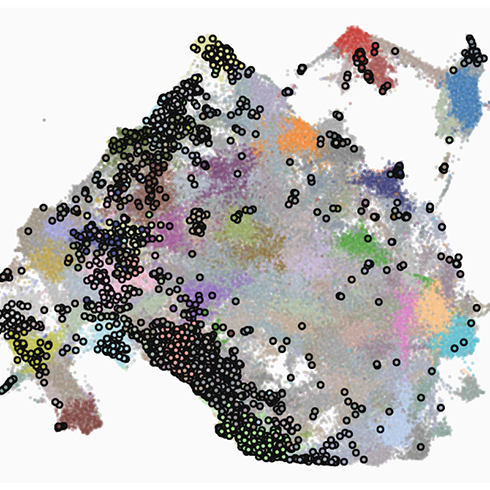
Satra Ghosh just launched the OHBM Abstract Atlas—a machine learning tool to help neuroscientists navigate thousands of abstracts at the Organization of Human Brain Mapping annual conference.
Read how this tool is transforming the conference experience in The Transmitter.
February 13, 2026
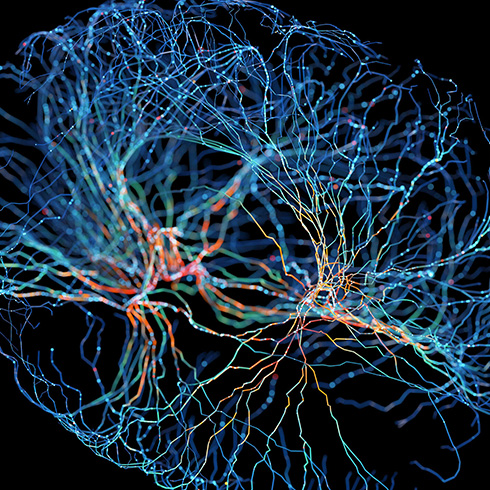
In the fifth episode of WBUR’s “BrainWaves” series, host Meghna Chakrabarti discusses brain health with Prof. Polina Anikeeva, director of the K. Lisa Yang Brain-Body Center at MIT.
By tapping into the powerful gut-brain connection, Anikeeva says, we may unlock new treatment methods for complex brain disorders.

February 9, 2026
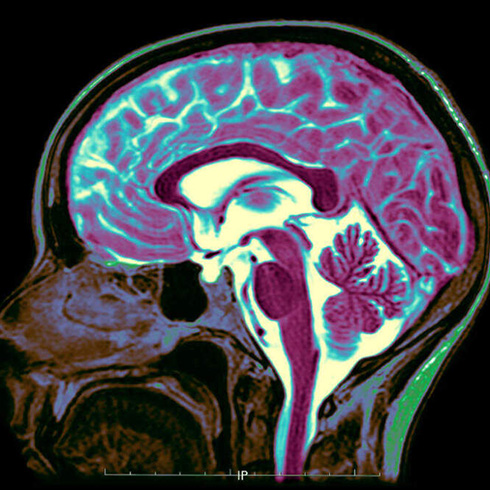
In the first episode of WBUR’s “BrainWaves” series, host Meghna Chakrabarti discusses the mysteries of the brain with Prof. Nancy Kanwisher.
“The fact that different parts of the brain do different things is actually a real lever that we have as scientists to help us understand it,” says Kanwisher.
December 5, 2025
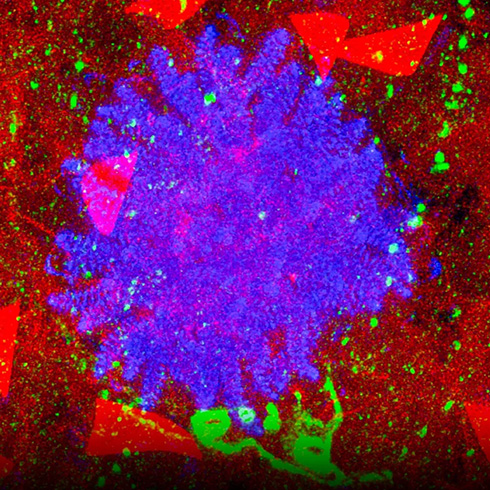
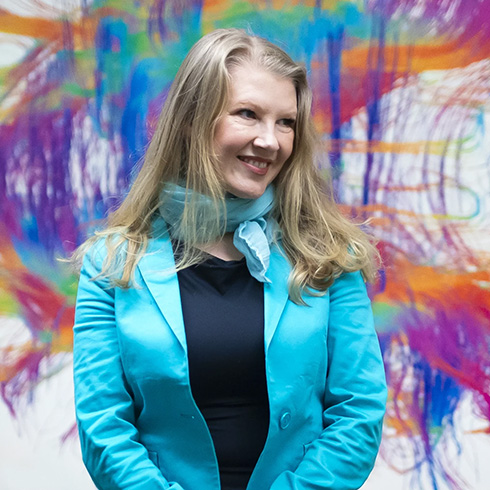
In an interview with reporter John Pavlus, Prof. Evelina Fedorenko describes the language network in the brain.
“It’s like a map, and it tells you where in the brain you can find different kinds of meaning. It’s basically a glorified parser that helps us put the pieces together — and then all the thinking and interesting stuff happens outside of [its] boundaries.”
October 30, 2025
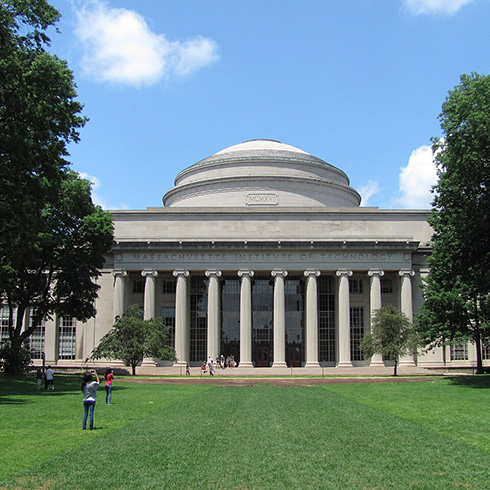
Michael T. Nietzel reports that several universities, including MIT, have launched major initiatives in brain science and neurological research.
MIT will use a private gift from alumni Ana Méndez and Rajeev Jayavant to establish the Rare Brain Disorders Nexus — or RareNet — at MIT’s McGovern Institute for Brain Research.

August 5, 2025
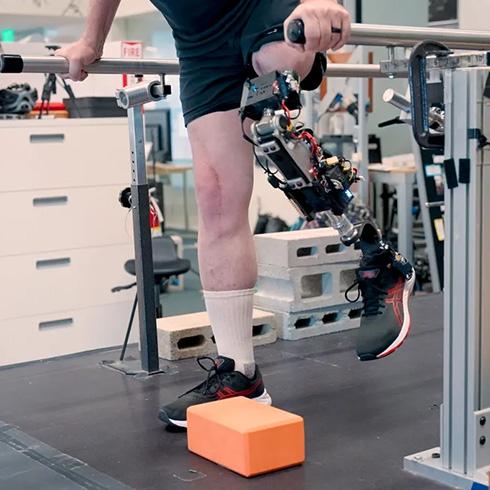
Researchers at MIT have developed a “tissue-integrated, above-the-knee prosthesis that gives people more control over their movements,” reports Amber X. Chen for Smithsonian Magazine.
“I want to be in the business of building bodies, not powerful devices,” says Prof. Hugh Herr. “I want to fully integrate humanity into electromechanics, not just build a better hammer.”
August 3, 2025
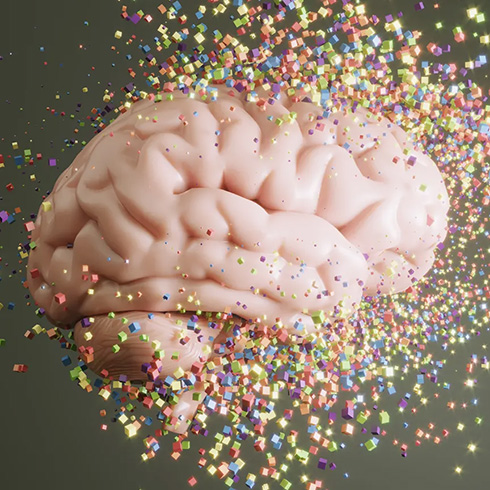
A new study by MIT researchers in Prof. Nancy Kanwisher‘s lab has identified the parts of the brain’s visual cortex that respond more when we look at things (rigid objects like a stone skipping or a bouncing ball) vs stuff (liquids or something more granular like sand).
Understanding this distinction may help our brains better plan how to interact with various materials,” explains the researchers.
July 10, 2025
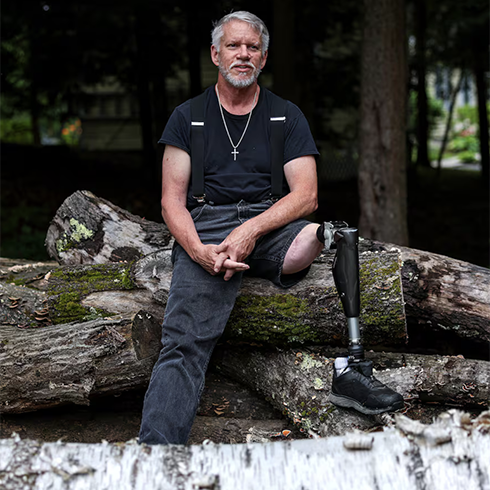
Researchers at MIT have developed a bionic knee that can “integrate with a patient’s bones and nervous system, allowing users to control the prosthesis with their mind,” reports Angela Mathew for The Boston Globe.
“In conventional prosthesis, there’s an energy exchange, but there’s not much of an information exchange with the brain,” explains Prof. Hugh Herr. “Because the prosthesis is so intimately connected to the skeleton, if you just tap the toe in a really modest way, the person can feel it exquisitely.”

May 20, 2205
Longtime supporter and board member K. Lisa Yang has been recognized by TIME Magazine as one of the “100 most influential people shaping the future of giving.”
“The things that we’re most passionate about are the things that touch our own lives,” says Yang, who has two children on the autism spectrum.
April 9, 2025
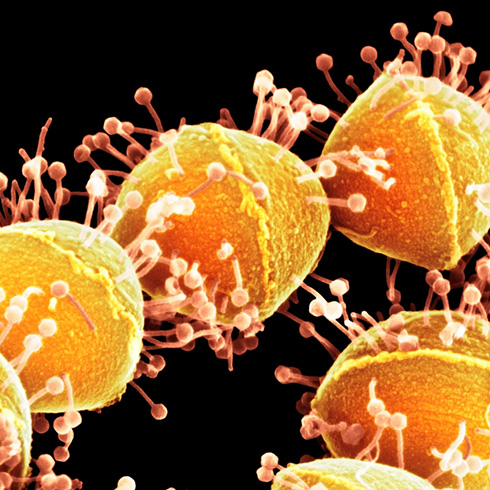
Gene editing and many other useful biotechnology tools came from studies of bacteria fighting off viral invaders. But scientists have only begun to unlock the secrets of this ancient arms race, reports Amber Dance.
She describes how Prof. Feng Zhang has discovered another efficient CRISPR-like system, called TIGR-Tas.