New gift expands mental illness studies at Poitras Center for Psychiatric Disorders Research

One in every eight people—970 million globally—live with mental illness, according to the World Health Organization, with depression and anxiety being the most common mental health conditions worldwide. Existing therapies for complex psychiatric disorders like depression, anxiety, and schizophrenia have limitations, and federal funding to address these shortcomings is growing increasingly uncertain.

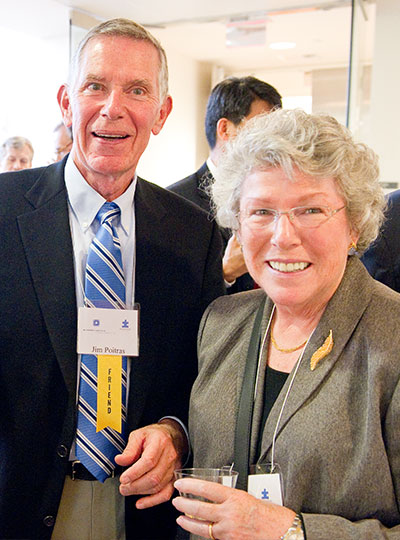
Jim and Pat Poitras
James and Patricia Poitras at an event co-hosted by the McGovern Institute and Autism Speaks. Photo: Justin Knight

Patricia and James Poitras ’63 have committed $8 million to the Poitras Center for Psychiatric Disorders Research to launch pioneering research initiatives aimed at uncovering the brain basis of major mental illness and accelerating the development of novel treatments.

“Federal funding rarely supports the kind of bold, early-stage research that has the potential to transform our understanding of psychiatric illness. Pat and I want to help fill that gap—giving researchers the freedom to follow their most promising leads, even when the path forward isn’t guaranteed,” says James Poitras, who is chair of the McGovern Institute Board.

Their latest gift builds upon their legacy of philanthropic support for psychiatric disorders research at MIT, which now exceeds $46 million.

“With deep gratitude for Jim and Pat’s visionary support, we are eager to launch a bold set of studies aimed at unraveling the neural and cognitive underpinnings of major mental illnesses,” says Robert Desimone, director of the McGovern Institute, home to the Poitras Center. “Together, these projects represent a powerful step toward transforming how we understand and treat mental illness.”

A legacy of support

Soon after joining the McGovern Institute Leadership Board in 2006, the Poitrases made a $20 million commitment to establish the Poitras Center for Psychiatric Disorders Research at MIT. The center’s goal, to improve human health by addressing the root causes of complex psychiatric disorders, is deeply personal to them both.

“We had decided many years ago that our philanthropic efforts would be directed towards psychiatric research. We could not have imagined then that this perfect synergy between research at MIT’s McGovern Institute and our own philanthropic goals would develop,” recalls Patricia.

The center supports research at the McGovern Institute and collaborative projects with institutions such as the Broad Institute, McLean Hospital, Mass General Brigham and other clinical research centers. Since its establishment in 2007, the center has enabled advances in psychiatric research including the development of a machine learning “risk calculator” for bipolar disorder, the use of brain imaging to predict treatment outcomes for anxiety, and studies demonstrating that mindfulness can improve mental health in adolescents.

A scientist speaks at a podium with an image of DNA on the wall behind him.
Feng Zhang, the James and Patricia Poitras Professor of Neuroscience at MIT, delivers a lecture at the Poitras Center’s 10th anniversary celebration in 2017. Photo: Justin Knight

For the past decade, the Poitrases have also fueled breakthroughs in McGovern Investigator Feng Zhang’s lab, backing the invention of powerful CRISPR systems and other molecular tools that are transforming biology and medicine. Their support has enabled the Zhang team to engineer new delivery vehicles for gene therapy, including vehicles capable of carrying genetic payloads that were once out of reach. The lab has also advanced innovative RNA-guided gene engineering tools such as NovaIscB, published in Nature Biotechnology in May 2025. These revolutionary genome editing and delivery technologies hold promise for the next generation of therapies needed for serious psychiatric illness.

In addition to fueling research in the center, the Poitras family has gifted two endowed professorships—the James and Patricia Poitras Professor of Neuroscience at MIT, currently held by Feng Zhang, and the James W. (1963) and Patricia T. Poitras Professor of Brain and Cognitive Sciences at MIT, held by Guoping Feng—and an annual postdoctoral fellowship at the McGovern Institute.

New initiatives at the Poitras Center

The Poitras family’s latest commitment to the Poitras Center will launch an ambitious set of new projects that bring together neuroscientists, clinicians, and computational experts to probe underpinnings of complex psychiatric disorders including schizophrenia, anxiety, and depression. These efforts reflect the center’s core mission: to speed scientific discovery and therapeutic innovation in the field of psychiatric brain disorders research.

McGovern cognitive neuroscientists Evelina Fedorenko PhD ‘07 and Nancy Kanwisher ’80, PhD ’86, the Walter A. Rosenblith Professor of Cognitive Neuroscience—in collaboration with psychiatrist Ann Shinn of McLean Hospital—will explore how altered inner speech and reasoning contribute to the symptoms of schizophrenia. They will collect functional MRI data from individuals diagnosed with schizophrenia and matched controls as they perform reasoning tasks. The goal is to identify the brain activity patterns that underlie impaired reasoning in schizophrenia, a core cognitive disruption in the disorder.

Three women wearing name tags smile for hte camera.
Patricia Poitras (center) with McGovern Investigators Nancy Kanwisher ’80, PhD ’86 (left) and Martha Constantine-Paton (right) at the Poitras Center’s 10th anniversary celebration in 2017. Photo: Justin Knight

A complementary line of investigation will focus on the role of inner speech—the “voice in our head” that shapes thought and self-awareness. The team will conduct a large-scale online behavioral study of neurotypical individuals to analyze how inner speech characteristics correlate with schizophrenia-spectrum traits. This will be followed by neuroimaging work comparing brain architecture among individuals with strong or weak inner voices and people with schizophrenia, with the aim of discovering neural markers linked to self-talk and disrupted cognition.

A different project led by McGovern neuroscientist Mark Harnett and 2024–2026 Poitras Center Postdoctoral Fellow Cynthia Rais focuses on how ketamine—an increasingly used antidepressant—alters brain circuits to produce rapid and sustained improvements in mood. Despite its clinical success, ketamine’s mechanisms of action remain poorly understood. The Harnett lab is using sophisticated tools to track how ketamine affects synaptic communication and large-scale brain network dynamics, particularly in models of treatment-resistant depression. By mapping these changes at both the cellular and systems levels, the team hopes to reveal how ketamine lifts mood so quickly—and inform the development of safer, longer-lasting antidepressants.

Guoping Feng is leveraging a new animal model of depression to uncover the brain circuits that drive major depressive disorder. The new animal model provides a powerful system for studying the intricacies of mood regulation. Feng’s team is using state-of-the-art molecular tools to identify the specific genes and cell types involved in this circuit, with the goal of developing targeted treatments that can fine-tune these emotional pathways.

“This is one of the most promising models we have for understanding depression at a mechanistic level,” says Feng, who is also associate director of the McGovern Institute. “It gives us a clear target for future therapies.”

Another novel approach to treating mood disorders comes from the lab of James DiCarlo, the Peter de Florez Professor of Neuroscience at MIT, who is exploring the brain’s visual-emotional interface as a therapeutic tool for anxiety. The amygdala, a key emotional center in the brain, is heavily influenced by visual input. DiCarlo’s lab is using advanced computational models to design visual scenes that may subtly shift emotional processing in the brain—essentially using sight to regulate mood. Unlike traditional therapies, this strategy could offer a noninvasive, drug-free option for individuals suffering from anxiety.

Together, these projects exemplify the kind of interdisciplinary, high-impact research that the Poitras Center was established to support.

“Mental illness affects not just individuals, but entire families who often struggle in silence and uncertainty,” adds Patricia. “Our hope is that Poitras Center scientists will continue to make important advancements and spark novel treatments for complex mental health disorders and most of all, give families living with these conditions a renewed sense of hope for the future.”

Learning from punishment

From toddlers’ timeouts to criminals’ prison sentences, punishment reinforces social norms, making it known that an offender has done something unacceptable. At least, that is usually the intent—but the strategy can backfire. When a punishment is perceived as too harsh, observers can be left with the impression that an authority figure is motivated by something other than justice.

It can be hard to predict what people will take away from a particular punishment, because everyone makes their own inferences not just about the acceptability of the act that led to the punishment, but also the legitimacy of the authority who imposed it. A new computational model developed by scientists at MIT’s McGovern Institute makes sense of these complicated cognitive processes, recreating the ways people learn from punishment and revealing how their reasoning is shaped by their prior beliefs.

Their work, reported August 4 in the journal PNAS, explains how a single punishment can send different messages to different people and even strengthen the opposing viewpoints of groups who hold different opinions about authorities or social norms.

Modeling punishment

“The key intuition in this model is the fact that you have to be evaluating simultaneously both the norm to be learned and the authority who’s punishing,” says McGovern Investigator and John W. Jarve Professor of Brain and Cognitive Sciences Rebecca Saxe, who led the research. “One really important consequence of that is even where nobody disagrees about the facts—everybody knows what action happened, who punished it, and what they did to punish it—different observers of the same situation could come to different conclusions.”

For example, she says, a child who is sent to timeout after biting a sibling might interpret the event differently than the parent. One might see the punishment as proportional and important, teaching the child not to bite. But if the biting, to the toddler, seemed a reasonable tactic in the midst of a squabble, the punishment might be seen as unfair, and the lesson will be lost.

People draw on their own knowledge and opinions when they evaluate these situations—but to study how the brain interprets punishment, Saxe and graduate student Setayesh Radkani wanted to take those personal ideas out of the equation. They needed a clear understanding of the beliefs that people held when they observed a punishment, so they could learn how different kinds of information altered their perceptions. So Radkani set up scenarios in imaginary villages where authorities punished individuals for actions that had no obvious analog in the real world.

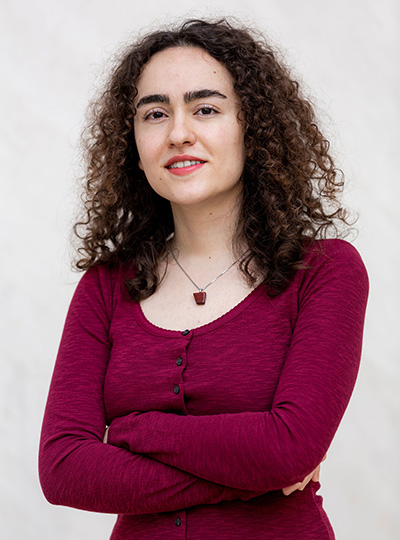
Woman in red sweater smiling to camera
Graduate student Setayesh Radkani uses tools from psychology, cognitive neuroscience and machine learning to understand the social and moral mind. Photo: Caitlin Cunningham

Participants observed these scenarios in a series of experiments, with different information offered in each one. In some cases, for example, participants were told that the person being punished was either an ally or competitor of the authority, whereas in other cases, the authority’s possible bias was left ambiguous.

“That gives us a really controlled setup to vary prior beliefs,” Radkani explains. “We could ask what people learn from observing punitive decisions with different severities, in response to acts that vary in their level of wrongness, by authorities that vary in their level of different motives.”

For each scenario, participants were asked to evaluate four factors: how much the authority figure cared about justice; the selfishness of the authority; the authority’s bias for or against the individual being punished; and the wrongness of the punished act. The research team asked these questions when participants were first introduced to the hypothetical society, then tracked how their responses changed after they observed the punishment. Across the scenarios, participants’ initial beliefs about the authority and the wrongness of the act shaped the extent to which those beliefs shifted after they observed the punishment.

Radkani was able to replicate these nuanced interpretations using a cognitive model framed around an idea that Saxe’s team has long used to think about how people interpret the actions of others. That is, to make inferences about others’ intentions and beliefs, we assume that people choose actions that they expect will help them achieve their goals.

To apply that concept to the punishment scenarios, Radkani developed a model that evaluates the meaning of a punishment (an action aimed at achieving a goal of the authority) by considering the harm associated with that punishment; its costs or benefits to the authority; and its proportionality to the violation. By assessing these factors, along with prior beliefs about the authority and the punished act, the model was able to predict people’s responses to the hypothetical punishment scenarios, supporting the idea that people use a similar mental model. “You need to have them consider those things, or you can’t make sense of how people understand punishment when they observe it,” Saxe says.

Even though the team designed their experiments to preclude preconceived ideas about the people and actions in their imaginary villages, not everyone drew the same conclusions from the punishments they observed. Saxe’s group found that participants’ general attitudes toward authority influenced their interpretation of events. Those with more authoritarian attitudes—assessed through a standard survey—tended to judge punished acts as more wrong and authorities as more motivated by justice than other observers.

“If we differ from other people, there’s a knee-jerk tendency to say, ‘either they have different evidence from us, or they’re crazy,’” Saxe says. Instead, she says, “It’s part of the way humans think about each other’s actions.”

“When a group of people who start out with different prior beliefs get shared evidence, they will not end up necessarily with shared beliefs. That’s true even if everybody is behaving rationally,” says Saxe.

This way of thinking also means that the same action can simultaneously strengthen opposing viewpoints. The Saxe lab’s modeling and experiments showed that when those viewpoints shape individuals’ interpretations of future punishments, the groups’ opinions will continue to diverge. For instance, a punishment that seems too harsh to a group who suspects an authority is biased can make that group even more skeptical of the authority’s future actions. Meanwhile, people who see the same punishment as fair and the authority as just will be more likely to conclude that the authority figure’s future actions are also just. “You will get a vicious cycle of polarization, staying and actually spreading to new things,” says Radkani.

The researchers say their findings point toward strategies for communicating social norms through punishment. “It is exactly sensible in our model to do everything you can to make your action look like it’s coming out of a place of care for the long-term outcome of this individual, and that it’s proportional to the norm violation they did,” Saxe says. “That is your best shot at getting a punishment interpreted pedagogically, rather than as evidence that you’re a bully.”

Nevertheless, she says that won’t always be enough. “If the beliefs are strong the other way, it’s very hard to punish and still sustain a belief that you were motivated by justice.”

This study was funded, in part, by the Patrick J McGovern Foundation.

How the brain distinguishes oozing fluids from solid objects

Imagine a ball bouncing down a flight of stairs. Now think about a cascade of water flowing down those same stairs. The ball and the water behave very differently, and it turns out that your brain has different regions for processing visual information about each type of physical matter.

In a new study, MIT neuroscientists have identified parts of the brain’s visual cortex that respond preferentially when you look at “things” — that is, rigid or deformable objects like a bouncing ball. Other brain regions are more activated when looking at “stuff” — liquids or granular substances such as sand.

This distinction, which has never been seen in the brain before, may help the brain plan how to interact with different kinds of physical materials, the researchers say.

“When you’re looking at some fluid or gooey stuff, you engage with it in different way than you do with a rigid object. With a rigid object, you might pick it up or grasp it, whereas with fluid or gooey stuff, you probably are going to have to use a tool to deal with it,” says Nancy Kanwisher, the Walter A. Rosenblith Professor of Cognitive Neuroscience; a member of the McGovern Institute for Brain Research and MIT’s Center for Brains, Minds, and Machines; and the senior author of the study.

MIT postdoc Vivian Paulun, who is joining the faculty of the University of Wisconsin at Madison this fall, is the lead author of the paper, which appears today in the journal Current Biology. RT Pramod, an MIT postdoc, and Josh Tenenbaum, an MIT professor of brain and cognitive sciences, are also authors of the study.

Stuff vs. things

Decades of brain imaging studies, including early work by Kanwisher, have revealed regions in the brain’s ventral visual pathway that are involved in recognizing the shapes of 3D objects, including an area called the lateral occipital complex (LOC). A region in the brain’s dorsal visual pathway, known as the frontoparietal physics network (FPN), analyzes the physical properties of materials, such as mass or stability.

Although scientists have learned a great deal about how these pathways respond to different features of objects, the vast majority of these studies have been done with solid objects, or “things.”

“Nobody has asked how we perceive what we call ‘stuff’ — that is, liquids or sand, honey, water, all sorts of gooey things. And so we decided to study that,” Paulun says.

These gooey materials behave very differently from solids. They flow rather than bounce, and interacting with them usually requires containers and tools such as spoons. The researchers wondered if these physical features might require the brain to devote specialized regions to interpreting them.

To explore how the brain processes these materials, Paulun used a software program designed for visual effects artists to create more than 100 video clips showing different types of things or stuff interacting with the physical environment. In these videos, the materials could be seen sloshing or tumbling inside a transparent box, being dropped onto another object, or bouncing or flowing down a set of stairs.

The researchers used functional magnetic resonance imaging (fMRI) to scan the visual cortex of people as they watched the videos. They found that both the LOC and the FPN respond to “things” and “stuff,” but that each pathway has distinctive subregions that respond more strongly to one or the other.

“Both the ventral and the dorsal visual pathway seem to have this subdivision, with one part responding more strongly to ‘things,’ and the other responding more strongly to ‘stuff,’” Paulun says. “We haven’t seen this before because nobody has asked that before.”

Roland Fleming, a professor of experimental psychology at Justus Liebig University of Geissen, described the findings as a “major breakthrough in the scientific understanding of how our brains represent the physical properties of our surrounding world.”

“We’ve known the distinction exists for a long time psychologically, but this is the first time that it’s been really mapped onto separate cortical structures in the brain. Now we can investigate the different computations that the distinct brain regions use to process and represent objects and materials,” says Fleming, who was not involved in the study.

Physical interactions

The findings suggest that the brain may have different ways of representing these two categories of material, similar to the artificial physics engines that are used to create video game graphics. These engines usually represent a 3D object as a mesh, while fluids are represented as sets of particles that can be rearranged.

“The interesting hypothesis that we can draw from this is that maybe the brain, similar to artificial game engines, has separate computations for representing and simulating ‘stuff’ and ‘things.’ And that would be something to test in the future,” Paulun says.

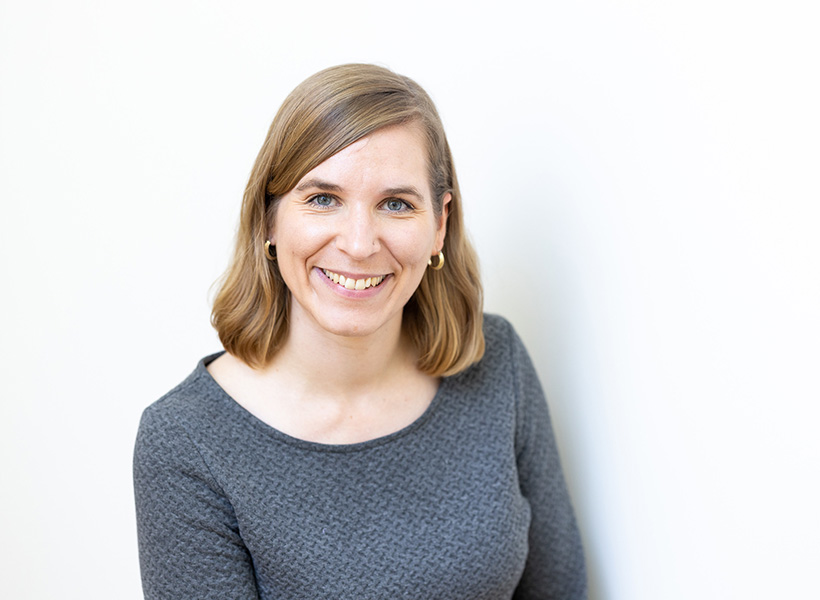
Portrait of smiling woman wearing a grey sweater.
McGovern Institute postdoc Vivian Paulun, who is joining the faculty of the University of Wisconsin at Madison in the fall of 2025, is the lead author of the “things vs. stuff” paper, which appears today in the journal Current Biology. Photo: Steph Stevens

The researchers also hypothesize that these regions may have developed to help the brain understand important distinctions that allow it to plan how to interact with the physical world. To further explore this possibility, the researchers plan to study whether the areas involved in processing rigid objects are also active when a brain circuit involved in planning to grasp objects is active.

They also hope to look at whether any of the areas within the FPN correlate with the processing of more specific features of materials, such as the viscosity of liquids or the bounciness of objects. And in the LOC, they plan to study how the brain represents changes in the shape of fluids and deformable substances.

The research was funded by the German Research Foundation, the U.S. National Institutes of Health, and a U.S. National Science Foundation grant to the Center for Brains, Minds, and Machines.


Adolescents’ willingness to explore is shaped by socioeconomic status

Exploration is essential to learning—and a new study from scientists at MIT’s McGovern Institute suggests that students may be less willing to explore if they come from a low socioeconomic environment. The study, which focused on adolescents and was published July 9, 2025, in the journal Nature Communications, shows how differences in learning strategies might contribute to socioeconomic-related disparities in academic achievement.

Students with low socioeconomic status (SES)—a measure that takes into account parents’ income levels and educational attainment—tend to lag behind their higher-SES peers academically. Limited resources at home can restrict access to educational tools and experiences, likely contributing to these disparities. But the new study, led by McGovern Institute Investigator John Gabrieli, shows that students from low-SES backgrounds may approach learning differently, too.

“We often think about external factors when we think about socioeconomic differences in learning, but kids’ mindsets and internal factors can also play a role,” says Alexandra Decker, a postdoctoral fellow in Gabrieli’s lab who ran the study. Understanding such differences can help educators develop strategies to reduce disparities and help all students succeed.

The value of exploration

Exploration is a vital part of development, particularly during adolescence. By trying new things and testing limits, children begin to find their way in the world, discovering the subjects and experiences that motivate them. That’s important for obtaining new knowledge, both in and out of school. “There’s a lot of research suggesting that exploration is a really important mechanism that children use for learning,” Decker says. “Exploring their environment really broadly and making mistakes helps them get the feedback that they need for learning,” she says.

Because the outcomes of exploration are unknown, this way of interacting with the world involves risk. “If you try something new, the outcome is uncertain, and it could lead to a bad outcome before things get better. You might lose out, at least in the short term. ” Decker says.

At school, students can explore in a variety of ways, such as by asking questions in class or taking on courses in unfamiliar subjects. Both are opportunities to learn something new, though they may seem less safe than sitting quietly and sticking to more comfortable coursework. Decker points out that this kind of exploration might feel particularly risky when students feel they lack the resources to compensate if things don’t go well.

“If you’re in an environment that’s really enriching, you have resources to compensate for challenges that might be accrued through exploring. If you take a new course and you struggle, you can use your resources to get a tutor and overcome these challenges. Your environment can support exploration and its costs,” she says. “But if you’re in an environment where you don’t have resources to compensate for bad outcomes, you might not take that course that could lead to unknown outcomes.”

Risk-benefit analysis

To investigate the relationship between SES and exploration, Gabrieli’s team had students play a computer game in which they earned points for pumping up balloons as much as possible without popping them. The most successful strategy was to explore the limits early on by pumping the first balloons until they popped, thereby learning when to stop with future balloons. A less exploratory approach could keep all the balloons intact, but earn fewer points over the course of the game.

The students who participated in the study were between the ages of 12 and 14 and came from families with a wide range of SES. Those from lower-SES backgrounds were less likely to explore in the balloon pumping task, resulting in lower outcomes in the game. What’s more, the researchers found a relationship between students’ exploration in the game and their real-world academic performance. Those who explored the least in the balloon-popping game had lower grades than students who explored more. For students at lower-SES levels, reduced exploration also correlated to lower scores on standardized tests of academic skills.

The researchers took a closer look at the data to investigate why some students explored more than others in their game. Their analysis indicated that students who were reluctant to explore were more strongly motivated by avoiding losses than students who had pushed the limits as they pumped their balloons.

The finding suggests that potential losses might be particularly distressing to lower-SES students, says Gabrieli, who is also the Grover Hermann Professor of Health Sciences and Technology and a professor of brain and cognitive sciences at MIT. Decker adds students from less affluent backgrounds may have found losses to be more consequential than they are for students whose families have more resources, so it makes sense that those students might take greater pains to avoid them.

This is not the first time Gabrieli’s group has found that evidence of differences in the ways students from different socioeconomic backgrounds make decisions. In a brain imaging study published last year, they found that the brains of adolescents from low-SES backgrounds respond less to rewards than the brains of their higher-SES peers. “How you think about the world—in terms of what’s rewarding, risks worth taking or not taking—seems strongly influenced by the environment that you’re growing up in,” he says.

Decker notes that regardless of SES, students in the study were generally more willing to explore when they had experienced more recent successes in the task. This finding, along with what the team learned about how loss aversion curtails exploration, suggest strategies that educators might use to encourage more exploration in the classroom. “Low-stakes opportunities for kids to engage in exploratory risk-taking with positive feedback could go a long way to helping kids feel more comfortable exploring,” Decker says.


Looking under the hood at the brain’s language system

As a young girl growing up in the former Soviet Union, Evelina Fedorenko PhD ’07 studied several languages, including English, as her mother hoped that it would give her the chance to eventually move abroad for better opportunities.

Her language studies not only helped her establish a new life in the United States as an adult, but also led to a lifelong interest in linguistics and how the brain processes language. Now an associate professor of brain and cognitive sciences at MIT, Fedorenko studies the brain’s language-processing regions: how they arise, whether they are shared with other mental functions, and how each region contributes to language comprehension and production.

Fedorenko’s early work helped to identify the precise locations of the brain’s language-processing regions, and she has been building on that work to generate insight into how different neuronal populations in those regions implement linguistic computations.

“It took a while to develop the approach and figure out how to quickly and reliably find these regions in individual brains, given this standard problem of the brain being a little different across people,” she says. “Then we just kept going, asking questions like: Does language overlap with other functions that are similar to it? How is the system organized internally? Do different parts of this network do different things? There are dozens and dozens of questions you can ask, and many directions that we have pushed on.”

Among some of the more recent directions, she is exploring how the brain’s language-processing regions develop early in life, through studies of very young children, people with unusual brain architecture, and computational models known as large language models.

From Russia to MIT

Fedorenko grew up in the Russian city of Volgograd, which was then part of the Soviet Union. When the Soviet Union broke up in 1991, her mother, a mechanical engineer, lost her job, and the family struggled to make ends meet.

“It was a really intense and painful time,” Fedorenko recalls. “But one thing that was always very stable for me is that I always had a lot of love, from my parents, my grandparents, and my aunt and uncle. That was really important and gave me the confidence that if I worked hard and had a goal, that I could achieve whatever I dreamed about.”

Fedorenko did work hard in school, studying English, French, German, Polish, and Spanish, and she also participated in math competitions. As a 15-year-old, she spent a year attending high school in Alabama, as part of a program that placed students from the former Soviet Union with American families. She had been thinking about applying to universities in Europe but changed her plans when she realized the American higher education system offered more academic flexibility.

After being admitted to Harvard University with a full scholarship, she returned to the United States in 1998 and earned her bachelor’s degree in psychology and linguistics, while also working multiple jobs to send money home to help her family.

While at Harvard, she also took classes at MIT and ended up deciding to apply to the Institute for graduate school. For her PhD research at MIT, she worked with Ted Gibson, a professor of brain and cognitive sciences, and later, Nancy Kanwisher, the Walter A. Rosenblith Professor of Cognitive Neuroscience. She began by using functional magnetic resonance imaging (fMRI) to study brain regions that appeared to respond preferentially to music, but she soon switched to studying brain responses to language.

She found that working with Kanwisher, who studies the functional organization of the human brain but hadn’t worked much on language before, helped Fedorenko to build a research program free of potential biases baked into some of the early work on language processing in the brain.

“We really kind of started from scratch,” Fedorenko says, “combining the knowledge of language processing I have gained by working with Gibson and the rigorous neuroscience approaches that Kanwisher had developed when studying the visual system.”

After finishing her PhD in 2007, Fedorenko stayed at MIT for a few years as a postdoc funded by the National Institutes of Health, continuing her research with Kanwisher. During that time, she and Kanwisher developed techniques to identify language-processing regions in different people, and discovered new evidence that certain parts of the brain respond selectively to language. Fedorenko then spent five years as a research faculty member at Massachusetts General Hospital, before receiving an offer to join the faculty at MIT in 2019.

How the brain processes language

Since starting her lab at MIT’s McGovern Institute for Brain Research, Fedorenko and her trainees have made several discoveries that have helped to refine neuroscientists’ understanding of the brain’s language-processing regions, which are spread across the left frontal and temporal lobes of the brain.

In a series of studies, her lab showed that these regions are highly selective for language and are not engaged by activities such as listening to music, reading computer code, or interpreting facial expressions, all of which have been argued to be share similarities with language processing.

“We’ve separated the language-processing machinery from various other systems, including the system for general fluid thinking, and the systems for social perception and reasoning, which support the processing of communicative signals, like facial expressions and gestures, and reasoning about others’ beliefs and desires,” Fedorenko says. “So that was a significant finding, that this system really is its own thing.”

More recently, Fedorenko has turned her attention to figuring out, in more detail, the functions of different parts of the language processing network. In one recent study, she identified distinct neuronal populations within these regions that appear to have different temporal windows for processing linguistic content, ranging from just one word up to six words.

She is also studying how language-processing circuits arise in the brain, with ongoing studies in which she and a postdoc in her lab are using fMRI to scan the brains of young children, observing how their language regions behave even before the children have fully learned to speak and understand language.

Large language models (similar to ChatGPT) can help with these types of developmental questions, as the researchers can better control the language inputs to the model and have continuous access to its abilities and representations at different stages of learning.

“You can train models in different ways, on different kinds of language, in different kind of regimens. For example, training on simpler language first and then more complex language, or on language combined with some visual inputs. Then you can look at the performance of these language models on different tasks, and also examine changes in their internal representations across the training trajectory, to test which model best captures the trajectory of human language learning,” Fedorenko says.

To gain another window into how the brain develops language ability, Fedorenko launched the Interesting Brains Project several years ago. Through this project, she is studying people who experienced some type of brain damage early in life, such as a prenatal stroke, or brain deformation as a result of a congenital cyst. In some of these individuals, their conditions destroyed or significantly deformed the brain’s typical language-processing areas, but all of these individuals are cognitively indistinguishable from individuals with typical brains: They still learned to speak and understand language normally, and in some cases, they didn’t even realize that their brains were in some way atypical until they were adults.

“That study is all about plasticity and redundancy in the brain, trying to figure out what brains can cope with, and how” Fedorenko says. “Are there many solutions to build a human mind, even when the neural infrastructure is so different-looking?”

To the brain, Esperanto and Klingon appear the same as English or Mandarin

Within the human brain, a network of regions has evolved to process language. These regions are consistently activated whenever people listen to their native language or any language in which they are proficient.

A new study by MIT researchers finds that this network also responds to languages that are completely invented, such as Esperanto, which was created in the late 1800s as a way to promote international communication, and even to languages made up for television shows such as “Star Trek” and “Game of Thrones.”

To study how the brain responds to these artificial languages, MIT neuroscientists convened nearly 50 speakers of these languages over a single weekend. Using functional magnetic resonance imaging (fMRI), the researchers found that when participants listened to a constructed language in which they were proficient, the same brain regions lit up as those activated when they processed their native language.

“We find that constructed languages very much recruit the same system as natural languages, which suggests that the key feature that is necessary to engage the system may have to do with the kinds of meanings that both kinds of languages can express,” says Evelina Fedorenko, an associate professor of neuroscience at MIT, a member of MIT’s McGovern Institute for Brain Research and the senior author of the study.

The findings help to define some of the key properties of language, the researchers say, and suggest that it’s not necessary for languages to have naturally evolved over a long period of time or to have a large number of speakers.

“It helps us narrow down this question of what a language is, and do it empirically, by testing how our brain responds to stimuli that might or might not be language-like,” says Saima Malik-Moraleda, an MIT postdoc and the lead author of the paper, which appears this week in the Proceedings of the National Academy of Sciences.

Convening the conlang community

Unlike natural languages, which evolve within communities and are shaped over time, constructed languages, or “conlangs,” are typically created by one person who decides what sounds will be used, how to label different concepts, and what the grammatical rules are.

Esperanto, the most widely spoken conlang, was created in 1887 by L.L. Zamenhof, who intended it to be used as a universal language for international communication. Currently, it is estimated that around 60,000 people worldwide are proficient in Esperanto.

In previous work, Fedorenko and her students have found that computer programming languages, such as Python — another type of invented language — do not activate the brain network that is used to process natural language. Instead, people who read computer code rely on the so-called multiple demand network, a brain system that is often recruited for difficult cognitive tasks.

Fedorenko and others have also investigated how the brain responds to other stimuli that share features with language, including music and nonverbal communication such as gestures and facial expressions.

“We spent a lot of time looking at all these various kinds of stimuli, finding again and again that none of them engage the language-processing mechanisms,” Fedorenko says. “So then the question becomes, what is it that natural languages have that none of those other systems do?”

That led the researchers to wonder if artificial languages like Esperanto would be processed more like programming languages or more like natural languages. Similar to programming languages, constructed languages are created by an individual for a specific purpose, without natural evolution within a community. However, unlike programming languages, both conlangs and natural languages can be used to convey meanings about the state of the external world or the speaker’s internal state.

To explore how the brain processes conlangs, the researchers invited speakers of Esperanto and several other constructed languages to MIT for a weekend conference in November 2022. The other languages included Klingon (from “Star Trek”), Na’vi (from “Avatar”), and two languages from “Game of Thrones” (High Valyrian and Dothraki). For all of these languages, there are texts available for people who want to learn the language, and for Esperanto, Klingon, and High Valyrian, there is even a Duolingo app available.

“It was a really fun event where all the communities came to participate, and over a weekend, we collected all the data,” says Malik-Moraleda, who co-led the data collection effort with former MIT postbac Maya Taliaferro, now a PhD student at New York University.

During that event, which also featured talks from several of the conlang creators, the researchers used fMRI to scan 44 conlang speakers as they listened to sentences from the constructed language in which they were proficient. The creators of these languages — who are co-authors on the paper — helped construct the sentences that were presented to the participants.

While in the scanner, the participants also either listened to or read sentences in their native language, and performed some nonlinguistic tasks for comparison. The researchers found that when people listened to a conlang, the same language regions in the brain were activated as when they listened to their native language.

Common features

The findings help to identify some of the key features that are necessary to recruit the brain’s language processing areas, the researchers say. One of the main characteristics driving language responses seems to be the ability to convey meanings about the interior and exterior world — a trait that is shared by natural and constructed languages, but not programming languages.

“All of the languages, both natural and constructed, express meanings related to inner and outer worlds. They refer to objects in the world, to properties of objects, to events,” Fedorenko says. “Whereas programming languages are much more similar to math. A programming language is a symbolic generative system that allows you to express complex meanings, but it’s a self-contained system: The meanings are highly abstract and mostly relational, and not connected to the real world that we experience.”

Some other characteristics of natural languages, which are not shared by constructed languages, don’t seem to be necessary to generate a response in the language network.

“It doesn’t matter whether the language is created and shaped over time by a community of speakers, because these constructed languages are not,” Malik-Moraleda says. “It doesn’t matter how old they are, because conlangs that are just a decade old engage the same brain regions as natural languages that have been around for many hundreds of years.”

To further refine the features of language that activate the brain’s language network, Fedorenko’s lab is now planning to study how the brain responds to a conlang called Lojban, which was created by the Logical Language Group in the 1990s and was designed to prevent ambiguity of meanings and promote more efficient communication.

The research was funded by MIT’s McGovern Institute for Brain Research, Brain and Cognitive Sciences Department, the Simons Center for the Social Brain, the Frederick A. and Carole J. Middleton Career Development Professorship, and the U.S. National Institutes of Health.

Evelina Fedorenko receives Troland Award from National Academy of Sciences

The National Academy of Sciences (NAS) announced today that McGovern Investigator Evelina Fedorenko will receive a 2025 Troland Research Award for her groundbreaking contributions towards understanding the language network in the human brain.

The Troland Research Award is given annually to recognize unusual achievement by early-career researchers within the broad spectrum of experimental psychology.

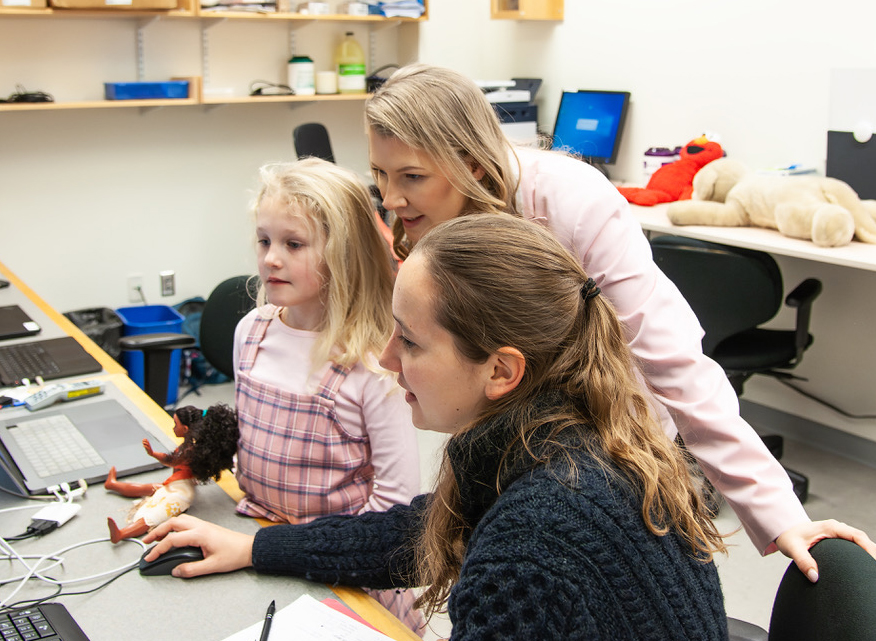
Two women and one child looking at a computer screen.
McGovern Investigator Ev Fedorenko (center) looks at a young subject’s brain scan in the Martinos Imaging Center at MIT. Photo: Alexandra Sokhina

Fedorenko, who is an associate professor of brain and cognitive sciences at MIT, is interested in how minds and brains create language. Her lab is unpacking the internal architecture of the brain’s language system and exploring the relationship between language and various cognitive, perceptual, and motor systems.  Her novel methods combine precise measures of an individual’s brain organization with innovative computational modeling to make fundamental discoveries about the computations that underlie the uniquely human ability for language.

Fedorenko has shown that the language network is selective for language processing over diverse non-linguistic processes that have been argued to share computational demands with language, such as math, music, and social reasoning. Her work has also demonstrated that syntactic processing is not localized to a particular region within the language network, and every brain region that responds to syntactic processing is at least as sensitive to word meanings.

She has also shown that representations from neural network language models, such as ChatGPT, are similar to those in the human language brain areas. Fedorenko also highlighted that although language models can master linguistic rules and patterns, they are less effective at using language in real-world situations. In the human brain, that kind of functional competence is distinct from formal language competence, she says, requiring not just language-processing circuits but also brain areas that store knowledge of the world, reason, and interpret social interactions. Contrary to a prominent view that language is essential for thinking, Fedorenko argues that language is not the medium of thought and is primarily a tool for communication.

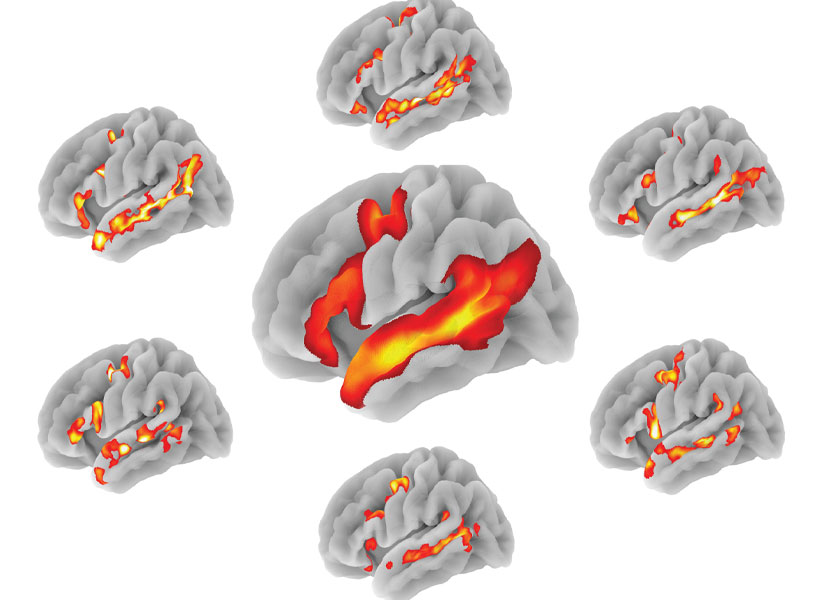
A probabilistic atlas of the human language network based on >800 individuals (center) and sample individual language networks, which illustrate inter-individual variability in the precise locations and shapes of the language areas. Image: Ev Fedorenko

Ultimately, Fedorenko’s cutting-edge work is uncovering the computations and representations that fuel language processing in the brain. She will receive the Troland Award this April, during the annual meeting of the NAS in Washington DC.


3 Questions: Claire Wang on training the brain for memory sports

On Nov. 10, some of the country’s top memorizers converged on MIT’s Kresge Auditorium to compete in a “Tournament of Memory Champions” in front of a live audience.

The competition was split into four events: long-term memory, words-to-remember, auditory memory, and double-deck of cards, in which competitors must memorize the exact order of two decks of cards. In between the events, MIT faculty who are experts in the science of memory provided short talks and demos about memory and how to improve it. Among the competitors was MIT’s own Claire Wang, a sophomore majoring in electrical engineering and computer science. Wang has competed in memory sports for years, a hobby that has taken her around the world to learn from some of the best memorists on the planet. At the tournament, she tied for first place in the words-to-remember competition.

The event commemorated the 25th anniversary of the USA Memory Championship Organization (USAMC). USAMC sponsored the event in partnership with MIT’s McGovern Institute for Brain Research, the Department of Brain and Cognitive Sciences, the MIT Quest for Intelligence, and the company Lumosity.

MIT News sat down with Wang to learn more about her experience with memory competitions — and see if she had any advice for those of us with less-than-amazing memory skills.

Q: How did you come to get involved in memory competitions?

A: When I was in middle school, I read the book “Moonwalking with Einstein,” which is about a journalist’s journey from average memory to being named memory champion in 2006. My parents were also obsessed with this TV show where people were memorizing decks of cards and performing other feats of memory. I had already known about the concept of “memory palaces,” so I was inspired to explore memory sports. Somehow, I convinced my parents to let me take a gap year after seventh grade, and I travelled the world going to competitions and learning from memory grandmasters. I got to know the community in that time and I got to build my memory system, which was really fun. I did a lot less of those competitions after that year and some subsequent competitions with the USA memory competition, but it’s still fun to have this ability.

Q: What was the Tournament of Memory Champions like?

A: USAMC invited a lot of winners from previous years to compete, which was really cool. It was nice seeing a lot of people I haven’t seen in years. I didn’t compete in every event because I was too busy to do the long-term memory, which takes you two weeks of memorization work. But it was a really cool experience. I helped a bit with the brainstorming beforehand because I know one of the professors running it. We thought about how to give the talks and structure the event.

Then I competed in the words event, which is when they give you 300 words over 15 minutes, and the competitors have to recall each one in order in a round robin competition. You got two strikes. A lot of other competitions just make you write the words down. The round robin makes it more fun for people to watch. I tied with someone else — I made a dumb mistake — so I was kind of sad in hindsight, but being tied for first is still great.

Since I hadn’t done this in a while (and I was coming back from a trip where I didn’t get much sleep), I was a bit nervous that my brain wouldn’t be able to remember anything, and I was pleasantly surprised I didn’t just blank on stage. Also, since I hadn’t done this in a while, a lot of my loci and memory palaces were forgotten, so I had to speed-review them before the competition. The words event doesn’t get easier over time — it’s just 300 random words (which could range from “disappointment” to “chair”) and you just have to remember the order.

Q: What is your approach to improving memory?

A: The whole idea is that we memorize images, feelings, and emotions much better than numbers or random words. The way it works in practice is we make an ordered set of locations in a “memory palace.” The palace could be anything. It could be a campus or a classroom or a part of a room, but you imagine yourself walking through this space, so there’s a specific order to it, and in every location I place certain information. This is information related to what I’m trying to remember. I have pictures I associate with words and I have specific images I correlate with numbers. Once you have a correlated image system, all you need to remember is a story, and then when you recall, you translate that back to the original information.

Doing memory sports really helps you with visualization, and being able to visualize things faster and better helps you remember things better. You start remembering with spaced repetition that you can talk yourself through. Allowing things to have an emotional connection is also important, because you remember emotions better. Doing memory competitions made me want to study neuroscience and computer science at MIT.

The specific memory sports techniques are not as useful in everyday life as you’d think, because a lot of the information we learn is more operative and requires intuitive understanding, but I do think they help in some ways. First, sometimes you have to initially remember things before you can develop a strong intuition later. Also, since I have to get really good at telling a lot of stories over time, I have gotten great at visualization and manipulating objects in my mind, which helps a lot.

Four from MIT named 2025 Rhodes Scholars

Yiming Chen ’24, Wilhem Hector, Anushka Nair, and David Oluigbo have been selected as 2025 Rhodes Scholars and will begin fully funded postgraduate studies at Oxford University in the U.K. next fall. In addition to MIT’s two U.S. Rhodes winners, Ouigbo and Nair, two affiliates were awarded international Rhodes Scholarships: Chen for Rhodes’ China constituency and Hector for the Global Rhodes Scholarship. Hector is the first Haitian citizen to be named a Rhodes Scholar.

The scholars were supported by Associate Dean Kim Benard and the Distinguished Fellowships team in Career Advising and Professional Development. They received additional mentorship and guidance from the Presidential Committee on Distinguished Fellowships.

“It is profoundly inspiring to work with our amazing students, who have accomplished so much at MIT and, at the same time, thought deeply about how they can have an impact in solving the world’s major challenges,” says Professor Nancy Kanwisher who co-chairs the committee along with Professor Tom Levenson. “These students have worked hard to develop and articulate their vision and to learn to communicate it to others with passion, clarity, and confidence. We are thrilled but not surprised to see so many of them recognized this year as finalists and as winners.

Yiming Chen ’24

Yiming Chen, from Beijing, China, and the Washington area, was named one of four Rhodes China Scholars on Sept 28. At Oxford, she will pursue graduate studies in engineering science, working toward her ongoing goal of advancing AI safety and reliability in clinical workflows.

Chen graduated from MIT in 2024 with a BS in mathematics and computer science and an MEng in computer science. She worked on several projects involving machine learning for health care, and focused her master’s research on medical imaging in the Medical Vision Group of the Computer Science and Artificial Intelligence Laboratory (CSAIL).

Collaborating with IBM Research, Chen developed a neural framework for clinical-grade lumen segmentation in intravascular ultrasound and presented her findings at the MICCAI Machine Learning in Medical Imaging conference. Additionally, she worked at Cleanlab, an MIT-founded startup, creating an open-source library to ensure the integrity of image datasets used in vision tasks.

Chen was a teaching assistant in the MIT math and electrical engineering and computer science departments, and received a teaching excellence award. She taught high school students at the Hampshire College Summer Studies in Math and was selected to participate in MISTI Global Teaching Labs in Italy.

Having studied the guzheng, a traditional Chinese instrument, since age 4, Chen served as president of the MIT Chinese Music Ensemble, explored Eastern and Western music synergies with the MIT Chamber Music Society, and performed at the United Nations. On campus, she was also active with Asymptones a capella, MIT Ring Committee, Ribotones, Figure Skating Club, and the Undergraduate Association Innovation Committee.

Wilhem Hector

Wilhem Hector, a senior from Port-au-Prince, Haiti, majoring in mechanical engineering, was awarded a Global Rhodes Scholarship on Nov 1. The first Haitian national to be named a Rhodes Scholar, Hector will pursue at Oxford a master’s in energy systems followed by a master’s in education, focusing on digital and social change. His long-term goals are twofold: pioneering Haiti’s renewable energy infrastructure and expanding hands-on opportunities in the country‘s national curriculum.

Hector developed his passion for energy through his research in the MIT Howland Lab, where he investigated the uncertainty of wind power production during active yaw control. He also helped launch the MIT Renewable Energy Clinic through his work on the sources of opposition to energy projects in the U.S. Beyond his research, Hector had notable contributions as an intern at Radia Inc. and DTU Wind Energy Systems, where he helped develop computational wind farm modeling and simulation techniques.

Outside of MIT, he leads the Hector Foundation, a nonprofit providing educational opportunities to young people in Haiti. He has raised over $80,000 in the past five years to finance their initiatives, including the construction of Project Manus, Haiti’s first open-use engineering makerspace. Hector’s service endeavors have been supported by the MIT PKG Center, which awarded him the Davis Peace Prize, the PKG Fellowship for Social Impact, and the PKG Award for Public Service.

Hector co-chairs both the Student Events Board and the Class of 2025 Senior Ball Committee and has served as the social chair for Chocolate City and the African Students Association.

Anushka Nair

Anushka Nair, from Portland, Oregon, will graduate next spring with BS and MEng degrees in computer science and engineering with concentrations in economics and AI. She plans to pursue a DPhil in social data science at the Oxford Internet Institute. Nair aims to develop ethical AI technologies that address pressing societal challenges, beginning with combating misinformation.

For her master’s thesis under Professor David Rand, Nair is developing LLM-powered fact-checking tools to detect nuanced misinformation beyond human or automated capabilities. She also researches human-AI co-reasoning at the MIT Center for Collective Intelligence with Professor Thomas Malone. Previously, she conducted research on autonomous vehicle navigation at Stanford’s AI and Robotics Lab, energy microgrid load balancing at MIT’s Institute for Data, Systems, and Society, and worked with Professor Esther Duflo in economics.

Nair interned in the Executive Office of the Secretary General at the United Nations, where she integrated technology solutions and assisted with launching the High-Level Advisory Body on AI. She also interned in Tesla’s energy sector, contributing to Autobidder, an energy trading tool, and led the launch of a platform for monitoring distributed energy resources and renewable power plants. Her work has earned her recognition as a Social and Ethical Responsibilities of Computing Scholar and a U.S. Presidential Scholar.

Nair has served as President of the MIT Society of Women Engineers and MIT and Harvard Women in AI, spearheading outreach programs to mentor young women in STEM fields. She also served as president of MIT Honors Societies Eta Kappa Nu and Tau Beta Pi.

David Oluigbo

David Oluigbo, from Washington, is a senior majoring in artificial intelligence and decision making and minoring in brain and cognitive sciences. At Oxford, he will undertake an MSc in applied digital health followed by an MSc in modeling for global health. Afterward, Oluigbo plans to attend medical school with the goal of becoming a physician-scientist who researches and applies AI to address medical challenges in low-income countries.

Since his first year at MIT, Oluigbo has conducted neural and brain research with Ev Fedorenko at the McGovern Institute for Brain Research and with Susanna Mierau’s Synapse and Network Development Group at Brigham and Women’s Hospital. His work with Mierau led to several publications and a poster presentation at the Federation of European Societies annual meeting.

In a summer internship at the National Institutes of Health Clinical Center, Oluigbo designed and trained machine-learning models on CT scans for automatic detection of neuroendocrine tumors, leading to first authorship on an International Society for Optics and Photonics conference proceeding paper, which he presented at the 2024 annual meeting. Oluigbo also did a summer internship with the Anyscale Learning for All Laboratory at the MIT Computer Science and Artificial Intelligence Laboratory.

Oluigbo is an EMT and systems administrator officer with MIT-EMS. He is a consultant for Code for Good, a representative on the MIT Schwarzman College of Computing Undergraduate Advisory Group, and holds executive roles with the Undergraduate Association, the MIT Brain and Cognitive Society, and the MIT Running Club.

Illuminating the architecture of the mind

This story also appears in the Winter 2025 issue of BrainScan

___

McGovern investigator Nancy Kanwisher and her team have big questions about the nature of the human mind. Energized by Kanwisher’s enthusiasm for finding out how and why the brain works as it does, her team collaborates broadly and embraces various tools of neuroscience. But their core discoveries tend to emerge from pictures of the brain in action. For Kanwisher, the Walter A. Rosenblith Professor of Cognitive Neuroscience at MIT, “there’s nothing like looking inside.”

Kanwisher and her colleagues have scanned the brains of hundreds of volunteers using functional magnetic resonance imaging (fMRI). With each scan, they collect a piece of insight into how the brain is organized.

Male and female researchers sitting in an imaging center with an MRI in the background.
Nancy Kanwisher (right), whose unfaltering support for students and trainees has earned her awards for outstanding teaching and mentorship, is now working with research scientist RT Pramod to find the brain’s “physics network.” Photo: Steph Stevens

Recognizing faces

By visualizing the parts of the brain that get involved in various mental activities — and, importantly, which do not — they’ve discovered that certain parts of the brain specialize in surprisingly specific tasks. Earlier this year Kanwisher was awarded the prestigious Kavli Prize in Neuroscience for the discovery of one of these hyper-specific regions: a small spot within the brain’s neocortex that recognizes faces.

Kanwisher found that this region, which she named the fusiform face area (FFA), is highly sensitive to images of faces and appears to be largely uninterested in other objects. Without the FFA, the brain struggles with facial recognition — an impairment seen in patients who have experienced damage to this part of the brain.

Beyond the FFA

Not everything in the brain is so specialized. Many areas participate in a range of cognitive processes, and even the most specialized modules, like the FFA, must work with other brain regions to process and use information. Plus, Kanwisher and her team have tracked brain activity during many functions without finding regions devoted exclusively to those tasks. (There doesn’t appear to be a part of the brain dedicated to recognizing snakes, for example).

Still, work in the Kanwisher lab demonstrates that as a specialized functional module within the brain, the FFA is not unique. In collaboration with McGovern colleagues Josh McDermott and Evelina Fedorenko, the group has found areas devoted to perceiving music and using language. There’s even a region dedicated to thinking about other people’s thoughts, identified by Rebecca Saxe in work she started as a graduate student in Kanwisher’s lab.

Brain with colored blobs.
Kanwisher’s team has found several hyperspecific regions of the brain, including those dedicated to using language (red-orange), perceiving music (yellow), thinking about other people’s thoughts (blue), recognizing bodies (green), and our intuitive sense of physics (teal). (This is an artistic adaptation of Kanwisher’s data.)

Having established these regions’ roles, Kanwisher and her collaborators are now looking at how and why they become so specialized. Meanwhile, the group has also turned its attention to a more complex function that seems to largely take place within a defined network: our intuitive sense of physics.

The brain’s game engine

Early in life, we begin to understand the nature of objects and materials, such as the fact that objects can support but not move through each other. Later, we intuitively understand how it feels to move on a slippery floor, what happens when moving objects collide, and where a tossed ball will fall. “You can’t do anything at all in the world without some understanding of the physics of the world you’re acting on,” Kanwisher says.

Kanwisher says MIT colleague Josh Tenenbaum first sparked her interest in intuitive physical reasoning. Tenenbaum and his students had been arguing that humans understand
the physical world using a simulation system, much like the physics engines that video games use to generate realistic movement and interactions within virtual environments. Kanwisher decided to team up with Tenenbaum to test whether there really is a game engine in the head, and if so, what it computes and represents.

An unstable column of blue and yellow blocks piled on top of a table that is half red, half green.
By asking subjects in an MRI scanner to predict which way this block tower might fall, Kanwisher’s team is zeroing in on the location of the brain’s “physics network.” Image: RT Pramod, Nancy Kanwisher

To find out, Kanwisher and her team have asked volunteers to evaluate various scenarios while in an MRI scanner — some that require physical reasoning and some that do not. They found sizable parts of the brain that participate in physical reasoning tasks but stay quiet during other kinds of thinking.

Research scientist RT Pramod says he was initially skeptical the brain would dedicate special circuitry to the diverse tasks involved in our intuitive sense of physics — but he’s been convinced by the data he’s found. “I see consistent evidence that if you’re reasoning, if you’re thinking, or even if you’re looking at anything sort of “physics-y” about the world, you will see activations in these regions and only in these regions — not anywhere else,” he says.

Pramod’s experiments also show that these regions are called on to make predictions about the physical world. When volunteers watch videos of objects whose trajectories portend a crash — but do not actually depict that crash — it is the physics network that signals what is about to happen. “Only these regions have this information, suggesting that maybe there is some truth to the physics engine hypothesis,” Pramod says.

Kanwisher says she doesn’t expect physical reasoning, which her group has tied to sizable swaths of the brain’s frontal and parietal cortex, to be executed by a module as distinct as the FFA. “It’s not going to be like one hyper-specific region and that’s all that happens there,” she says. “I think ultimately it’s much more interesting than that.”

To figure out what these regions can and cannot do, Kanwisher’s team has broadened the ways in which they ask volunteers to think about physics inside the MRI scanner. So far, Kanwisher says, the group’s tests have focused on rigid objects. But what about soft, squishy ones, or liquids?

A red liquid sloshes inside a clear container.
Kanwisher’s team is exploring whether non-rigid materials, like the liquid in this image, engage the brain’s “physics network” in the same way as rigid objects. Image: Vivian Paulun

Vivian Paulun, a postdoc working jointly with Kanwisher and Tenenbaum, is investigating whether our innate expectations about these kinds of materials occur within the network that they have linked to physical reasoning about rigid objects. Another set of experiments will explore whether we use sounds, like that of a bouncing ball or a screeching car, to predict physics physical events with the same network that interprets visual cues.

Meanwhile, she is also excited about an opportunity to find out what happens when the brain’s physics network is damaged. With collaborators in England, the group plans to find out whether patients in which stroke has affected this part of the brain have specific deficits in physical reasoning.

Probing these questions could reveal fundamental truths about the human mind and intelligence. Pramod points out that it could also help advance artificial intelligence, which so far has been unable to match humans when it comes to physical reasoning. “Inferences that are sort of easy for us are still really difficult for even state-of-the art computer vision,” he says. “If we want to get to a stage where we have really good machine learning algorithms that can interact with the world the way we do, I think we should first understand how the brain does it.”