RareNet Symposium 2026
Patient stories meet scientific innovation at the inaugural Rare Brain Disorders Nexus (RareNet) Symposium.
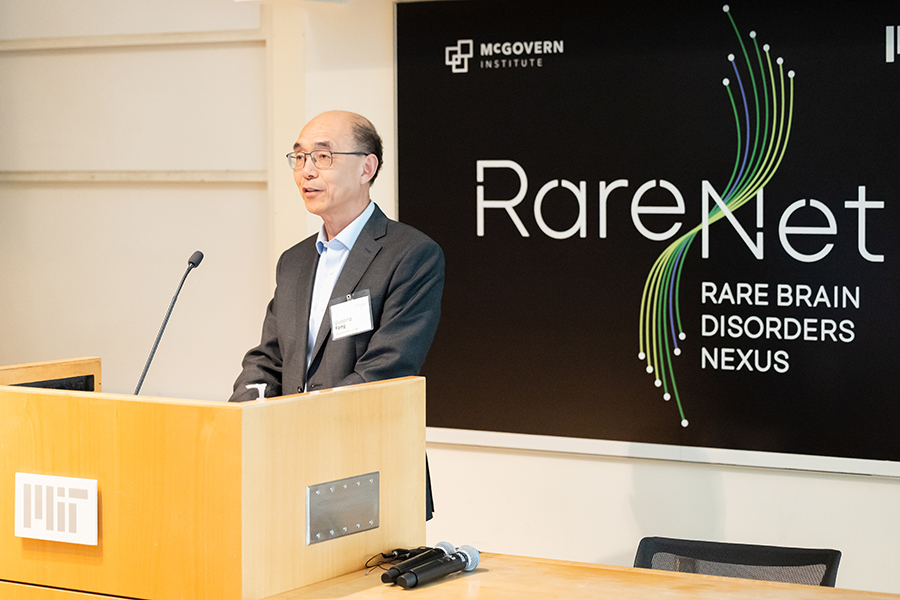
On June 9, the McGovern Institute convened leaders in science, biotechnology, and patient advocacy for RareNet 2026, a first-of-its-kind symposium aimed at dismantling the barriers between laboratory discovery and life-changing treatments for rare brain disorders.
Over 300 million people worldwide live with rare disorders—most affecting the brain and nervous system. Yet the vast majority lack an approved therapy. The Rare Brain Disorders Nexus (RareNet) was established at the McGovern Institute in 2025 by MIT alums Ana Méndez ’91 and Jayavant ’86, (EE ’88, SM ’88) to address this need. Led by Guoping Feng, the James W. (1963) and Patricia T. Poitras Professor of Neuroscience at MIT, RareNet draws together expertise from the MIT community and beyond to expedite the path from lab to clinic.
MIT President Sally Kornbluth set the tone at the inaugural RareNet symposium, thanking founders Méndez and Jayavant for helping MIT focus on this important challenge: “I look forward to watching RareNet dissolve needless barriers, accelerate timelines, and bring new hope to millions of patients and their families for whom hope is long overdue.”
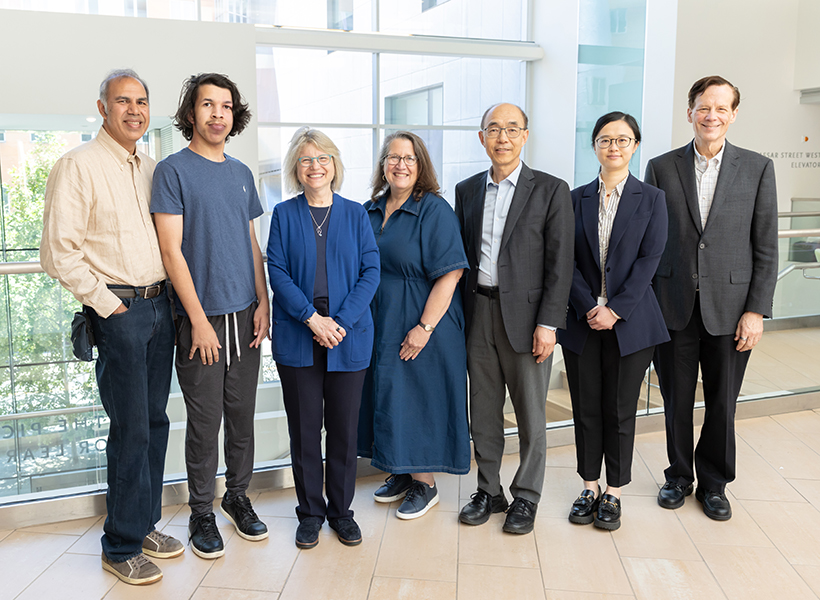
RareNet’s collaborative vision came into focus at the symposium, where more than a dozen leading neuroscientists, biotech innovators, and patient advocates shared the podium. The scientific program spanned the full translational pathway, from fundamental discovery to clinical development.
Feng Zhang (McGovern Institute, MIT; HHMI; Broad Institute), Katherine High (RhyGaze AG; Rockefeller University), Kiran Musunuru (University of Pennsylvania), and Timothy Yu (Boston Children’s Hospital; Harvard Medical School) discussed emerging genetic medicines–including genome editing, gene therapy, and individualized therapeutic strategies–and the challenges involved in bringing them safely to patients.
Kevin Bender (University of California San Francisco), Christopher Walsh (Boston Children’s Hospital; Harvard Medical School), Sonia Vallabh (Broad Institute; MGH; Harvard Medical School), and Joseph Buxbaum (Icahn School of Medicine at Mount Sinai) explored how insights into disease mechanisms, human genetics, and patient-derived data are advancing research in neurodevelopmental disorders, autism, and prion disease.
Representatives from the Sturge-Weber and FOXP1 communities–including Karen Ball, Matt Shirley, and Samit Dasgupta–demonstrated how patient foundations can help define research priorities, build essential resources, and drive promising discoveries toward meaningful treatments.
Also among the day’s speakers was Monica Coenraads, who transformed her child’s rare disease into a powerful research initiative. When her daughter Chelsea was diagnosed with Rett syndrome in 1998 at age two, Coenraads faced an uncertain future. Today, as founder and CEO of the Rett Syndrome Research Trust, she is helping to rewrite that story for other families. In a compelling talk with John Sinnamon, Director of Research at RSRT, Coenraads shared both the scientific breakthroughs reshaping Rett syndrome treatment and the deeply personal journey that sparked it all.
“Monica and John’s talks capture the vital connection between patients and families, cutting-edge research, and translational innovation,” says RareNet Executive Director Xian Gao. “It’s a powerful reminder that behind every research breakthrough is a human story demanding progress.”