Movies like “Limitless” and “Lucy” play on the notion that humans use only 10 percent of their brains—and those who unlock a higher percentage wield powers like infinite memory or telekinesis. It’s enticing to think that so much of the brain remains untapped and is ripe for boosting human potential.
But the idea that we use 10 percent of our brain is 100 percent a myth.
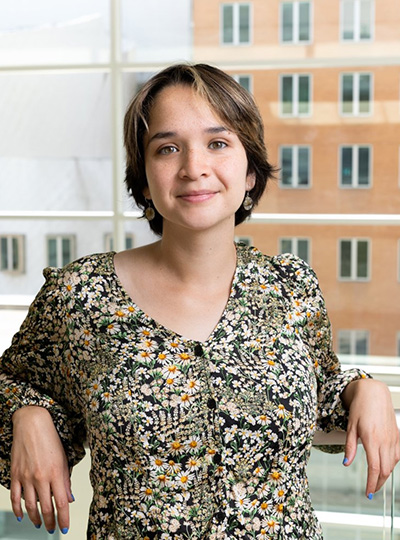
In fact, scientists believe that we use our entire brain every day. Mila Halgren is a graduate student in the lab of Mark Harnett, an associate professor of brain and cognitive sciences and an investigator at the McGovern Institute. The Harnett lab studies the computational power of neurons, that is, how neural networks rapidly process massive amounts of information.
“All of our brain is constantly in use and consumes a tremendous amount of energy,” Halgren says. “Despite making up only two percent of our body weight, it devours 20 percent of our calories.” This doesn’t appear to change significantly with different tasks, from typing on a computer to doing yoga. “Even while we sleep, our entire brain remains intensely active.”
When did this myth take root?
Mila Halgren is a PhD student in MIT’s Department of Brain and Cognitive Sciences. Photo: Mila Halgren
The myth is thought to have gained traction when scientists first began exploring the brain’s abilities but lacked the tools to capture its exact workings. In 1907, William James, a founder of American psychology, suggested in his book “The Energies of Men” that “we are making use of only a small part of our possible mental and physical resources.” This influential work likely sparked the idea that humans access a mere fraction of the brain—setting this common misconception ablaze.
Brainpower lore even suggests that Albert Einstein credited his genius to being able to access more than 10 percent of his brain. However, no such quote has been documented and this too is perhaps a myth of cosmic proportion.
Halgren believes that there may be some fact backing this fiction. “People may think our brain is underutilized in the sense that some neurons fire very infrequently—once every few minutes or less. But this isn’t true of most neurons, some of which fire hundreds of times per second,” she says.
In the nascent years of neuroscience, scientists also argued that a large portion of the brain must be inactive because some people experience brain injuries and can still function at a high level, like the famous case of Phineas Gage. Halgren points to the brain’s remarkable plasticity—the reshaping of neural connections. “Entire brain hemispheres can be removed during early childhood and the rest of the brain will rewire and compensate for the loss. In other words, the brain will use 100 percent of what it has, but can make do with less depending on which structures are damaged.”
Is there a limit to the brain?
If we indeed use our entire brain, can humans tease out any problem? Or, are there enigmas in the world that we will never unravel?
“This is still in contention,” Halgren says. “There may be certain problems that the human brain is fundamentally unable to solve, like how a mouse will never understand chemistry and a chimpanzee can’t do calculus.”
Can we increase our brainpower?
The brain may have its limits, but there are ways to boost our cognitive prowess to ace that midterm or crank up productivity in the workplace. According to Halgren, “You can increase your brainpower, but there’s no ‘trick’ that will allow you to do so. Like any organ in your body, the brain works best with proper sleep, exercise, low stress, and a well-balanced diet.”
The truth is, we may never rearrange furniture with our minds or foresee which team will win the Super Bowl. The idea of a largely latent brain is draped in fantasy, but debunking this myth speaks to the immense growth of neuroscience over the years—and the allure of other misconceptions that scientists have yet to demystify.
Clocks, computers, and metronomes can keep time with exquisite precision. But even in the absence of an external time keeper, we can track time on our own. We know when minutes or hours have elapsed, and we can maintain a rhythm when we dance, sing, or play music. Now, neuroscientists at the National Autonomous University of Mexico and MIT’s McGovern Institute and have discovered one way the brain keeps a beat: It runs an internal simulation, mentally recreating the perception of an external rhythm and preparing an appropriately timed response.
The discovery, reported January 10, 2024, in the journal Science Advances, illustrates how animals can think about imaginary events and use an internal model to guide their interactions with the world. “It’s a real indication of mental states as an independent driver of behavior,” says neuroscientist Mehrdad Jazayeri, an investigator at the McGovern Institute and an associate professor of brain and cognitive sciences at MIT.
Predicting the future
Jazayeri teamed up with Victor de Lafuente, a neuroscientist at the National Autonomous University of Mexico, to investigate the brain’s time-keeping ability. De Lafuente, who led the study, says they were motivated by curiosity about how the brain makes predictions and prepares for future states of the world.
De Lafuente and his team used a visual metronome to teach monkeys a simple rhythm, showing them a circle that moved between two positions on a screen to set a steady tempo. Then the metronome stopped. After a variable and unpredictable pause, the monkeys were asked to indicate where the dot would be if the metronome had carried on.
Monkeys do well at this task, successfully keeping time after the metronome stops. After the waiting period, they are usually able to identify the expected position of the circle, which they communicate by reaching towards a touchscreen.
To find out how the animals were keeping track of the metronome’s rhythm, de Lafuente’s group monitored their brain activity. In several key brain regions, they found rhythmic patterns of activity that oscillated at the same frequency as the metronome. This occurred while the monkeys watched the metronome. More remarkably, it continued after the metronome had stopped.
“The animal is seeing things going and then things stop. What we find in the brain is the continuation of that process in the animal’s mind,” Jazayeri says. “An entire network is replicating what it was doing.”
That was true in the visual cortex, where clusters of neurons respond to stimuli in specific spots within the eyes’ field of view. One set of cells in the visual cortex fired when the metronome’s circle was on the left of the screen; another set fired when the dot was on the right. As a monkey followed the visual metronome, the researchers could see these cells’ activity alternating rhythmically, tracking the movement. When the metronome stopped, the back-and-forth neural activity continued, maintaining the rhythm. “Once the stimulus was no longer visible, they were seeing the stimulus within their minds,” de Lafuente says.
They found something similar in the brain’s motor cortex, where movements are prepared and executed. De Lafuente explains that the monkeys are motionless for most of their time-keeping task; only when they are asked to indicate where the metronome’s circle should be do they move a hand to touch the screen. But the motor cortex was engaged even before it was time to move. “Within their brains there is a signal that is switching from the left to the right,” he says. “So the monkeys are thinking ‘left, right, left, right’—even when they are not moving and the world is constant.”
While some scientists have proposed that the brain may have a central time-keeping mechanism, the team’s findings indicate that entire networks can be called on to track the passage of time. The monkeys’ model of the future was surprisingly explicit, de Lafuente says, representing specific sensory stimuli and plans for movement. “This offers a potential solution to mentally tracking the dynamics in the world, which is to basically think about them in terms of how they actually would have happened,” Jazayeri says.
Today the McGovern Institute at MIT announces that the 2024 Edward M. Scolnick Prize in Neuroscience will be awarded to Margaret Livingstone, Takeda Professor of Neurobiology at Harvard Medical School. The Scolnick Prize is awarded annually by the McGovern Institute, for outstanding achievements in neuroscience.
“Margaret Livingstone’s driven curiosity and original experimental approaches have led to fundamental advances in our understanding of visual perception,” says Robert Desimone, director of the McGovern Institute and chair of the selection committee. “In particular, she has made major advances in resolving a long-standing debate over whether the brain domains and neurons that are specifically tuned to detect facial features are present from birth or arise from experience. Her developmental research shows that the cerebral cortex already contains topographic sensory maps at birth but that domain-specific maps, for example to recognize facial-features, require experience and sensory input to develop normally.”
“Margaret Livingstone’s driven curiosity and original experimental approaches have led to fundamental advances in our understanding of visual perception.” — Robert Desimone
Livingstone received a BS from MIT in 1972 and, under the mentorship of Edward Kravitz, a PhD in neurobiology from Harvard University in 1981. Her doctoral research in lobsters showed that the biogenic amines serotonin and octopamine control context-dependent behaviors such as offensive versus defensive postures. She followed up on this discovery as a postdoctoral fellow by researching biogenic amine signaling in learning and memory, with Prof. William Quinn at Princeton University. Using learning and memory mutants created in the fruit fly model she identified defects in dopamine-synthesizing enzymes and calcium-dependent enzymes that produce cAMP. Her results supported the then burgeoning idea that biogenic amines signal through second messengers enable behavioral plasticity.
To test whether biogenic amines also control neuronal function in mammals, Livingstone moved back to Harvard Medical School in 1983 to study the effects of sleep on visual processing with David Hubel, who was studying neuronal activity in the nonhuman primate visual cortex. Over the course of a 20-year collaboration, Livingstone and Hubel showed that the visual system is functionally and anatomically divided into parallel pathways that detect and process the distinct visual features of color, motion, and orientation.
Livingstone quickly rose through the academic ranks at Harvard to be appointed as an instructor and then assistant professor in 1983, associate professor in 1986 and full professor in 1988. With her own laboratory, Livingstone began to explore the organization of face-perception domains in the inferotemporal cortex of nonhuman primates. By combining single-cell recording and fMRI brain imaging data from the same animal, her then graduate student Doris Tsao, in collaboration with Winrich Freiwald, showed that an abundance of individual neurons within the face-recognition domain are tuned to a combination of facial features. These results helped to explain the long-standing question of how individual neurons show such exquisite selectivity to specific faces.
Mona Lisa’s smile has been described as mysterious and fleeting because it seems to disappear when viewers look directly at it. Livingstone showed that Mona Lisa’s smile is more apparent in our peripheral vision than our central (or foveal) vision because our peripheral vision is more sensitive to low spatial frequencies, or shadows and shadings of black and white. These shadows make her lips seem to turn upward into a subtle smile. The three images above show the painting filtered to reveal very low spatial frequency features (left, with the smile more apparent) to high spatial frequency features (right, with the smile being less visible). Image: Margaret Livingstone
In researching face patches, Livingstone became fascinated with the question of whether face-perception domains are present from birth, as many scientists thought at the time. Livingstone and her postdoc Michael Arcaro carried out experiments that showed that the development of face patches requires visual exposure to faces in the early postnatal period. Moreover, they showed that entirely unnatural symbol-specific domains can form in animals that experienced intensive visual exposure to symbols early in development. Thus, experience is both necessary and sufficient for the formation of feature-specific domains in the inferotemporal cortex. Livingtone’s results support a consistent principle for the development of higher-level cortex, from a hard-wired sensory topographic map present at birth to the formation of experience-dependent domains that detect combined, stimulus-specific features.
Livingstone is also known for her scientifically based exploration of the visual arts. Her book “Vision and Art: The Biology of Seeing,” which has sold more than 40,000 copies to date, explores how both the techniques artists use and our anatomy and physiology influence our perception of art. Livingstone has presented this work to audiences around the country, from Pixar Studios, MicroSoft and IBM to The Metropolitan Museum of Art, The National Gallery and The Hirshhorn Museum.
In 2014, Livingstone was awarded the Takeda Professorship of Neurobiology at Harvard Medical School. She was awarded the Mika Salpeter Lifetime Achievement Award from the Society for Neuroscience in 2011, the Grossman Award from the Society of Neurological Surgeons in 2013 and the Roberts Prize for Best Paper in Physics in Medicine and Biology in 2013 and 2016. Livingstone was elected fellow of the American Academy of Arts and Sciences in 2018 and of the National Academy of Science in 2020. She will be awarded the Scolnick Prize in the spring of 2024.
The world assaults our senses, exposing us to more noise and color and scents and sensations than we can fully comprehend. Our brains keep us tuned in to what’s important, letting less relevant sights and sounds fade into the background while we focus on the most salient features of our surroundings. Now, scientists at MIT’s McGovern Institute have a better understanding of how the brain manages this critical task of directing our attention.
In the January 15, 2023, issue of the journal Neuron, a team led by Diego Mendoza-Halliday, a research scientist in McGovern Institute Director Robert Desimone’s lab, reports on a group of neurons in the brain’s prefrontal cortex that are critical for directing an animal’s visual attention. Their findings not only demonstrate this brain region’s important role in guiding attention, but also help establish attention as a function that is distinct from other cognitive functions, such as short-term memory, in the brain.
Attention and working memory
Mendoza-Halliday, who is now an assistant professor at the University of Pittsburgh, explains that attention has a close relationship to working memory, which the brain uses to temporarily store information after our senses take it in. The two brain functions strongly influence one another: We’re more likely to remember something if we pay attention to it, and paying attention to certain features of our environment may involve representing those features in our working memory. For example, he explains, both attention and working memory are called on when searching for a triangular red keychain on a cluttered desk: “What my brain does is it remembers that my keyholder is red and it’s a triangle, and then builds a working memory representation and uses it as a search template. So now everything that is red and everything that is a triangle receives preferential processing, or is attended to.”
Working memory and attention are so closely associated that some neuroscientists have proposed that the brain calls on the same neural mechanisms to create them. “This has led to the belief that maybe attention and working memory are just two sides of the same coin—that they’re basically the same function in different modes,” Mendoza-Halliday says. His team’s findings, however, say otherwise.
Circuit manipulation
To study the origins of attention in the brain, Mendoza-Halliday and colleagues trained monkeys to focus their attention on a visual feature that matches a cue they have seen before. After seeing a set of dots move across the screen, they must call on their working memory to remember the direction of that movement for a few seconds while the screen goes blank. Then the experimenters present the animals with more moving dots, this time traveling in multiple directions. By focusing on the dots moving in the same direction as the first set they saw, the monkeys are able to recognize when those dots briefly accelerate. Reporting on the speed change earns the animals a reward.
While the monkeys performed this task, the researchers monitored cells in several brain regions, including the prefrontal cortex, which Desimone’s team has proposed plays a role in directing attention. The activity patterns they recorded suggested that distinct groups of cells participated in the attention and working memory aspects of the task.
To better understand those cells’ roles, the researchers manipulated their activity. They used optogenetics, an approach in which a light-sensitive protein is introduced into neurons so that they can be switched on or off with a pulse of light. Desimone’s lab, in collaboration with Edward Boyden, the Y. Eva Tan Professor in Neurotechnology at MIT and a member of the McGovern Institute, pioneered the use of optogenetics in primates. “Optogenetics allows us to distinguish between correlation and causality in neural circuits,” says Desimone, the Doris and Don Berkey Professor of Neuroscience at MIT. “If we turn off a circuit using optogenetics, and the animal can no longer perform the task, that is good evidence for a causal role of the circuit,” says Desimone, who is also a professor of brain and cognitive sciences at MIT.
Using this optogenetic method, they switched off neurons in a specific portion of the brain’s lateral prefrontal cortex for a few hundred milliseconds at a time as the monkeys performed their dot-tracking task. The researchers found that they could switch off signaling from the lateral prefrontal cortex early, when the monkeys needed their working memory but had no dots to attend to, without interfering with the animals’ ability to complete the task. But when they blocked signaling when the monkeys needed to focus their attention, the animals performed poorly.
The team also monitored activity in the brain visual’s cortex during the moving-dot task. When the lateral prefrontal cortex was shut off, neurons in connected visual areas showed less heightened reactivity to movement in the direction the monkey was attending to. Mendoza-Halliday says this suggests that cells in the lateral prefrontal cortex are important for telling sensory-processing circuits what visual features to pay attention to.
The discovery that at least part of the brain’s lateral prefrontal cortex is critical for attention but not for working memory offers a new view of the relationship between the two. “It is a physiological demonstration that working memory and attention cannot be the same function, since they rely on partially separate neuronal populations and neural mechanisms,” Mendoza-Halliday says.
McGovern Institute Principal Research Scientist Ian Wickersham. Photo: Caitlin Cunningham
A new tool developed by researchers at MIT’s McGovern Institute gives neuroscientists the power to find connected neurons within the brain’s tangled network of cells, and then follow or manipulate those neurons over a prolonged period. Its development, led by Principal Research Scientist Ian Wickersham, transforms a powerful tool for exploring the anatomy of the brain into a sophisticated system for studying brain function.
Wickersham and colleagues have designed their system to enable long-term analysis and experiments on groups of neurons that reach through the brain to signal to select groups of cells. It is described in the January 11, 2024, issue of the journal Nature Neuroscience. “This second-generation system will allow imaging, recording, and control of identified networks of synaptically-connected neurons in the context of behavioral studies and other experimental designs lasting weeks, months, or years,” Wickersham says.
The system builds on an approach to anatomical tracing that Wickersham developed in 2007, as a graduate student in Edward Callaway’s lab at the Salk Institute for Biological Studies. Its key is a modified version of a rabies virus, whose natural—and deadly—life cycle involves traveling through the brain’s neural network.
Viral tracing
The rabies virus is useful for tracing neuronal connections because once it has infected the nervous system, it spreads through the neural network by co-opting the very junctions that neurons use to communicate with one another. Hopping across those junctions, or synapses, the virus can pass from cell to cell. Traveling in the opposite direction of neuronal signals, it reaches the brain, where it continues to spread.
Simplified illustration of rabies virus. Image: istockphoto
To use the rabies virus to identify specific connections within the brain, Wickersham modified it to limit its spread. His original tracing system uses a rabies virus that lacks an essential gene. When researchers deliver the modified virus to the neurons whose connections they want to map, they also instruct those neurons to make the protein encoded by the virus’s missing gene. That allows the virus to replicate and travel across the synapses that link an infected cell to others in the network. Once it is inside a new cell, the virus is deprived of the critical protein and can go no farther.
Under a microscope, a fluorescent protein delivered by the modified virus lights up, exposing infected cells: those to which the virus was originally delivered as well as any neurons that send it direct inputs. Because the virus crosses only one synapse after leaving the cell it originally infected, the technique is known as monosynaptic tracing.
Labs around the world now use this method to identify which brain cells send signals to a particular set of neurons. But while the virus used in the original system can’t spread through the brain like a natural rabies virus, it still sickens the cells it does infect. Infected cells usually die in about two weeks, and that has limited scientists’ ability to conduct further studies of the cells whose connections they trace. “If you want to then go on to manipulate those connected populations of cells, you have a very short time window,” Wickersham says.
Reducing toxicity
To keep cells healthy after monosynaptic tracing, Wickersham, postdoctoral researcher Lei Jin, and colleagues devised a new approach. They began by deleting a second gene from the modified virus they use to label cells. That gene encodes an enzyme the rabies virus needs to produce the proteins encoded in its own genome. As with the original system, neurons are instructed to create the virus’s missing proteins, equipping the virus to replicate inside those cells. In this case, this is done in mice that have been genetically modified to produce the second deleted viral gene in specific sets of neurons.
The initially-infected “starter cells” at the injection site in the substantia nigra, pars compacta. Blue: tyrosine hydroxylase immunostaining, showing dopaminergic cells; green: enhanced green fluorescent protein showing neurons able to be initially infected with the rabies virus; red: the red fluorescent protein tdTomato, reporting the presence of the second-generation rabies virus. Image: Ian Wickersham, Lei Jin
To limit toxicity, Wickersham and his team built in a control that allows researchers to switch off cells’ production of viral proteins once the virus has had time to replicate and begin its spread to connected neurons. With those proteins no longer available to support the viral life cycle, the tracing tool is rendered virtually harmless. After following mice for up to 10 weeks, the researchers detected minimal toxicity in neurons where monosynaptic tracing was initiated. And, Wickersham says, “as far as we can tell, the trans-synaptically labeled cells are completely unscathed.”
Transsynaptically labeled cells in the striatum, which provides input to the dopaminergic cells of the substantia nigra. These cells show no morphological abnormalities or any other indication of toxicity five weeks after the rabies virus injection. Image: Ian Wickersham, Lei Jin
That means neuroscientists can now pair monosynaptic tracing with many of neuroscience’s most powerful tools for functional studies. To facilitate those experiments, Wickersham’s team encoded enzymes called recombinases into their connection-tracing rabies virus, which enables the introduction of genetically encoded research tools to targeted cells. After tracing cells’ connections, researchers will be able to manipulate those neurons, follow their activity, and explore their contributions to animal behavior. Such experiments will deepen scientists’ understanding of the inputs select groups of neurons receive from elsewhere in the brain, as well as the cells that are sending those signals.
Jin, who is now a principal investigator at Lingang Laboratory in Shanghai, says colleagues are already eager to begin working with the new non-toxic tracing system. Meanwhile, Wickersham’s group has already started experimenting with a third-generation system, which they hope will improve efficiency and be even more powerful.
McGovern Institute Director Robert Desimone. Photo: Steph Stevens
As we start 2024, I hope you can join me in celebrating a historic recent advance: the FDA approval of Casgevy, a bold new treatment for devastating sickle cell disease and the world’s first approved CRISPR gene therapy.
Developed by Vertex Pharmaceuticals and CRISPR Therapeutics, we are proud to share that this pioneering therapy licenses the CRISPR discoveries of McGovern scientist and Poitras Professor of Neuroscience Feng Zhang.
It is amazing to think that Feng’s breakthrough work adapting CRISPR-Cas9 for genome editing in eukaryotic cells was published only 11 years ago today in Science.
Incredibly, CRISPR-Cas9 rapidly transitioned from proof-of-concept experiments to an approved treatment in just over a decade.
McGovern scientists are determined to maintain the momentum!
Incredibly, CRISPR-Cas9 rapidly transitioned from proof-of-concept experiments to an approved treatment in just over a decade.
Our labs are creating new gene therapies that are already in clinical trials or preparing to enroll patients in trials. For instance, Feng Zhang’s team has developed therapies currently in clinical trials for lymphoblastic leukemia and beta thalassemia, while another McGovern researcher, Guoping Feng, the Poitras Professor of Brain and Cognitive Sciences at MIT, has made advancements that lay the groundwork for a new gene therapy to treat a severe form of autism spectrum disorder. It is expected to enter clinical trials later this year. Moreover, McGovern fellows Omar Abudayyeh and Jonathan Gootenberg created programmable genomic tools that are now licensed for use in monogenic liver diseases and autoimmune disorders.
These exciting innovations stem from your steadfast support of our high-risk, high-reward research. Your generosity is enabling our scientists to pursue basic research in other areas with potential therapeutic applications in the future, such as mechanisms of pain, addiction, the connections between the brain and gut, the workings of memory and attention, and the bi-directional influence of artificial intelligence on brain research. All of this fundamental research is being fueled by major new advances in technology, many of them developed here.
As we enter a new year filled with anticipation following our inaugural gene therapy, I want to express my heartfelt gratitude for your invaluable support in advancing our research programs. Your role in pushing our research to new heights is valued by all faculty, students, and researchers at the McGovern Institute. We can’t wait to share our continued progress with you.
Thank you again for partnering with us to make great scientific achievements possible.
With appreciation and best wishes,
Robert Desimone, PhD
Director, McGovern Institute
Doris and Don Berkey Professor of Neuroscience, MIT
This year’s holiday greeting (video above) was inspired by research conducted in John Gabrieli’s lab, which found that practicing mindfulness reduced children’s stress levels and negative emotions during the pandemic. These findings contribute to a growing body of evidence that practicing mindfulness can change patterns of brain activity associated with emotions and mental health.
Coloring is one form of mindfulness, or focusing awareness on the present. Visit our postcard collection to download and color your own brain-themed postcards and may the spirit of mindfulness bring you peace in the year ahead!
Mindfulness is the practice of maintaining a state of complete awareness of one’s thoughts, emotions, or experiences on a moment-to-moment basis. McGovern researchers have shown that practicing mindfulness reduces anxiety and supports emotional resilience.
In a survey distributed to the McGovern Institute community, 57% of the 74 researchers, faculty, and staff who responded, said that they practice mindfulness as a way to reduce anxiety and stress.
Here are a few of their stories.
Fernanda De La Torre
MIT graduate student Fernanda De La Torre. Photo: Steph Stevens
Fernanda De La Torre is a graduate student in MIT’s Department of Brain and Cognitive Sciences, where she is advised by Josh McDermott.
Originally from Mexico, De La Torre took an unconventional path to her education in the United States, where she completed her undergraduate studies in computer science and math at Kansas State University. In 2019, she came to MIT as a postbaccalaureate student in the lab of Tomaso Poggio where she began working on deep-learning theory, an area of machine learning focused on how artificial neural networks modeled on the brain can learn to recognize patterns and learn.
A recent recipient of the prestigious Paul and Daisy Soros Fellowship for New Americans, De La Torre now studies multisensory integration during speech perception using deep learning models in Josh McDermott’s lab.
What kind of mindfulness do you practice, how often, and why?
Metta meditation is the type of meditation I come back to the most. I practice 2-3 times per week. Sometimes by joining Nikki Mirghafori’s Zoom calls or listening to her and other teachers’ recordings on AudioDharma. I practice because when I observe the patterns of my thoughts, I remember the importance of compassion, including self-compassion. In my experience, I find metta meditation is a wonderful way to cultivate the two: observation and compassion.
When and why did you start practicing mindfulness?
My first meditation practice was as a first-year post-baccalaureate student here at BCS. Gal Raz (also pictured above) carried a lot of peace and attributed it to meditation; this sparked my curiosity. I started practicing more frequently last summer, after realizing my mental health was not in a good place.
How does mindfulness benefit your research at MIT?
This is hard to answer because I think the benefits of meditation are hard to measure. I find that meditation helps me stay centered and healthy, which can indirectly help the research I do. More directly, some of my initial grad school pursuits were fueled by thoughts during meditation but I ended up feeling that a lot of these concepts are hard to explore using non-philosophical approaches. So I think meditation is mainly a practice that helps my health, my relationships with others, and my relationship with work (this last one I find most challenging and personally unresolved).
Adam Eisen
MIT graduate student Adam Eisen.
Adam Eisen is a graduate student in MIT’s Department of Brain and Cognitive Sciences, where he is co-advised by Ila Fiete (McGovern Institute) and Earl Miller (Picower Institute).
Eisen completed his undergraduate degree in Applied Mathematics & Computer Engineering at Queen’s University in Toronto, Canada. Prior to joining MIT, Eisen built computer vision algorithms at the solar aerial inspection company Heliolytics and worked on developing machine learning tools to predict disease outcomes from genetics at The Hospital for Sick Children.
Today, in the Fiete and Miller labs, Eisen develops tools for analyzing the flow of neural activity, and applies them to understand changes in neural states (such as from consciousness to anesthetic-induced unconsciousness).
What kind of mindfulness do you practice, how often, and why?
I mostly practice simple sitting meditation centered on awareness of senses and breathing. On a good week, I meditate about 3-5 times. The reason I practice are the benefits to my general experience of living. Whenever I’m in a prolonged period of consistent meditation, I’m shocked by how much more awareness I have about thoughts, feelings and sensations that are arising in my mind throughout the day. I’m also amazed by how much easier it is to watch my mind and body react to the context around me, without slipping into the usual patterns and habits. I also find mindful benefits in doing yoga, running and playing music, but the core is really centered on meditation practice.
When and why did you start practicing mindfulness?
I’ve been interested in mindfulness and meditation since undergrad as a path to investigating the nature of mind and thought – an interest which also led me into my PhD. I started practicing meditation more seriously at the start of the pandemic to get more first hand experience with what I had been learning about. I find meditation is one of those things where knowledge and theory can support the practice, but without the experiential component it’s very hard to really start to build an understanding of the core concepts at play.
How does mindfulness benefit your research at MIT?
Mindfulness has definitely informed the kinds of things I’m interested in studying and the questions I’d like to ask – largely in relation to the nature of conscious awareness and the flow of thoughts. Outside of that, I’d like to think that mindfulness benefits my general well-being and spiritual balance, which enables me to do better research.
Sugandha Sharma
MIT graduate student Sugandha Sharma. Photo: Steph Stevens
Sugandha (Su) Sharma is a graduate student in MIT’s Department of Brain and Cognitive Sciences (BCS), where she is co-advised by Ila Fiete (McGovern Institute) and Josh Tenenbaum (BCS).
Prior to joining MIT, she studied theoretical neuroscience at the University of Waterloo where she built neural models of context dependent decision making in the prefrontal cortex and spiking neuron models of bayesian inference, based on online learning of priors from life experience.
Today, in the Fiete and Tenenbaum labs, she studies the computational and theoretical principles underlying cognition and intelligence in the human brain. She is currently exploring the coding principles in the hippocampal circuits implicated in spatial navigation, and their role in cognitive computations like structure learning and relational reasoning.
When did you start practicing mindfulness?
When I first learned to meditate, I was challenged to practice it every day for at least 3 months in a row. I took up the challenge, and by the end of it, the results were profound. My whole perspective towards life changed. It made me more empathetic — I could step in other people’s shoes and be mindful of their situations and feelings; my focus shifted from myself to the big picture — it made me realize how insignificant my life was on the grand scale of the universe, and how it was worthless to be caught up in small things that I was usually worrying about. It somehow also brought selflessness to me. This experience hooked me to meditation and mindfulness for life!
What kind of mindfulness do you practice and why?
I practice mindfulness because it brings awareness. It helps me to be aware of myself, my thoughts, my actions, and my surroundings at each moment in my life, thus helping me stay in and enjoy the present moment. Awareness is of utmost importance since an aware mind always does the right thing. Imagine that you are angry, in that moment you have lost awareness of yourself. The moment you become aware of yourself; anger goes away. This is why sometimes counting helps to combat anger. If you start counting, that gives you time to think and become aware of yourself and your actions.
Meditating — sitting with my eyes closed and just observing (being aware of) my thoughts — is a yogic technique that helps me clear the noise in my mind and calm it down making it easier for me to be mindful not only while meditating, but also in general after I am done meditating. Over time, the thoughts vanish, and the mind becomes blank (noiseless). For this reason, practicing meditation regularly makes it easier for me to be mindful all the time.
An added advantage of yoga and meditation is that it helps combat stress by relaxing the mind and body. Many people don’t know what to do when they are stressed, but I am grateful to have this toolkit of yoga and meditation to deal with stressful situations in my life. They help me calm my mind in stressful situations and ensure that instead of reacting to a situation, I instead act mindfully and appropriately to make it right.
Funded by philanthropist Lisa Yang, the K. Lisa Yang Postbaccalaureate Scholar Program provides two years of paid laboratory experience, mentorship, and education to recent college graduates from backgrounds underrepresented in neuroscience. This year, two young researchers in McGovern Institute labs, Joseph Itiat and Sam Merrow, are the recipients of the Yang postbac program.
Itiat moved to the United States from Nigeria in 2019 to pursue a degree in psychology and cognitive neuroscience at Temple University. Today, he is a Yang postbac in John Gabrieli’s lab studying the relationship between learning and value processes and their influence on future-oriented decision-making. Ultimately, Itiat hopes to develop models that map the underlying mechanisms driving these processes.
“Being African, with limited research experience and little representation in the domain of neuroscience research,” Itiat says, “I chose to pursue a postbaccalaureate
research program to prepare me for a top graduate school and a career in cognitive neuroscience.”
Merrow first fell in love with science while working at the Barrow Neurological Institute in Arizona during high school. After graduating from Simmons University in Boston, Massachusetts, Merrow joined Guoping Feng’s lab as a Yang postbac to pursue research on glial cells and brain disorders. “As a queer, nonbinary, LatinX person, I have not met anyone like me in my field, nor have I had role models that hold a similar identity to myself,” says Merrow.
“My dream is to one day become a professor, where I will be able to show others that science is for anyone.”
Previous Yang postbacs include Alex Negron, Zoe Pearce, Ajani Stewart, and Maya Taliaferro.
Mental health is the defining public health crisis of our time, according to U.S. Surgeon General Vivek Murthy, and the nation’s youth is at the center of this crisis.
Psychiatrists and pediatricians have sounded an alarm. The mental health of youth in the United States is worsening. Youth visits to emergency departments related to depression, anxiety, and behavioral challenges have been on the rise for years. Suicide rates among young people have escalated, too. Researchers have tracked these trends for more than a decade, and the Covid-19 pandemic only exacerbated the situation.
“It’s all over the news, how shockingly common mental health difficulties are,” says John Gabrieli, the Grover Hermann Professor of Health Sciences and Technology at MIT and an investigator at the McGovern Institute. “It’s worsening by every measure.”
Experts worry that our mental health systems are inadequate to meet the growing need. “This has gone from bad to catastrophic, from my perspective,” says Susan Whitfeld-Gabrieli, a professor of psychology at Northeastern University and a research affiliate at the McGovern Institute.
“We really need to come up with novel interventions that target the neural mechanisms that we believe potentiate depression and anxiety.”
Training the brain
One approach may be to help young people learn to modulate some of the relevant brain circuitry themselves. Evidence is accumulating that practicing mindfulness — focusing awareness on the present, typically through meditation — can change patterns of brain activity associated with emotions and mental health.
“There’s been a steady flow of moderate-size studies showing that when you help people gain mindfulness through training programs, you get all kinds of benefits in terms of people feeling less stress, less anxiety, fewer negative emotions, and sometimes more positive ones as well,” says Gabrieli, who is also a professor of brain and cognitive sciences at MIT. “Those are the things you wish for people.”
“If there were a medicine with as much evidence of its effectiveness as mindfulness, it would be flying off the shelves of every pharmacy.”
– John Gabrieli
Researchers have even begun testing mindfulness-based interventions head-to-head against standard treatments for psychiatric disorders. The results of recent studies involving hundreds of adults with anxiety disorders or depression are encouraging. “It’s just as good as the best medicines and the best behavioral treatments that we know a ton about,” Gabrieli says.
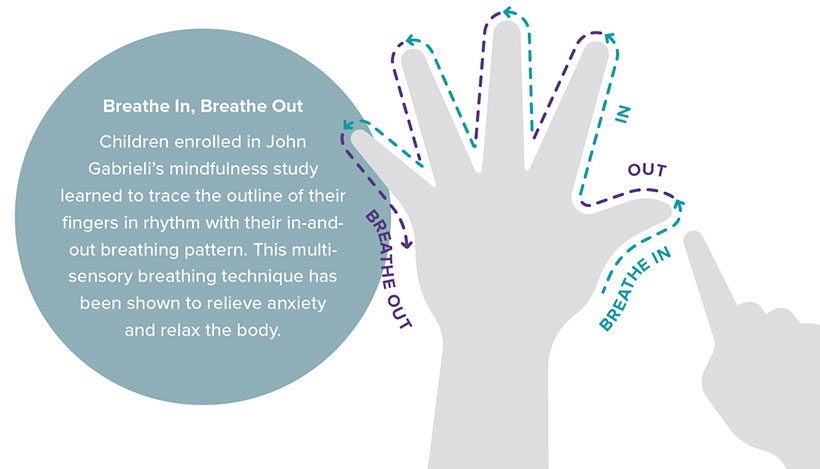
Much mindfulness research has focused on adults, but promising data about the benefits of mindfulness training for children and adolescents is emerging as well. In studies supported by the McGovern Institute’s Poitras Center for Psychiatric Disorders Research in 2019 and 2020, Gabrieli and Whitfield-Gabrieli found that sixth-graders in a Boston middle school who participated in eight weeks of mindfulness training experienced reductions in feelings of stress and increases in sustained attention. More recently, Gabrieli and Whitfeld-Gabrieli’s teams have shown how new tools can support mindfulness training and make it accessible to more children and their families — from a smartphone app that can be used anywhere to real-time neurofeedback inside an MRI scanner.
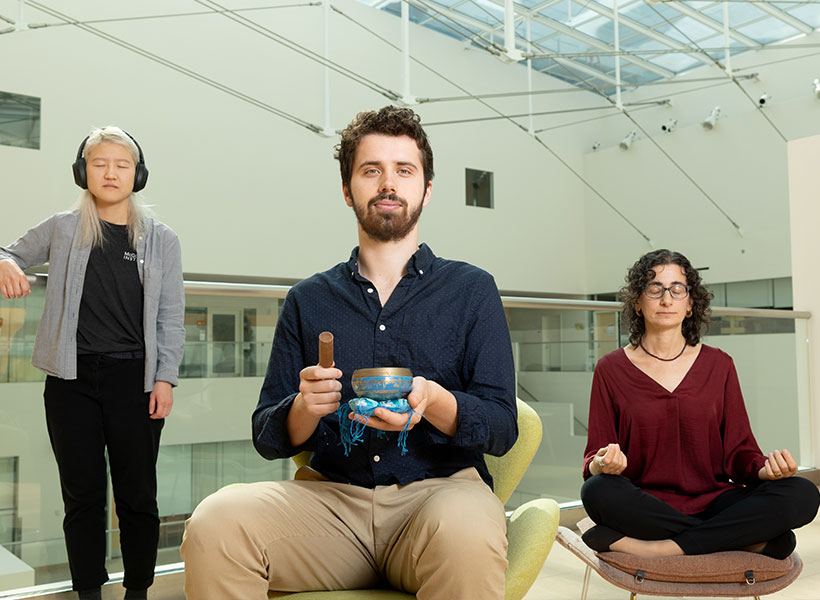
Isaac Treves (center), a PhD student in the lab of John Gabrieli, is the lead author of two studies which found that mindfulness training may improve children’s mental health. Treves and his co-authors Kimberly Wang (left) and Cindy Li (right) also practice mindfulness in their daily lives. Photo: Steph Stevens
Mindfulness and mental health
Mindfulness is not just a practice, it is a trait — an open, non-judgmental way of attending to experiences that some people exhibit more than others. By assessing individuals’ mindfulness with questionnaires that ask about attention and awareness, researchers have found the trait associates with many measures of mental health. Gabrieli and his team measured mindfulness in children between the ages of eight and ten and found it was highest in those who were most emotionally resilient to the stress they experienced during the Covid-19 pandemic. As the team reported this year in the journal PLOS One, children who were more mindful rated the impact of the pandemic on their own lives lower than other participants in the study. They also reported lower levels of stress, anxiety, and depression.
Mindfulness doesn’t come naturally to everyone, but brains are malleable, and both children and adults can cultivate mindfulness with training and practice. In their studies of middle schoolers, Gabrieli and Whitfeld-Gabrieli showed that the emotional effects of mindfulness training corresponded to measurable changes in the brain: Functional MRI scans revealed changes in regions involved in stress, negative feelings, and focused attention.
Whitfeld-Gabrieli says if mindfulness training makes kids more resilient, it could be a valuable tool for managing symptoms of anxiety and depression before they become severe. “I think it should be part of the standard school day,” she says. “I think we would have a much happier, healthier society if we could be doing this from the ground up.”
Data from Gabrieli’s lab suggests broadly implementing mindfulness training might even pay off in terms of academic achievement. His team found in a 2019 study that middle school students who reported greater levels of mindfulness had, on average, better grades, better scores on standardized tests, fewer absences, and fewer school suspensions than their peers.
Some schools have begun making mindfulness programs available to their students. But those programs don’t reach everyone, and their type and quality vary tremendously. Indeed, not every study of mindfulness training in schools has found the program to significantly benefit participants, which may be because not every approach to mindfulness training is equally effective.
“This is where I think the science matters,” Gabrieli says. “You have to find out what kinds of supports really work and you have to execute them reasonably. A recent report from Gabrieli’s lab offers encouraging news: mindfulness training doesn’t have to be in-person. Gabrieli and his team found that children can benefit from practicing mindfulness at home with the help of an app.
When the pandemic closed schools in 2020, school-based mindfulness programs came to an abrupt halt. Soon thereafter, a group called Inner Explorer had developed a smartphone app that could teach children mindfulness at home. Gabrieli and his team were eager to find out if this easy-access tool could effectively support children’s emotional well-being.
In October of this year, they reported in the journal Mindfulness that after 40 days of app use, children between the ages of eight and ten reported less stress than they had before beginning mindfulness training. Parents reported that their children were also experiencing fewer negative emotions, such as loneliness and fear.
The outcomes suggest a path toward making evidence-based mindfulness training for children broadly accessible. “Tons of people could do this,” says Gabrieli. “It’s super scalable. It doesn’t cost money; you don’t have to go somewhere. We’re very excited about that.”
Visualizing healthy minds
Mindfulness training may be even more effective when practitioners can visualize what’s happening in their brains. In Whitfeld-Gabrieli’s lab, teenagers have had a chance to slide inside an MRI scanner and watch their brain activity shift in real time as they practiced mindfulness meditation. The visualization they see focuses on the brain’s default mode network (DMN), which is most active when attention is not focused on a particular task. Certain patterns of activity in the DMN have been linked to depression, anxiety, and other psychiatric conditions, and mindfulness training may help break these patterns.
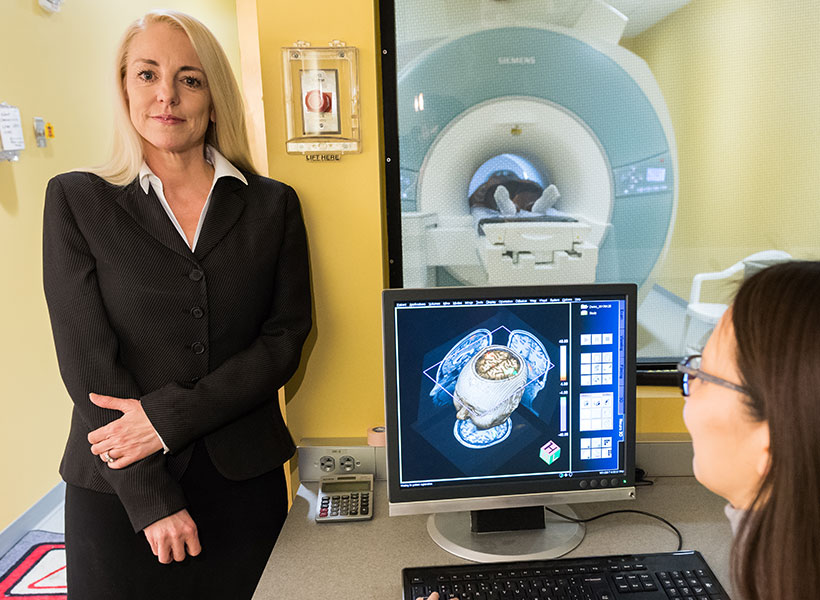
McGovern research affiliate Susan Whitfield-Gabrieli in the Martinos Imaging Center. Photo: Caitlin Cunningham
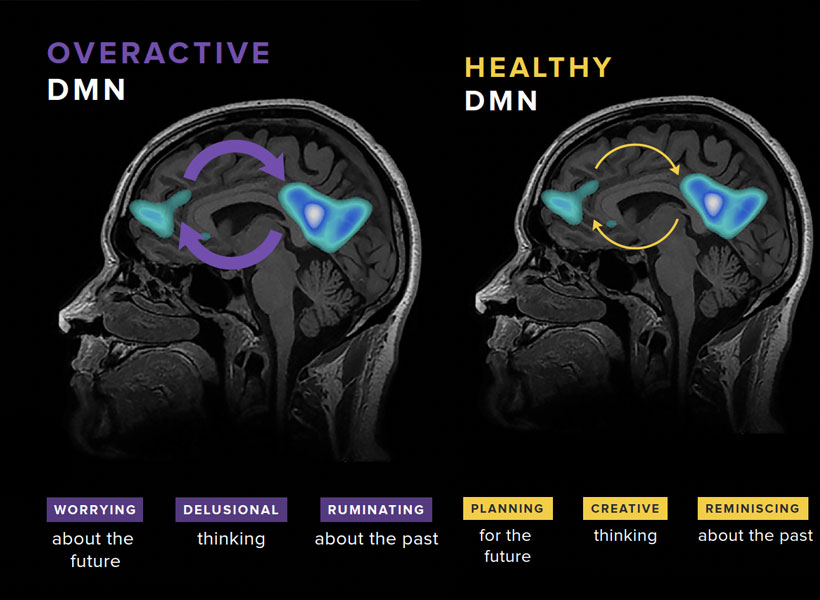
Whitfeld-Gabrieli explains that when the mind is free to wander, two hubs of the DMN become active. “Typically, that means we’re engaged in some kind of mental time travel,” she says. That might mean reminiscing about the past or planning for the future, but can be more distressing when it turns into obsessive rumination or worry. In people with anxiety, depression, and psychosis, these network hubs are often hyperconnected.
“It’s almost as if they’re hijacked,” Whitfeld-Gabrieli says. “The more they’re correlated, the more psychopathology one might be experiencing. We wanted to unlock that hyperconnectivity for kids who are suffering from depression and anxiety.” She hoped that by replacing thoughts of the past and the future with focus on the present, mindfulness meditation would rein in overactive DMNs, and she wanted a way to encourage kids to do exactly that.
The neurofeedback tool that she and her colleagues created focuses on the DMN as well as separate brain region that is called on during attention-demanding tasks. Activity in those regions is monitored with functional MRI and displayed to users in a game-like visualization. Inside the scanner, participants see how that activity changes as they focus on a meditation or when their mind wanders. As their mind becomes more focused on the present moment, changes in brain activity move a ball toward a target.
Whitfeld-Gabrieli says the real-time feedback was motivating for adolescents who participated in a recent study, who all had histories of anxiety or depression. “They’re training their brain to tune their mind, and they love it,” she says.
The default mode network (DMN) is a large-scale brain network that is active when a person is not focused on the outside world and the brain is at wakeful rest. The DMN is often over-engaged in adolescents with depression and anxiety, as well as teens at risk for these affective disorders (left). DMN activation and connectivity can be “tuned” to a healthier state through the practice of mindfulness (right).
In March, she and her team reported in Molecular Psychiatry that the neurofeedback tool helped those study participants reduce connectivity in the DMN and engage a more desirable brain state. It’s not the first success the team has had with the approach. Previously, they found that the decreases in DMN connectivity brought about by mindfulness meditation with neurofeedback were associated with reduced hallucinations for patients with schizophrenia. Testing the clinical benefits of the approach in teens is on the horizon; Whitfeld-Gabrieli and her collaborators plan to investigate how mindfulness meditation with real-time neurofeedback affects depression symptoms in an upcoming clinical trial.
Whitfeld-Gabrieli emphasizes that the neurofeedback is a training tool, helping users improve mindfulness techniques they can later call on anytime, anywhere. While that training currently requires time inside an MRI scanner, she says it may be possible create an EEG-based version of the approach, which could be deployed in doctors’ offices and other more accessible settings.
Both Gabrieli and Whitfeld-Gabrieli continue to explore how mindfulness training impacts different aspects of mental health, in both children and adults and with a range of psychiatric conditions. Whitfeld-Gabrieli expects it will be one powerful tool for combating a youth mental health crisis for which there will be no single solution. “I think it’s going to take a village,” she says. “We are all going to have to work together, and we’ll have to come up some really innovative ways to help.”