Hugh Herr creates bionic limbs that emulate the function of natural limbs. In 2011, TIME magazine named him the “Leader of the Bionic Age” for his revolutionary work in the emerging field of biomechatronics, an emerging field that marries human physiology with electromechanics.
Herr, who lost both of his legs below the knee to a climbing accident in 1982, has dedicated his career to the creation of technologies that push the possibilities of prosthetics. As co-director of the K. Lisa Yang Center for Bionics, Herr seeks to develop neural and mechanical interfaces for human-machine communications; integrate these interfaces into novel bionic platforms; perform clinical trials to accelerate the deployment of bionic products by the private sector; and leverage novel and durable, but affordable, materials and manufacturing processes to ensure equitable access of the latest bionic technology to all impacted individuals, especially to those in developing countries.
Herr’s story has been told in the National Geographic film, Ascent: The Story of Hugh Herr as well as the PBS documentary, Augmented.
More Research
Some of Herr’s key innovations include:
the first autonomous leg exoskeleton to lower human metabolism, increase preferred speed, and reduce musculoskeletal stress for human walking.
a novel surgical procedure for limb amputation and neural interfacing that allows persons with limb loss to control their synthetic limbs through thought and experience natural proprioceptive sensations from the synthetic limb.
a powered ankle-foot prosthesis that has been clinically shown to allow amputees to walk with normal levels of speed and metabolism.
Herr’s team is now evaluating its novel bionic limbs for clinical efficacy in people with amputations at various levels. The limbs’ artificial sensors enable brain-controlled movements with natural touch and movement sensations.
The team is also advancing a technology to help stroke survivors and people with age-related musculoskeletal joint disease gain muscle strength. The system uses proprioceptive sensing and biophysical controllers to modulate artificial muscle interfaces that are attached to the body. The researchers expect that it will enable people with certain leg weaknesses to vary their walking cadence and move across irregular terrains with typical energy exertion and a natural gait
To restore movement function in people with paralyzed limbs caused by spinal cord injury, the team has embarked on a cross-disciplinary collaboration with McGovern’s Ed Boyden and Robert Langer to develop a platform that will incorporate, among other elements, a scaffold—or engineered “nerve bridge”—to reproduce the conductivity and mechanical properties of the original tissue and muscle-control interfaces to provide computer-modulated muscle stimulation using optogenetics, which enables neuronal activity to be controlled with light.
Herr’s lab has also launched the Sierra Leone Prosthetic Project to design and implement a health-system model to support the country’s prosthetic sector and expand access to prosthetic devices.
Biography
Herr earned his MS in mechanical engineering at MIT and his PhD in biophysics at Harvard University. He worked as a postdoctoral researcher at the MIT Leg Lab, part of the MIT Artificial Intelligence Lab, which is dedicated to studying legged locomotion and building dynamic legged robots that walk, run, and hop like their biological counterparts. In 2000, Herr took over as director of the lab, which eventually became the Biomechatronics Group within the Media Lab. He was named co-director of the K. Lisa Yang Center for Bionics in 2022 and joined the McGovern Institute as an associate investigator that same year.
Honors and Awards
2022 – Genius Award, Liberty Science Center
2016 – Award for Technical & Scientific Research, Princess of Asturias Foundation
2014 – American Ingenuity Award in Technology, Smithsonian Institute
2014 – Innovator of the Year, R&D Magazine
2014 – Inventor of the Year, Intellectual Property Owners Education Foundation
2007 – Heinz Award in Technology, the Economy and Employment, Heinz Family Foundation
2007 – Top Ten Inventions in Health (EmPower ankle-foot prosthesis), TIME
2005 – Breakthrough Leadership Award, Popular Mechanics
2004 – Top Ten Inventions in Health (Rheo prosthetic knee), TIME
Augmented is a Nova PBS documentary that premiered in February 2022, featuring Hugh Herr, the co-director of the K. Lisa Yang Center for Bionics at MIT.
Follow the dramatic personal journey of Hugh Herr, a biophysicist working to create brain-controlled robotic limbs. At age 17, Herr’s legs were amputated after a climbing accident. Frustrated by the crude prosthetic limbs he was given, Herr set out to remedy their design, leading him to a career as an inventor of innovative prosthetic devices. Now, Herr is teaming up with an injured climber and a surgeon at a leading Boston hospital to test a new approach to surgical amputation that allows prosthetic limbs to move and feel like the real thing. Herr’s journey is a powerful tale of innovation and the inspiring story of a personal tragedy transformed into a life-long quest to help others.
A deepening understanding of the brain has created unprecedented opportunities to alleviate the challenges posed by disability. Scientists and engineers are taking design cues from biology itself to create revolutionary technologies that restore the function of bodies affected by injury, aging, or disease – from prosthetic limbs that effortlessly navigate tricky terrain to digital nervous systems that move the body after a spinal cord injury.
With the establishment of the new K. Lisa Yang Center for Bionics, MIT is pushing forward the development and deployment of enabling technologies that communicate directly with the nervous system to mitigate a broad range of disabilities. The center’s scientists, clinicians, and engineers will work together to create, test, and disseminate bionic technologies that integrate with both the body and mind.
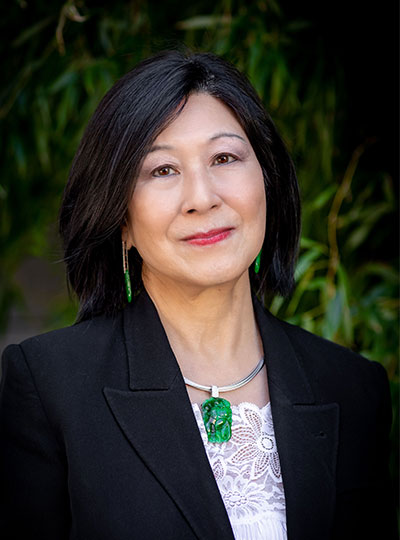
The center is funded by a $24 million gift to MIT’s McGovern Institute for Brain Research from philanthropist Lisa Yang, a former investment banker committed to advocacy for individuals with visible and invisible disabilities.
Philanthropist Lisa Yang is committed to advocacy for individuals with visible and invisible disabilities. Photo: Caitlin Cunningham
“The K. Lisa Yang Center for Bionics will provide a dynamic hub for scientists, engineers and designers across MIT to work together on revolutionary answers to the challenges of disability,” says MIT President L. Rafael Reif. “With this visionary gift, Lisa Yang is unleashing a powerful collaborative strategy that will have broad impact across a large spectrum of human conditions – and she is sending a bright signal to the world that the lives of individuals who experience disability matter deeply.”
An interdisciplinary approach
To develop prosthetic limbs that move as the brain commands or optical devices that bypass an injured spinal cord to stimulate muscles, bionic developers must integrate knowledge from a diverse array of fields—from robotics and artificial intelligence to surgery, biomechanics, and design. The K. Lisa Yang Center for Bionics will be deeply interdisciplinary, uniting experts from three MIT schools: Science, Engineering, and Architecture and Planning. With clinical and surgical collaborators at Harvard Medical School, the center will ensure that research advances are tested rapidly and reach people in need, including those in traditionally underserved communities.
To support ongoing efforts to move toward a future without disability, the center will also provide four endowed fellowships for MIT graduate students working in bionics or other research areas focused on improving the lives of individuals who experience disability.
“I am thrilled to support MIT on this major research effort to enable powerful new solutions that improve the quality of life for individuals who experience disability,” says Yang. “This new commitment extends my philanthropic investment into the realm of physical disabilities, and I look forward to the center’s positive impact on countless lives, here in the US and abroad.”
The center will be led by Hugh Herr, a professor of media arts and sciences at MIT’s Media Lab, and Ed Boyden, the Y. Eva Tan Professor of Neurotechnology at MIT, a professor of biological engineering, brain and cognitive sciences, and media arts and sciences, and an investigator at MIT’s McGovern Institute and the Howard Hughes Medical Institute.
A double amputee himself, Herr is a pioneer in the development of bionic limbs to improve mobility for those with physical disabilities. “The world profoundly needs relief from the disabilities imposed by today’s nonexistent or broken technologies. We must continually strive towards a technological future in which disability is no longer a common life experience,” says Herr. “I am thrilled that the Yang Center for Bionics will help to measurably improve the human experience for so many.”
Boyden, who is a renowned creator of tools to analyze and control the brain, will play a key role in merging bionics technologies with the nervous system. “The Yang Center for Bionics will be a research center unlike any other in the world,” he says. “A deep understanding of complex biological systems, coupled with rapid advances in human-machine bionic interfaces, mean we will soon have the capability to offer entirely new strategies for individuals who experience disability. It is an honor to be part of the center’s founding team.”
Center priorities
In its first four years, the K. Lisa Yang Center for Bionics will focus on developing and testing three bionic technologies:
Digital nervous system: to eliminate movement disorders caused by spinal cord injuries, using computer-controlled muscle activations to control limb movements while simultaneously stimulating spinal cord repair
Brain-controlled limb exoskeletons: to assist weak muscles and enable natural movement for people affected by stroke or musculoskeletal disorders
Bionic limb reconstruction: to restore natural, brain-controlled movements as well as the sensation of touch and proprioception (awareness of position and movement) from bionic limbs
A fourth priority will be developing a mobile delivery system to ensure patients in medically underserved communities have access to prosthetic limb services. Investigators will field test a system that uses a mobile clinic to conduct the medical imaging needed to design personalized, comfortable prosthetic limbs and to fit the prostheses to patients where they live. Investigators plan to initially bring this mobile delivery system to Sierra Leone, where thousands of people suffered amputations during the country’s 11-year civil war. While the population of persons with amputation continues to increase each year in Sierra Leone, today less than 10% of persons in need benefit from functional prostheses. Through the mobile delivery system, a key center objective is to scale up production and access of functional limb prostheses for Sierra Leoneans in dire need.
Philanthropist Lisa Yang (far left) and MIT bionics researcher Hugh Herr (second from left) met with Sierra Leone’s President Julius Maada Bio (second from right) and Chief Innovation Officer for the Directorate of Science, Technology and Innovation, David Moinina Sengeh, to discuss the mobile clinic component of the new K. Lisa Yang Center for Bionics at MIT. Photo: David Moinina Sengeh
“The mobile prosthetics service fueled by the K. Lisa Yang Center for Bionics at MIT is an innovative solution to a global problem,” said Julius Maada Bio, President of Sierra Leone. “I am proud that Sierra Leone will be the first site for deploying this state-of-the-art digital design and fabrication process. As leader of a government that promotes innovative technologies and prioritizes human capital development, I am overjoyed that this pilot project will give Sierra Leoneans (especially in rural areas) access to quality limb prostheses and thus improve their quality of life.”
Together, Herr and Boyden will launch research at the bionics center with three other MIT faculty: Assistant Professor of Media Arts and Sciences Canan Dagdeviren, Walter A. Rosenblith Professor of Cognitive Neuroscience Nancy Kanwisher, and David H. Koch (1962) Institute Professor Robert Langer. They will work closely with three clinical collaborators at Harvard Medical School: orthopedic surgeon Marco Ferrone, plastic surgeon Matthew Carty, and Nancy Oriol, Faculty Associate Dean for Community Engagement in Medical Education.
“Lisa Yang and I share a vision for a future in which each and every person in the world has the right to live without a debilitating disability if they so choose,” adds Herr. “The Yang Center will be a potent catalyst for true innovation and impact in the bionics space, and I am overjoyed to work with my colleagues at MIT, and our accomplished clinical partners at Harvard, to make important steps forward to help realize this vision.”