Brain region linked to altered social interactions in autism model

Although psychiatric disorders can be linked to particular genes, the brain regions and mechanisms underlying particular disorders are not well-understood. Mutations or deletions of the SHANK3 gene are strongly associated with autism spectrum disorder (ASD) and a related rare disorder called Phelan-McDermid syndrome. Mice with SHANK3 mutations also display some of the traits associated with autism, including avoidance of social interactions, but the brain regions responsible for this behavior have not been identified.

A new study by neuroscientists at MIT and colleagues in China provides clues to the neural circuits underlying social deficits associated with ASD. The paper, published in Nature Neuroscience, found that structural and functional impairments in the anterior cingulate cortex (ACC) of SHANK3 mutant mice are linked to altered social interactions.

“Neurobiological mechanisms of social deficits are very complex and involve many brain regions, even in a mouse model,” explains Guoping Feng, the James W. and Patricia T. Poitras Professor at MIT and one of the senior authors of the study. “These findings add another piece of the puzzle to mapping the neural circuits responsible for this social deficit in ASD models.”

The Nature Neuroscience paper is the result of a collaboration between Feng, who is also an investigator at MIT’s McGovern Institute and a senior scientist in the Broad Institute’s Stanley Center for Psychiatric Research, and Wenting Wang and Shengxi Wu at the Fourth Military Medical University, Xi’an, China.

A number of brain regions have been implicated in social interactions, including the prefrontal cortex (PFC) and its projections to brain regions including the nucleus accumbens and habenula, but these studies failed to definitively link the PFC to altered social interactions seen in SHANK3 knockout mice.

In the new study, the authors instead focused on the ACC, a brain region noted for its role in social functions in humans and animal models. The ACC is also known to play a role in fundamental cognitive processes, including cost-benefit calculation, motivation, and decision making.

In mice lacking SHANK3, the researchers found structural and functional disruptions at the synapses, or connections, between excitatory neurons in the ACC. The researchers went on to show that the loss of SHANK3 in excitatory ACC neurons alone was enough to disrupt communication between these neurons and led to unusually reduced activity of these neurons during behavioral tasks reflecting social interaction.

Having implicated these ACC neurons in social preferences and interactions in SHANK3 knockout mice, the authors then tested whether activating these same neurons could rescue these behaviors. Using optogenetics and specfic drugs, the researchers activated the ACC neurons and found improved social behavior in the SHANK3 mutant mice.

“Next, we are planning to explore brain regions downstream of the ACC that modulate social behavior in normal mice and models of autism,” explains Wenting Wang, co-corresponding author on the study. “This will help us to better understand the neural mechanisms of social behavior, as well as social deficits in neurodevelopmental disorders.”

Previous clinical studies reported that anatomical structures in the ACC were altered and/or dysfunctional in people with ASD, an initial indication that the findings from SHANK3 mice may also hold true in these individuals.

The research was funded, in part, by the Natural Science Foundation of China. Guoping Feng was supported by NIMH grant no. MH097104, the  Poitras Center for Psychiatric Disorders Research at the McGovern Institute at MIT, and the Hock E. Tan and K. Lisa Yang Center for Autism Research at the McGovern Institute at MIT.

Ed Boyden receives 2019 Warren Alpert Prize

The 2019 Warren Alpert Foundation Prize has been awarded to four scientists, including Ed Boyden, for pioneering work that launched the field of optogenetics, a technique that uses light-sensitive channels and pumps to control the activity of neurons in the brain with a flick of a switch. He receives the prize alongside Karl Deisseroth, Peter Hegemann, and Gero Miesenböck, as outlined by The Warren Alpert Foundation in their announcement.

Harnessing light and genetics, the approach illuminates and modulates the activity of neurons, enables study of brain function and behavior, and helps reveal activity patterns that can overcome brain diseases.

Boyden’s work was key to envisioning and developing optogenetics, now a core method in neuroscience. The method allows brain circuits linked to complex behavioral processes, such as those involved in decision-making, feeding, and sleep, to be unraveled in genetic models. It is also helping to elucidate the mechanisms underlying neuropsychiatric disorders, and has the potential to inspire new strategies to overcome brain disorders.

“It is truly an honor to be included among the extremely distinguished list of winners of the Alpert Award,” says Boyden, the Y. Eva Tan Professor in Neurotechnology at the McGovern Institute, MIT. “To me personally, it is exciting to see the relatively new field of neurotechnology recognized. The brain implements our thoughts and feelings. It makes us who we are. This mysteries and challenge requires new technologies to make the brain understandable and repairable. It is a great honor that our technology of optogenetics is being thus recognized.”

While they were students, Boyden, and fellow awardee Karl Deisseroth, brainstormed about how microbial opsins could be used to mediate optical control of neural activity. In mid-2004, the pair collaborated to show that microbial opsins can be used to optically control neural activity. Upon launching his lab at MIT, Boyden’s team developed the first optogenetic silencing tool, the first effective optogenetic silencing in live mammals, noninvasive optogenetic silencing, and single-cell optogenetic control.

“The discoveries made by this year’s four honorees have fundamentally changed the landscape of neuroscience,” said George Q. Daley, dean of Harvard Medical School. “Their work has enabled scientists to see, understand and manipulate neurons, providing the foundation for understanding the ultimate enigma—the human brain.”

Beyond optogenetics, Boyden has pioneered transformative technologies that image, record, and manipulate complex systems, including expansion microscopy, robotic patch clamping, and even shrinking objects to the nanoscale. He was elected this year to the ranks of the National Academy of Sciences, and selected as an HHMI Investigator. Boyden has received numerous awards for this work, including the 2018 Gairdner International Prize and the 2016 Breakthrough Prize in Life Sciences.

The Warren Alpert Foundation, in association with Harvard Medical School, honors scientists whose work has improved the understanding, prevention, treatment or cure of human disease. Prize recipients are selected by the foundation’s scientific advisory board, which is composed of distinguished biomedical scientists and chaired by the dean of Harvard Medical School. The honorees will share a $500,000 prize and will be recognized at a daylong symposium on Oct. 3 at Harvard Medical School.

Ed Boyden holds the titles of Investigator, McGovern Institute; Y. Eva Tan Professor in Neurotechnology at MIT; Leader, Synthetic Neurobiology Group, Media Lab; Associate Professor, Biological Engineering, Brain and Cognitive Sciences, Media Lab; Co-Director, MIT Center for Neurobiological Engineering; Member, MIT Center for Environmental Health Sciences, Computational and Systems Biology Initiative, and Koch Institute.

How expectation influences perception

For decades, research has shown that our perception of the world is influenced by our expectations. These expectations, also called “prior beliefs,” help us make sense of what we are perceiving in the present, based on similar past experiences. Consider, for instance, how a shadow on a patient’s X-ray image, easily missed by a less experienced intern, jumps out at a seasoned physician. The physician’s prior experience helps her arrive at the most probable interpretation of a weak signal.

The process of combining prior knowledge with uncertain evidence is known as Bayesian integration and is believed to widely impact our perceptions, thoughts, and actions. Now, MIT neuroscientists have discovered distinctive brain signals that encode these prior beliefs. They have also found how the brain uses these signals to make judicious decisions in the face of uncertainty.

“How these beliefs come to influence brain activity and bias our perceptions was the question we wanted to answer,” says Mehrdad Jazayeri, the Robert A. Swanson Career Development Professor of Life Sciences, a member of MIT’s McGovern Institute for Brain Research, and the senior author of the study.

The researchers trained animals to perform a timing task in which they had to reproduce different time intervals. Performing this task is challenging because our sense of time is imperfect and can go too fast or too slow. However, when intervals are consistently within a fixed range, the best strategy is to bias responses toward the middle of the range. This is exactly what animals did. Moreover, recording from neurons in the frontal cortex revealed a simple mechanism for Bayesian integration: Prior experience warped the representation of time in the brain so that patterns of neural activity associated with different intervals were biased toward those that were within the expected range.

MIT postdoc Hansem Sohn, former postdoc Devika Narain, and graduate student Nicolas Meirhaeghe are the lead authors of the study, which appears in the July 15 issue of Neuron.

Ready, set, go

Statisticians have known for centuries that Bayesian integration is the optimal strategy for handling uncertain information. When we are uncertain about something, we automatically rely on our prior experiences to optimize behavior.

“If you can’t quite tell what something is, but from your prior experience you have some expectation of what it ought to be, then you will use that information to guide your judgment,” Jazayeri says. “We do this all the time.”

In this new study, Jazayeri and his team wanted to understand how the brain encodes prior beliefs, and put those beliefs to use in the control of behavior. To that end, the researchers trained animals to reproduce a time interval, using a task called “ready-set-go.” In this task, animals measure the time between two flashes of light (“ready” and “set”) and then generate a “go” signal by making a delayed response after the same amount of time has elapsed.

They trained the animals to perform this task in two contexts. In the “Short” scenario, intervals varied between 480 and 800 milliseconds, and in the “Long” context, intervals were between 800 and 1,200 milliseconds. At the beginning of the task, the animals were given the information about the context (via a visual cue), and therefore knew to expect intervals from either the shorter or longer range.

Jazayeri had previously shown that humans performing this task tend to bias their responses toward the middle of the range. Here, they found that animals do the same. For example, if animals believed the interval would be short, and were given an interval of 800 milliseconds, the interval they produced was a little shorter than 800 milliseconds. Conversely, if they believed it would be longer, and were given the same 800-millisecond interval, they produced an interval a bit longer than 800 milliseconds.

“Trials that were identical in almost every possible way, except the animal’s belief led to different behaviors,” Jazayeri says. “That was compelling experimental evidence that the animal is relying on its own belief.”

Once they had established that the animals relied on their prior beliefs, the researchers set out to find how the brain encodes prior beliefs to guide behavior. They recorded activity from about 1,400 neurons in a region of the frontal cortex, which they have previously shown is involved in timing.

During the “ready-set” epoch, the activity profile of each neuron evolved in its own way, and about 60 percent of the neurons had different activity patterns depending on the context (Short versus Long). To make sense of these signals, the researchers analyzed the evolution of neural activity across the entire population over time, and found that prior beliefs bias behavioral responses by warping the neural representation of time toward the middle of the expected range.

“We have never seen such a concrete example of how the brain uses prior experience to modify the neural dynamics by which it generates sequences of neural activities, to correct for its own imprecision. This is the unique strength of this paper: bringing together perception, neural dynamics, and Bayesian computation into a coherent framework, supported by both theory and measurements of behavior and neural activities,” says Mate Lengyel, a professor of computational neuroscience at Cambridge University, who was not involved in the study.

Embedded knowledge

Researchers believe that prior experiences change the strength of connections between neurons. The strength of these connections, also known as synapses, determines how neurons act upon one another and constrains the patterns of activity that a network of interconnected neurons can generate. The finding that prior experiences warp the patterns of neural activity provides a window onto how experience alters synaptic connections. “The brain seems to embed prior experiences into synaptic connections so that patterns of brain activity are appropriately biased,” Jazayeri says.

As an independent test of these ideas, the researchers developed a computer model consisting of a network of neurons that could perform the same ready-set-go task. Using techniques borrowed from machine learning, they were able to modify the synaptic connections and create a model that behaved like the animals.

These models are extremely valuable as they provide a substrate for the detailed analysis of the underlying mechanisms, a procedure that is known as “reverse-engineering.” Remarkably, reverse-engineering the model revealed that it solved the task the same way the monkeys’ brain did. The model also had a warped representation of time according to prior experience.

The researchers used the computer model to further dissect the underlying mechanisms using perturbation experiments that are currently impossible to do in the brain. Using this approach, they were able to show that unwarping the neural representations removes the bias in the behavior. This important finding validated the critical role of warping in Bayesian integration of prior knowledge.

The researchers now plan to study how the brain builds up and slowly fine-tunes the synaptic connections that encode prior beliefs as an animal is learning to perform the timing task.

The research was funded by the Center for Sensorimotor Neural Engineering, the Netherlands Scientific Organization, the Marie Sklodowska Curie Reintegration Grant, the National Institutes of Health, the Sloan Foundation, the Klingenstein Foundation, the Simons Foundation, the McKnight Foundation, and the McGovern Institute.

Mark Harnett receives a 2019 McKnight Scholar Award

McGovern Institute investigator Mark Harnett is one of six young researchers selected to receive a prestigious 2019 McKnight Scholar Award. The award supports his research “studying how dendrites, the antenna-like input structures of neurons, contribute to computation in neural networks.”

Harnett examines the biophysical properties of single neurons, ultimately aiming to understand how these relate to the complex computations that underlie behavior. His lab was the first to examine the biophysical properties of human dendrites. The Harnett lab found that human neurons have distinct properties, including increased dendritic compartmentalization that could allow more complex computations within single neurons. His lab recently discovered that such dendritic computations are not rare, or confined to specific behaviors, but are a widespread and general feature of neuronal activity.

“As a young investigator, it is hard to prioritize so many exciting directions and ideas,” explains Harnett. “I really want to thank the McKnight Foundation, both for the support, but also for the hard work the award committee puts into carefully thinking about and giving feedback on proposals. It means a lot to get this type of endorsement from a seriously committed and distinguished committee, and their support gives even stronger impetus to pursue this research direction.”

The McKnight Foundation has supported neuroscience research since 1977, and provides three prominent awards, with the Scholar award aimed at supporting young scientists, and drawing applications from the strongest young neuroscience faculty across the US. William L. McKnight (1887-1979) was an early leader of the 3M Company and had a personal interest in memory and brain diseases. The McKnight Foundation was established with this focus in mind, and the Scholar Award provides $75,000 per year for three years to support cutting edge neuroscience research.


McGovern neuroscientists develop a new model for autism

Using the genome-editing system CRISPR, researchers at MIT and in China have engineered macaque monkeys to express a gene mutation linked to autism and other neurodevelopmental disorders in humans. These monkeys show some behavioral traits and brain connectivity patterns similar to those seen in humans with these conditions.

Mouse studies of autism and other neurodevelopmental disorders have yielded drug candidates that have been tested in clinical trials, but none of them have succeeded. Many pharmaceutical companies have given up on testing such drugs because of the poor track record so far.

The new type of model, however, could help scientists to develop better treatment options for some neurodevelopmental disorders, says Guoping Feng, who is the James W. and Patricia Poitras Professor of Neuroscience, a member of MIT’s McGovern Institute for Brain Research, and one of the senior authors of the study.

“Our goal is to generate a model to help us better understand the neural biological mechanism of autism, and ultimately to discover treatment options that will be much more translatable to humans,” says Feng, who is also an institute member of the Broad Institute of MIT and Harvard and a senior scientist in the Broad’s Stanley Center for Psychiatric Research.

“We urgently need new treatment options for autism spectrum disorder, and treatments developed in mice have so far been disappointing. While the mouse research remains very important, we believe that primate genetic models will help us to develop better medicines and possibly even gene therapies for some severe forms of autism,” says Robert Desimone, the director of MIT’s McGovern Institute for Brain Research, the Doris and Don Berkey Professor of Neuroscience, and an author of the paper.

Huihui Zhou of the Shenzhen Institutes of Advanced Technology, Andy Peng Xiang of Sun Yat-Sen University, and Shihua Yang of South China Agricultural University are also senior authors of the study, which appears in the June 12 online edition of Nature. The paper’s lead authors are former MIT postdoc Yang Zhou, MIT research scientist Jitendra Sharma, Broad Institute group leader Rogier Landman, and Qiong Ke of Sun Yat-Sen University. The research team also includes Mriganka Sur, the Paul and Lilah E. Newton Professor in the Department of Brain and Cognitive Sciences and a member of MIT’s Picower Institute for Learning and Memory.

Gene variants

Scientists have identified hundreds of genetic variants associated with autism spectrum disorder, many of which individually confer only a small degree of risk. In this study, the researchers focused on one gene with a strong association, known as SHANK3. In addition to its link with autism, mutations or deletions of SHANK3 can also cause a related rare disorder called Phelan-McDermid Syndrome, whose most common characteristics include intellectual disability, impaired speech and sleep, and repetitive behaviors. The majority of these individuals are also diagnosed with autism spectrum disorder, as many of the symptoms overlap.

The protein encoded by SHANK3 is found in synapses — the junctions between brain cells that allow them to communicate with each other. It is particularly active in a part of the brain called the striatum, which is involved in motor planning, motivation, and habitual behavior. Feng and his colleagues have previously studied mice with Shank3 mutations and found that they show some of the traits associated with autism, including avoidance of social interaction and obsessive, repetitive behavior.

Although mouse studies can provide a great deal of information on the molecular underpinnings of disease, there are drawbacks to using them to study neurodevelopmental disorders, Feng says. In particular, mice lack the highly developed prefrontal cortex that is the seat of many uniquely primate traits, such as making decisions, sustaining focused attention, and interpreting social cues, which are often affected by brain disorders.

The recent development of the CRISPR genome-editing technique offered a way to engineer gene variants into macaque monkeys, which has previously been very difficult to do. CRISPR consists of a DNA-cutting enzyme called Cas9 and a short RNA sequence that guides the enzyme to a specific area of the genome. It can be used to disrupt genes or to introduce new genetic sequences at a particular location.

Members of the research team based in China, where primate reproductive technology is much more advanced than in the United States, injected the CRISPR components into fertilized macaque eggs, producing embryos that carried the Shank3 mutation.

Researchers at MIT, where much of the data was analyzed, found that the macaques with Shank3 mutations showed behavioral patterns similar to those seen in humans with the mutated gene. They tended to wake up frequently during the night, and they showed repetitive behaviors. They also engaged in fewer social interactions than other macaques.

Magnetic resonance imaging (MRI) scans also revealed similar patterns to humans with autism spectrum disorder. Neurons showed reduced functional connectivity in the striatum as well as the thalamus, which relays sensory and motor signals and is also involved in sleep regulation. Meanwhile, connectivity was strengthened in other regions, including the sensory cortex.

Michael Platt, a professor of neuroscience and psychology at the University of Pennsylvania, says the macaque models should help to overcome some of the limitations of studying neurological disorders in mice, whose behavioral symptoms and underlying neurobiology are often different from those seen in humans.

“Because the macaque model shows a much more complete recapitulation of the human behavioral phenotype, I think we should stand a much greater chance of identifying the degree to which any particular therapy, whether it’s a drug or any other intervention, addresses the core symptoms,” says Platt, who was not involved in the study.

Drug development

Within the next year, the researchers hope to begin testing treatments that may affect autism-related symptoms. They also hope to identify biomarkers, such as the distinctive functional brain connectivity patterns seen in MRI scans, that would help them to evaluate whether drug treatments are having an effect.

A similar approach could also be useful for studying other types of neurological disorders caused by well-characterized genetic mutations, such as Rett Syndrome and Fragile X Syndrome. Fragile X is the most common inherited form of intellectual disability in the world, affecting about 1 in 4,000 males and 1 in 8,000 females. Rett Syndrome, which is more rare and almost exclusively affects girls, produces severe impairments in language and motor skills and can also cause seizures and breathing problems.

“Given the limitations of mouse models, patients really need this kind of advance to bring them hope,” Feng says. “We don’t know whether this will succeed in developing treatments, but we will see in the next few years how this can help us to translate some of the findings from the lab to the clinic.”

The research was funded, in part, by the Shenzhen Overseas Innovation Team Project, the Guangdong Innovative and Entrepreneurial Research Team Program, the National Key R&D Program of China, the External Cooperation Program of the Chinese Academy of Sciences, the Patrick J. McGovern Foundation, the National Natural Science Foundation of China, the Shenzhen Science, Technology Commission, the James and Patricia Poitras Center for Psychiatric Disorders Research at the McGovern Institute at MIT, the Stanley Center for Psychiatric Research at the Broad Institute of MIT and Harvard, and the Hock E. Tan and K. Lisa Yang Center for Autism Research at the McGovern Institute at MIT. The research facilities in China where the primate work was conducted are accredited by AAALAC International, a private, nonprofit organization that promotes the humane treatment of animals in science through voluntary accreditation and assessment programs.

How we tune out distractions

Imagine trying to focus on a friend’s voice at a noisy party, or blocking out the phone conversation of the person sitting next to you on the bus while you try to read. Both of these tasks require your brain to somehow suppress the distracting signal so you can focus on your chosen input.

MIT neuroscientists have now identified a brain circuit that helps us to do just that. The circuit they identified, which is controlled by the prefrontal cortex, filters out unwanted background noise or other distracting sensory stimuli. When this circuit is engaged, the prefrontal cortex selectively suppresses sensory input as it flows into the thalamus, the site where most sensory information enters the brain.

“This is a fundamental operation that cleans up all the signals that come in, in a goal-directed way,” says Michael Halassa, an assistant professor of brain and cognitive sciences, a member of MIT’s McGovern Institute for Brain Research, and the senior author of the study.

The researchers are now exploring whether impairments of this circuit may be involved in the hypersensitivity to noise and other stimuli that is often seen in people with autism.

Miho Nakajima, an MIT postdoc, is the lead author of the paper, which appears in the June 12 issue of Neuron. Research scientist L. Ian Schmitt is also an author of the paper.

Shifting attention

Our brains are constantly bombarded with sensory information, and we are able to tune out much of it automatically, without even realizing it. Other distractions that are more intrusive, such as your seatmate’s phone conversation, require a conscious effort to suppress.

In a 2015 paper, Halassa and his colleagues explored how attention can be consciously shifted between different types of sensory input, by training mice to switch their focus between a visual and auditory cue. They found that during this task, mice suppress the competing sensory input, allowing them to focus on the cue that will earn them a reward.

This process appeared to originate in the prefrontal cortex (PFC), which is critical for complex cognitive behavior such as planning and decision-making. The researchers also found that a part of the thalamus that processes vision was inhibited when the animals were focusing on sound cues. However, there are no direct physical connections from the prefrontal cortex to the sensory thalamus, so it was unclear exactly how the PFC was exerting this control, Halassa says.

In the new study, the researchers again trained mice to switch their attention between visual and auditory stimuli, then mapped the brain connections that were involved. They first examined the outputs of the PFC that were essential for this task, by systematically inhibiting PFC projection terminals in every target. This allowed them to discover that the PFC connection to a brain region known as the striatum is necessary to suppress visual input when the animals are paying attention to the auditory cue.

Further mapping revealed that the striatum then sends input to a region called the globus pallidus, which is part of the basal ganglia. The basal ganglia then suppress activity in the part of the thalamus that processes visual information.

Using a similar experimental setup, the researchers also identified a parallel circuit that suppresses auditory input when animals pay attention to the visual cue. In that case, the circuit travels through parts of the striatum and thalamus that are associated with processing sound, rather than vision.

The findings offer some of the first evidence that the basal ganglia, which are known to be critical for planning movement, also play a role in controlling attention, Halassa says.

“What we realized here is that the connection between PFC and sensory processing at this level is mediated through the basal ganglia, and in that sense, the basal ganglia influence control of sensory processing,” he says. “We now have a very clear idea of how the basal ganglia can be involved in purely attentional processes that have nothing to do with motor preparation.”

Noise sensitivity

The researchers also found that the same circuits are employed not only for switching between different types of sensory input such as visual and auditory stimuli, but also for suppressing distracting input within the same sense — for example, blocking out background noise while focusing on one person’s voice.

The team also showed that when the animals are alerted that the task is going to be noisy, their performance actually improves, as they use this circuit to focus their attention.

“This study uses a dazzling array of techniques for neural circuit dissection to identify a distributed pathway, linking the prefrontal cortex to the basal ganglia to the thalamic reticular nucleus, that allows the mouse brain to enhance relevant sensory features and suppress distractors at opportune moments,” says Daniel Polley, an associate professor of otolaryngology at Harvard Medical School, who was not involved in the research. “By paring down the complexities of the sensory stimulus only to its core relevant features in the thalamus — before it reaches the cortex — our cortex can more efficiently encode just the essential features of the sensory world.”

Halassa’s lab is now doing similar experiments in mice that are genetically engineered to develop symptoms similar to those of people with autism. One common feature of autism spectrum disorder is hypersensitivity to noise, which could be caused by impairments of this brain circuit, Halassa says. He is now studying whether boosting the activity of this circuit might reduce sensitivity to noise.

“Controlling noise is something that patients with autism have trouble with all the time,” he says. “Now there are multiple nodes in the pathway that we can start looking at to try to understand this.”

The research was funded by the National Institutes of Mental Health, the National Institute of Neurological Disorders and Stroke, the Simons Foundation, the Alfred P. Sloan Foundation, the Esther A. and Joseph Klingenstein Fund, and the Human Frontier Science Program.

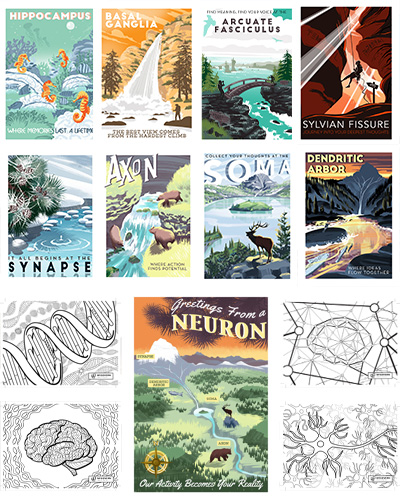
McGovern Institute postcard collection

A collection of 13 postcards arranged in columns.
The McGovern Institute postcard collection, 2023.

The McGovern Institute may be best known for its scientific breakthroughs, but a captivating series of brain-themed postcards developed by McGovern researchers and staff now reveals the institute’s artistic side.

What began in 2017 with a series of brain anatomy postcards inspired by the U.S. Works Projects Administration’s iconic national parks posters, has grown into a collection of twelve different prints, each featuring a unique fusion of neuroscience and art.

More information about each series in the McGovern Institute postcard collection, including the color-your-own mindfulness postcards, can be found below.

Mindfulness Postcard Series, 2023

In winter 2023, the institute released its mindfulness postcard series, a collection of four different neuroscience-themed illustrations that can be colored in with pencils, markers, or paint. The postcard series was inspired by research conducted in John Gabrieli’s lab, which found that practicing mindfulness reduced children’s stress levels and negative emotions during the pandemic. These findings contribute to a growing body of evidence that practicing mindfulness — focusing awareness on the present, typically through meditation, but also through coloring — can change patterns of brain activity associated with emotions and mental health.

Download and color your own postcards.

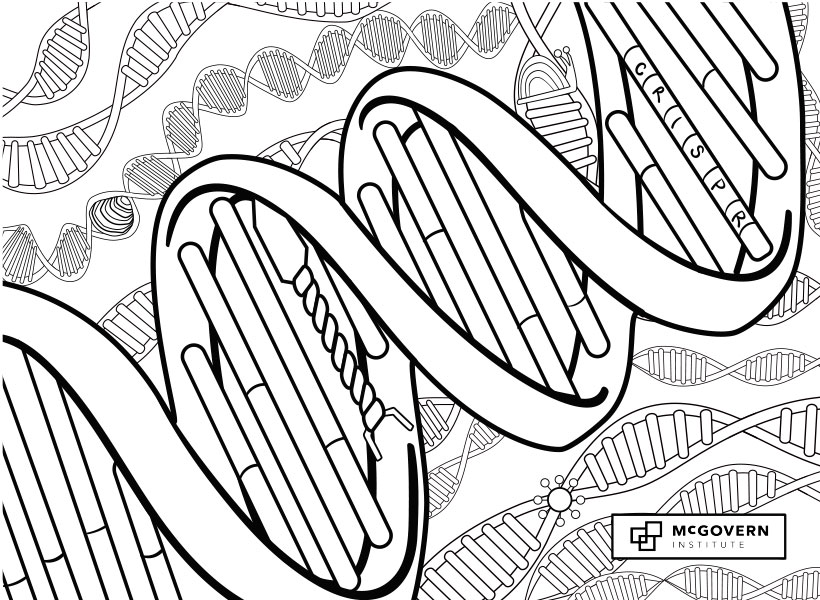
Genes

The McGovern Institute is at the cutting edge of applications based on CRISPR, a genome editing tool pioneered by McGovern Investigator Feng Zhang. Hidden within this DNA-themed postcard is a clam, virus, bacteriophage, snail, and the word CRISPR. Click the links to learn how these hidden elements relate to genetic engineering research at the McGovern Institute.


Line art showing strands of DNA and the McGovern Institute logo.
The McGovern Institute’s “mindfulness” postcard series includes this DNA-themed illustration containing five hidden design elements related to McGovern research. Image: Joseph Laney

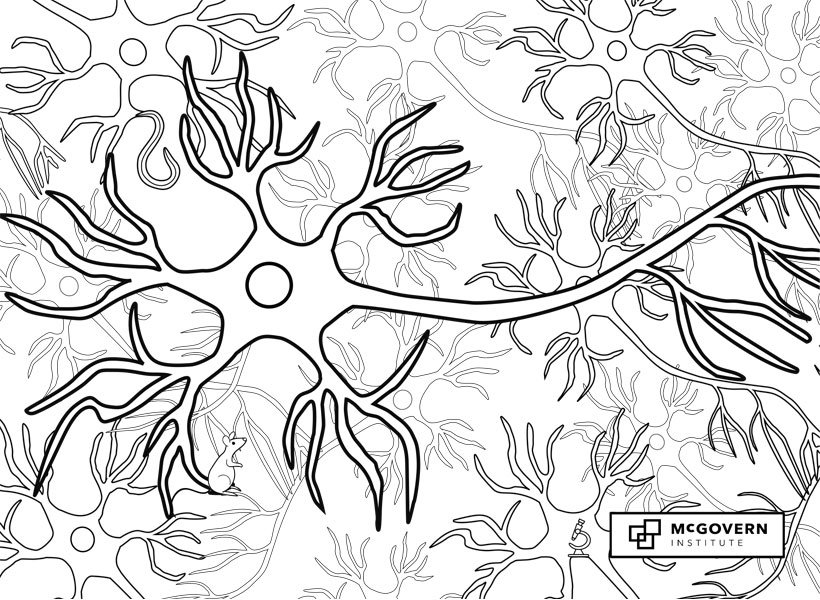
Neurons

McGovern researchers probe the nanoscale and cellular processes that are critical to brain function, including the complex computations conducted in neurons, to the synapses and neurotransmitters that facilitate messaging between cells. Find the mouse, worm, and microscope — three critical elements related to cellular and molecular neuroscience research at the McGovern Institute — in the postcard below.


Line art showing multiple neurons and the McGovern Institute logo.
The McGovern Institute’s “mindfulness” postcard series includes this neuron-themed illustration containing three hidden design elements related to McGovern research. Image: Joseph Laney

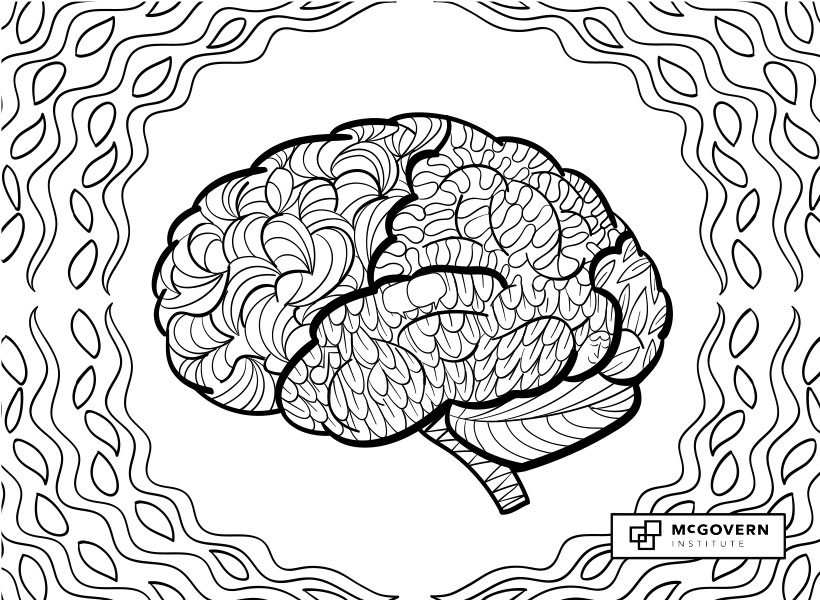
Human Brain

Cognitive neuroscientists at the McGovern Institute examine the brain processes that come together to inform our thoughts and understanding of the world.​ Find the musical note, speech bubbles, and human face in this postcard and click on the links to learn more about how these hidden elements relate to brain research at the McGovern Institute.


Line art of a human brain and the McGovern Institute logo.
The McGovern Institute’s “mindfulness” postcard series includes this brain-themed illustration containing three hidden design elements related to McGovern research. Image: Joseph Laney

Artificial Intelligence

McGovern researchers develop machine learning systems that mimic human processing of visual and auditory cues and construct algorithms to help us understand the complex computations made by the brain. Find the speech bubbles, DNA, and cochlea (spiral) in this postcard and click on the links to learn more about how these hidden elements relate to computational neuroscience research at the McGovern Institute.

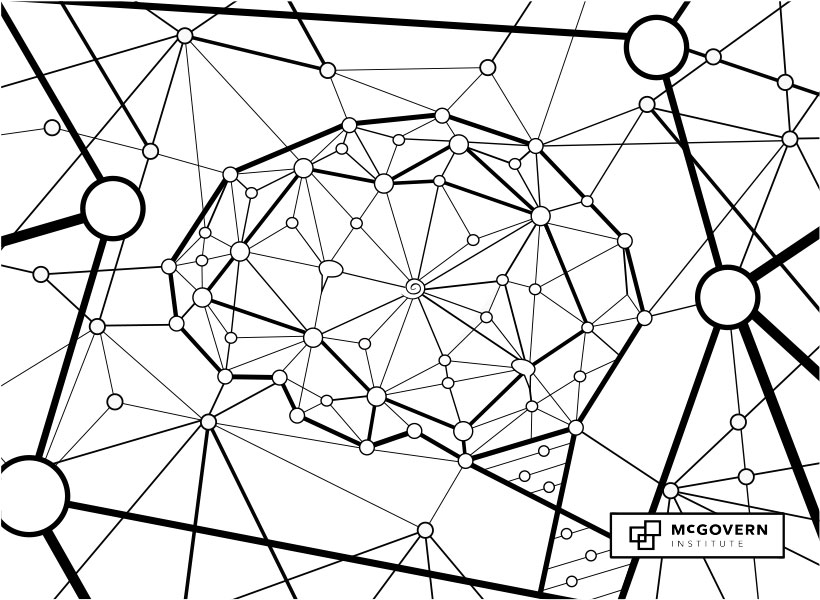
Line art showing an artificial neural network in the shape of the human brain and the McGovern Institute logo.
The McGovern Institute’s “mindfulness” postcard series includes this AI-themed illustration containing three hidden design elements related to McGovern research. Image: Joseph Laney

Neuron Postcard Series, 2019

In 2019, the McGovern Institute released a second series of postcards based on the anatomy of a neuron. Each postcard includes text on the back side that describes McGovern research related to that specific part of the neuron. The descriptive text for each postcard is shown beloSynapse

Synapse

Snow melting off the branch of a bush at the water's edge creates a ripple effect in the pool of water below. Words at the bottom of the image say "It All Begins at the SYNAPSE"Signals flow through the nervous system from one neuron to the next across synapses.

Synapses are exquisitely organized molecular machines that control the transmission of information.

McGovern researchers are studying how disruptions in synapse function can lead to brain disorders like autism.

Image: Joseph Laney

Axon

Illustration of three bears hunting for fish in a flowing river with the words: "Axon: Where Action Finds Potential"The axon is the long, thin neural cable that carries electrical impulses called action potentials from the soma to synaptic terminals at downstream neurons.

Researchers at the McGovern Institute are developing and using tracers that label axons to reveal the elaborate circuit architecture of the brain.

Image: Joseph Laney

Soma

An elk stands on a rocky outcropping overlooking a large lake with an island in the center. Words at the top read: "Collect Your Thoughts at the Soma"The soma, or cell body, is the control center of the neuron, where the nucleus is located.

It connects the dendrites to the axon, which sends information to other neurons.

At the McGovern Institute, neuroscientists are targeting the soma with proteins that can activate single neurons and map connections in the brain.

Image: Joseph Laney

Dendrites

A mountain lake at sunset with colorful fish and snow from a distant mountaintop melting into the lake. Words say "DENDRITIC ARBOR"Long branching neuronal processes called dendrites receive synaptic inputs from thousands of other neurons and carry those signals to the cell body.

McGovern neuroscientists have discovered that human dendrites have different electrical properties from those of other species, which may contribute to the enhanced computing power of the human brain.

Image: Joseph Laney

Brain Anatomy Postcard Series, 2017

The original brain anatomy-themed postcard series, developed in 2017, was inspired by the U.S. Works Projects Administration’s iconic national parks posters created in the 1930s and 1940s. Each postcard includes text on the back side that describes McGovern research related to that specific part of the neuron. The descriptive text for each postcard is shown below.

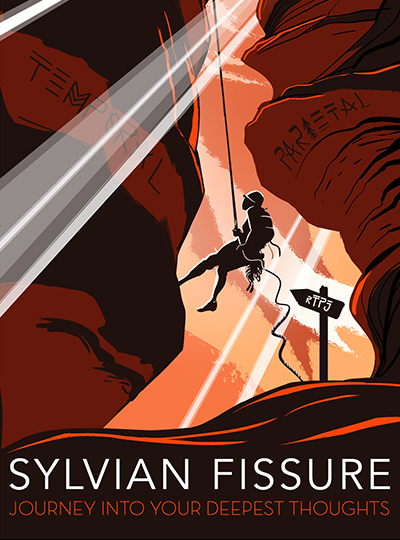
Sylvian Fissure

Illustration of explorer in cave labeled with temporal and parietal letters
The Sylvian fissure is a prominent groove on the right side of the brain that separates the frontal and parietal lobes from the temporal lobe. McGovern researchers are studying a region near the right Sylvian fissure, called the rTPJ, which is involved in thinking about what another person is thinking.

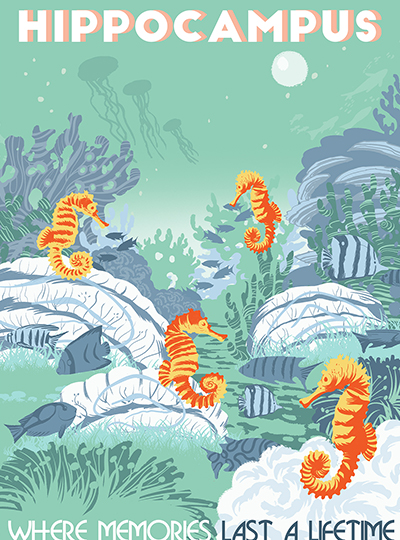
Hippocampus

The hippocampus, named after its resemblance to the seahorse, plays an important role in memory. McGovern researchers are studying how changes in the strength of synapses (connections between neurons) in the hippocampus contribute to the formation and retention of memories.

Basal Ganglia

The basal ganglia are a group of deep brain structures best known for their control of movement. McGovern researchers are studying how the connections between the cerebral cortex and a part of the basal ganglia known as the striatum play a role in emotional decision making and motivation.


The arcuate fasciculus is a bundle of axons in the brain that connects Broca’s area, involved in speech production, and Wernicke’s area, involved in understanding language. McGovern researchers have found a correlation between the size of this structure and the risk of dyslexia in children.


Order and Share

To order your own McGovern brain postcards, contact our colleagues at the MIT Museum, where proceeds will support current and future exhibitions at the growing museum.

Please share a photo of yourself in your own lab (or natural habitat) with one of our cards on social media. Tell us what you’re studying and don’t forget to tag us @mcgovernmit using the hashtag #McGovernPostcards.

Antenna-like inputs unexpectedly active in neural computation

Most neurons have many branching extensions called dendrites that receive input from thousands of other neurons. Dendrites aren’t just passive information-carriers, however. According to a new study from MIT, they appear to play a surprisingly large role in neurons’ ability to translate incoming signals into electrical activity.

Neuroscientists had previously suspected that dendrites might be active only rarely, under specific circumstances, but the MIT team found that dendrites are nearly always active when the main cell body of the neuron is active.

“It seems like dendritic spikes are an intrinsic feature of how neurons in our brain can compute information. They’re not a rare event,” says Lou Beaulieu-Laroche, an MIT graduate student and the lead author of the study. “All the neurons that we looked at had these dendritic spikes, and they had dendritic spikes very frequently.”

The findings suggest that the role of dendrites in the brain’s computational ability is much larger than had previously been thought, says Mark Harnett, who is the Fred and Carole Middleton Career Development Assistant Professor of Brain and Cognitive Sciences, a member of the McGovern Institute for Brain Research, and the senior author of the paper.

“It’s really quite different than how the field had been thinking about this,” he says. “This is evidence that dendrites are actively engaged in producing and shaping the outputs of neurons.”

Graduate student Enrique Toloza and technical associate Norma Brown are also authors of the paper, which appears in Neuron on June 6.

“A far-flung antenna”

Dendrites receive input from many other neurons and carry those signals to the cell body, also called the soma. If stimulated enough, a neuron fires an action potential — an electrical impulse that spreads to other neurons. Large networks of these neurons communicate with each other to perform complex cognitive tasks such as producing speech.

Through imaging and electrical recording, neuroscientists have learned a great deal about the anatomical and functional differences between different types of neurons in the brain’s cortex, but little is known about how they incorporate dendritic inputs and decide whether to fire an action potential. Dendrites give neurons their characteristic branching tree shape, and the size of the “dendritic arbor” far exceeds the size of the soma.

“It’s an enormous, far-flung antenna that’s listening to thousands of synaptic inputs distributed in space along that branching structure from all the other neurons in the network,” Harnett says.

Some neuroscientists have hypothesized that dendrites are active only rarely, while others thought it possible that dendrites play a more central role in neurons’ overall activity. Until now, it has been difficult to test which of these ideas is more accurate, Harnett says.

To explore dendrites’ role in neural computation, the MIT team used calcium imaging to simultaneously measure activity in both the soma and dendrites of individual neurons in the visual cortex of the brain. Calcium flows into neurons when they are electrically active, so this measurement allowed the researchers to compare the activity of dendrites and soma of the same neuron. The imaging was done while mice performed simple tasks such as running on a treadmill or watching a movie.

Unexpectedly, the researchers found that activity in the soma was highly correlated with dendrite activity. That is, when the soma of a particular neuron was active, the dendrites of that neuron were also active most of the time. This was particularly surprising because the animals weren’t performing any kind of cognitively demanding task, Harnett says.

“They weren’t engaged in a task where they had to really perform and call upon cognitive processes or memory. This is pretty simple, low-level processing, and already we have evidence for active dendritic processing in almost all the neurons,” he says. “We were really surprised to see that.”

Evolving patterns

The researchers don’t yet know precisely how dendritic input contributes to neurons’ overall activity, or what exactly the neurons they studied are doing.

“We know that some of those neurons respond to some visual stimuli, but we don’t necessarily know what those individual neurons are representing. All we can say is that whatever the neuron is representing, the dendrites are actively participating in that,” Beaulieu-Laroche says.

While more work remains to determine exactly how the activity in the dendrites and the soma are linked, “it is these tour-de-force in vivo measurements that are critical for explicitly testing hypotheses regarding electrical signaling in neurons,” says Marla Feller, a professor of neurobiology at the University of California at Berkeley, who was not involved in the research.

The MIT team now plans to investigate how dendritic activity contributes to overall neuronal function by manipulating dendrite activity and then measuring how it affects the activity of the cell body, Harnett says. They also plan to study whether the activity patterns they observed evolve as animals learn a new task.

“One hypothesis is that dendritic activity will actually sharpen up for representing features of a task you taught the animals, and all the other dendritic activity, and all the other somatic activity, is going to get dampened down in the rest of the cortical cells that are not involved,” Harnett says.

The research was funded by the Natural Sciences and Engineering Research Council of Canada and the U.S. National Institutes of Health.

How we make complex decisions

When making a complex decision, we often break the problem down into a series of smaller decisions. For example, when deciding how to treat a patient, a doctor may go through a hierarchy of steps — choosing a diagnostic test, interpreting the results, and then prescribing a medication.

Making hierarchical decisions is straightforward when the sequence of choices leads to the desired outcome. But when the result is unfavorable, it can be tough to decipher what went wrong. For example, if a patient doesn’t improve after treatment, there are many possible reasons why: Maybe the diagnostic test is accurate only 75 percent of the time, or perhaps the medication only works for 50 percent of the patients. To decide what do to next, the doctor must take these probabilities into account.

In a new study, MIT neuroscientists explored how the brain reasons about probable causes of failure after a hierarchy of decisions. They discovered that the brain performs two computations using a distributed network of areas in the frontal cortex. First, the brain computes confidence over the outcome of each decision to figure out the most likely cause of a failure, and second, when it is not easy to discern the cause, the brain makes additional attempts to gain more confidence.

“Creating a hierarchy in one’s mind and navigating that hierarchy while reasoning about outcomes is one of the exciting frontiers of cognitive neuroscience,” says Mehrdad Jazayeri, the Robert A. Swanson Career Development Professor of Life Sciences, a member of MIT’s McGovern Institute for Brain Research, and the senior author of the study.

MIT graduate student Morteza Sarafyzad is the lead author of the paper, which appears in Science on May 16.

Hierarchical reasoning

Previous studies of decision-making in animal models have focused on relatively simple tasks. One line of research has focused on how the brain makes rapid decisions by evaluating momentary evidence. For example, a large body of work has characterized the neural substrates and mechanisms that allow animals to categorize unreliable stimuli on a trial-by-trial basis. Other research has focused on how the brain chooses among multiple options by relying on previous outcomes across multiple trials.

“These have been very fruitful lines of work,” Jazayeri says. “However, they really are the tip of the iceberg of what humans do when they make decisions. As soon as you put yourself in any real decision-making situation, be it choosing a partner, choosing a car, deciding whether to take this drug or not, these become really complicated decisions. Oftentimes there are many factors that influence the decision, and those factors can operate at different timescales.”

The MIT team devised a behavioral task that allowed them to study how the brain processes information at multiple timescales to make decisions. The basic design was that animals would make one of two eye movements depending on whether the time interval between two flashes of light was shorter or longer than 850 milliseconds.

A twist required the animals to solve the task through hierarchical reasoning: The rule that determined which of the two eye movements had to be made switched covertly after 10 to 28 trials. Therefore, to receive reward, the animals had to choose the correct rule, and then make the correct eye movement depending on the rule and interval. However, because the animals were not instructed about the rule switches, they could not straightforwardly determine whether an error was caused because they chose the wrong rule or because they misjudged the interval.

The researchers used this experimental design to probe the computational principles and neural mechanisms that support hierarchical reasoning. Theory and behavioral experiments in humans suggest that reasoning about the potential causes of errors depends in large part on the brain’s ability to measure the degree of confidence in each step of the process. “One of the things that is thought to be critical for hierarchical reasoning is to have some level of confidence about how likely it is that different nodes [of a hierarchy] could have led to the negative outcome,” Jazayeri says.

The researchers were able to study the effect of confidence by adjusting the difficulty of the task. In some trials, the interval between the two flashes was much shorter or longer than 850 milliseconds. These trials were relatively easy and afforded a high degree of confidence. In other trials, the animals were less confident in their judgments because the interval was closer to the boundary and difficult to discriminate.

As they had hypothesized, the researchers found that the animals’ behavior was influenced by their confidence in their performance. When the interval was easy to judge, the animals were much quicker to switch to the other rule when they found out they were wrong. When the interval was harder to judge, the animals were less confident in their performance and applied the same rule a few more times before switching.

“They know that they’re not confident, and they know that if they’re not confident, it’s not necessarily the case that the rule has changed. They know they might have made a mistake [in their interval judgment],” Jazayeri says.

Decision-making circuit

By recording neural activity in the frontal cortex just after each trial was finished, the researchers were able to identify two regions that are key to hierarchical decision-making. They found that both of these regions, known as the anterior cingulate cortex (ACC) and dorsomedial frontal cortex (DMFC), became active after the animals were informed about an incorrect response. When the researchers analyzed the neural activity in relation to the animals’ behavior, it became clear that neurons in both areas signaled the animals’ belief about a possible rule switch. Notably, the activity related to animals’ belief was “louder” when animals made a mistake after an easy trial, and after consecutive mistakes.

The researchers also found that while these areas showed similar patterns of activity, it was activity in the ACC in particular that predicted when the animal would switch rules, suggesting that ACC plays a central role in switching decision strategies. Indeed, the researchers found that direct manipulation of neural activity in ACC was sufficient to interfere with the animals’ rational behavior.

“There exists a distributed circuit in the frontal cortex involving these two areas, and they seem to be hierarchically organized, just like the task would demand,” Jazayeri says.

Daeyeol Lee, a professor of neuroscience, psychology, and psychiatry at Yale School of Medicine, says the study overcomes what has been a major obstacle in studying this kind of decision-making, namely, a lack of animal models to study the dynamics of brain activity at single-neuron resolution.

“Sarafyazd and Jazayeri have developed an elegant decision-making task that required animals to evaluate multiple types of evidence, and identified how the two separate regions in the medial frontal cortex are critically involved in handling different sources of errors in decision making,” says Lee, who was not involved in the research. “This study is a tour de force in both rigor and creativity, and peels off another layer of mystery about the prefrontal cortex.”

Alumnus gives MIT $4.5 million to study effects of cannabis on the brain

The following news is adapted from a press release issued in conjunction with Harvard Medical School.

Charles R. Broderick, an alumnus of MIT and Harvard University, has made gifts to both alma maters to support fundamental research into the effects of cannabis on the brain and behavior.

The gifts, totaling $9 million, represent the largest donation to date to support independent research on the science of cannabinoids. The donation will allow experts in the fields of neuroscience and biomedicine at MIT and Harvard Medical School to conduct research that may ultimately help unravel the biology of cannabinoids, illuminate their effects on the human brain, catalyze treatments, and inform evidence-based clinical guidelines, societal policies, and regulation of cannabis.

Lagging behind legislation

With the increasing use of cannabis both for medicinal and recreational purposes, there is a growing concern about critical gaps in knowledge.

In 2017, the National Academies of Sciences, Engineering, and Medicine issued a report calling upon philanthropic organizations, private companies, public agencies and others to develop a “comprehensive evidence base” on the short- and long-term health effects — both beneficial and harmful — of cannabis use.

“Our desire is to fill the research void that currently exists in the science of cannabis,” says Broderick, who was an early investor in Canada’s medical marijuana market.

Broderick is the founder of Uji Capital LLC, a family office focused on quantitative opportunities in global equity capital markets. Identifying the growth of the Canadian legal cannabis market as a strategic investment opportunity, Broderick took equity positions in Tweed Marijuana Inc. and Aphria Inc., which have since grown into two of North America’s most successful cannabis companies. Subsequently, Broderick made a private investment in and served as a board member for Tokyo Smoke, a cannabis brand portfolio, which merged in 2017 to create Hiku Brands, where he served as chairman. Hiku Brands was acquired by Canopy Growth Corp. in 2018.

Through the Broderick gifts to Harvard Medical School and MIT’s School of Science through the Picower Institute for Learning and Memory and the McGovern Institute for Brain Research, the Broderick funds will support independent studies of the neurobiology of cannabis; its effects on brain development, various organ systems and overall health, including treatment and therapeutic contexts; and cognitive, behavioral and social ramifications.

“I want to destigmatize the conversation around cannabis — and, in part, that means providing facts to the medical community, as well as the general public,” says Broderick, who argues that independent research needs to form the basis for policy discussions, regardless of whether it is good for business. “Then we’re all working from the same information. We need to replace rhetoric with research.”

MIT: Focused on brain health and function

The gift to MIT from Broderick will provide $4.5 million over three years to support independent research for four scientists at the McGovern and Picower institutes.

Two of these researchers — John Gabrieli, the Grover Hermann Professor of Health Sciences and Technology, a professor of brain and cognitive sciences, and a member of MIT’s McGovern Institute for Brain Research; and Myriam Heiman, the Latham Family Associate Professor of Neuroscience at the Picower Institute — will separately explore the relationship between cannabis and schizophrenia.

Gabrieli, who directs the Martinos Imaging Center at MIT, will monitor any potential therapeutic value of cannabis for adults with schizophrenia using fMRI scans and behavioral studies.

“The ultimate goal is to improve brain health and wellbeing,” says Gabrieli. “And we have to make informed decisions on the way to this goal, wherever the science leads us. We need more data.”

Heiman, who is a molecular neuroscientist, will study how chronic exposure to phytocannabinoid molecules THC and CBD may alter the developmental molecular trajectories of cell types implicated in schizophrenia.

“Our lab’s research may provide insight into why several emerging lines of evidence suggest that adolescent cannabis use can be associated with adverse outcomes not seen in adults,” says Heiman.

In addition to these studies, Gabrieli also hopes to investigate whether cannabis can have therapeutic value for autism spectrum disorders, and Heiman plans to look at whether cannabis can have therapeutic value for Huntington’s disease.

MIT Institute Professor Ann Graybiel has proposed to study the cannabinoid 1 (CB1) receptor, which mediates many of the effects of cannabinoids. Her team recently found that CB1 receptors are tightly linked to dopamine — a neurotransmitter that affects both mood and motivation. Graybiel, who is also a member of the McGovern Institute, will examine how CB1 receptors in the striatum, a deep brain structure implicated in learning and habit formation, may influence dopamine release in the brain. These findings will be important for understanding the effects of cannabis on casual users, as well as its relationship to addictive states and neuropsychiatric disorders.

Earl Miller, Picower Professor of Neuroscience at the Picower Institute, will study effects of cannabinoids on both attention and working memory. His lab has recently formulated a model of working memory and unlocked how anesthetics reduce consciousness, showing in both cases a key role in the brain’s frontal cortex for brain rhythms, or the synchronous firing of neurons. He will observe how these rhythms may be affected by cannabis use — findings that may be able to shed light on tasks like driving where maintenance of attention is especially crucial.

Harvard Medical School: Mobilizing basic scientists and clinicians to solve an acute biomedical challenge 

The Broderick gift provides $4.5 million to establish the Charles R. Broderick Phytocannabinoid Research Initiative at Harvard Medical School, funding basic, translational and clinical research across the HMS community to generate fundamental insights about the effects of cannabinoids on brain function, various organ systems, and overall health.

The research initiative will span basic science and clinical disciplines, ranging from neurobiology and immunology to psychiatry and neurology, taking advantage of the combined expertise of some 30 basic scientists and clinicians across the school and its affiliated hospitals.

The epicenter of these research efforts will be the Department of Neurobiology under the leadership of Bruce Bean and Wade Regehr.

“I am excited by Bob’s commitment to cannabinoid science,” says Regehr, professor of neurobiology in the Blavatnik Institute at Harvard Medical School. “The research efforts enabled by Bob’s vision set the stage for unraveling some of the most confounding mysteries of cannabinoids and their effects on the brain and various organ systems.”

Bean, Regehr, and fellow neurobiologists Rachel Wilson and Bernardo Sabatini, for example, focus on understanding the basic biology of the cannabinoid system, which includes hundreds of plant and synthetic compounds as well as naturally occurring cannabinoids made in the brain.

Cannabinoid compounds activate a variety of brain receptors, and the downstream biological effects of this activation are astoundingly complex, varying by age and sex, and complicated by a person’s physiologic condition and overall health. This complexity and high degree of variability in individual biology has hampered scientific understanding of the positive and negative effects of cannabis on the human body. Bean, Regehr, and colleagues have already made critical insights showing how cannabinoids influence cell-to-cell communication in the brain.

“Even though cannabis products are now widely available, and some used clinically, we still understand remarkably little about how they influence brain function and neuronal circuits in the brain,” says Bean, the Robert Winthrop Professor of Neurobiology in the Blavatnik Institute at HMS. “This gift will allow us to conduct critical research into the neurobiology of cannabinoids, which may ultimately inform new approaches for the treatment of pain, epilepsy, sleep and mood disorders, and more.”

To propel research findings from lab to clinic, basic scientists from HMS will partner with clinicians from Harvard-affiliated hospitals, bringing together clinicians and scientists from disciplines including cardiology, vascular medicine, neurology, and immunology in an effort to glean a deeper and more nuanced understanding of cannabinoids’ effects on various organ systems and the body as a whole, rather than just on isolated organs.

For example, Bean and colleague Gary Yellen, who are studying the mechanisms of action of antiepileptic drugs, have become interested in the effects of cannabinoids on epilepsy, an interest they share with Elizabeth Thiele, director of the pediatric epilepsy program at Massachusetts General Hospital. Thiele is a pioneer in the use of cannabidiol for the treatment of drug-resistant forms of epilepsy. Despite proven clinical efficacy and recent FDA approval for rare childhood epilepsies, researchers still do not know exactly how cannabidiol quiets the misfiring brain cells of patients with the seizure disorder. Understanding its mechanism of action could help in developing new agents for treating other forms of epilepsy and other neurologic disorders.